


XPENG New P7
China-only performance sedan on 5C charging, with dual-chamber air suspension and up to three Turing AI chips. Not sold in Europe.
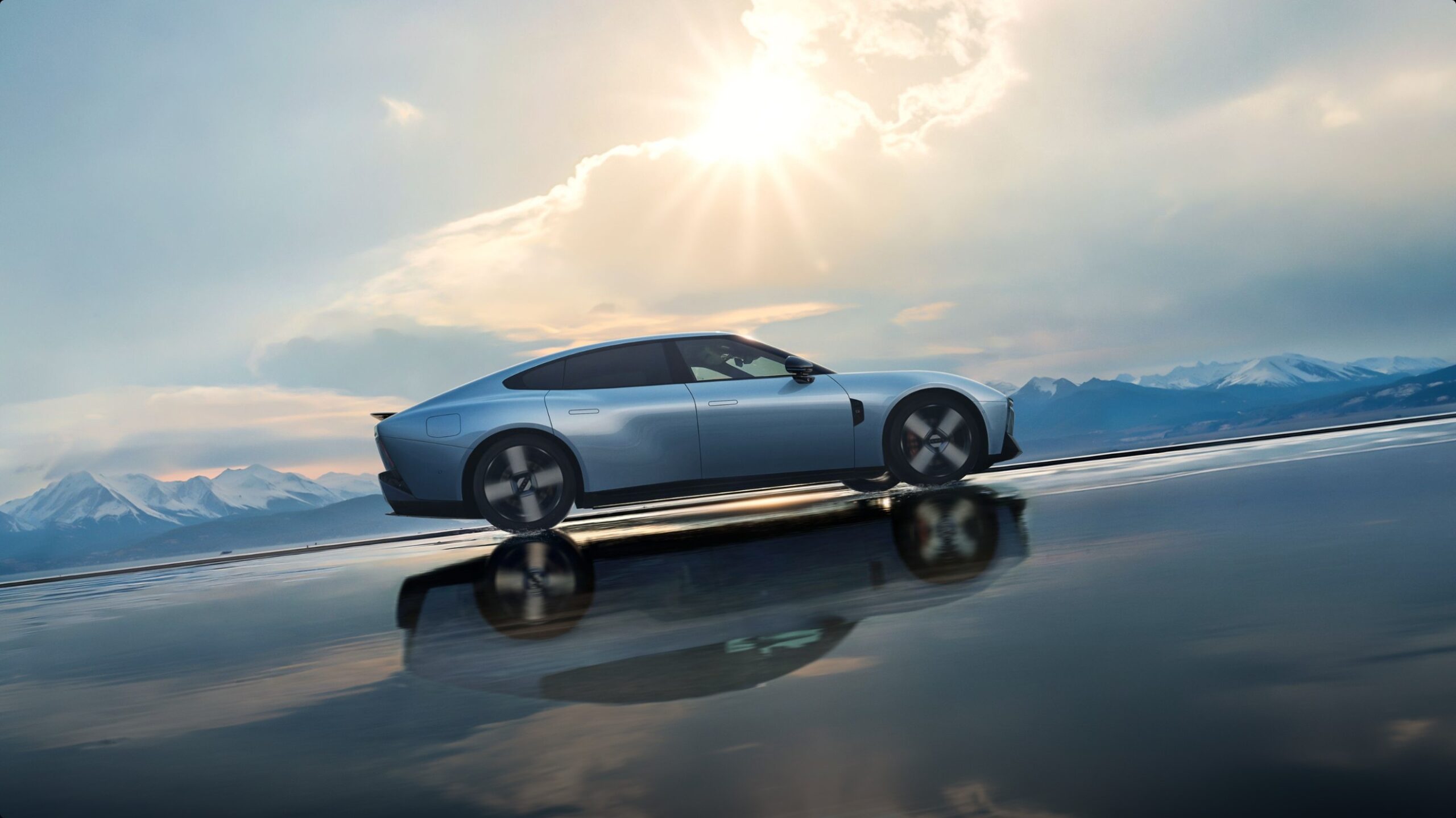
XPENG New P7 is XPENG’s performance sedan for the Chinese market, revealed in May 2025 and sold there since the August 2025 launch campaign. It carries 5C charging, dual-chamber air suspension and up to three Turing AI chips. The P7 and P7+ sold in Europe are separate cars with their own pages. Browse the Lineup hub.
Images: XPENG and xpeng.guru
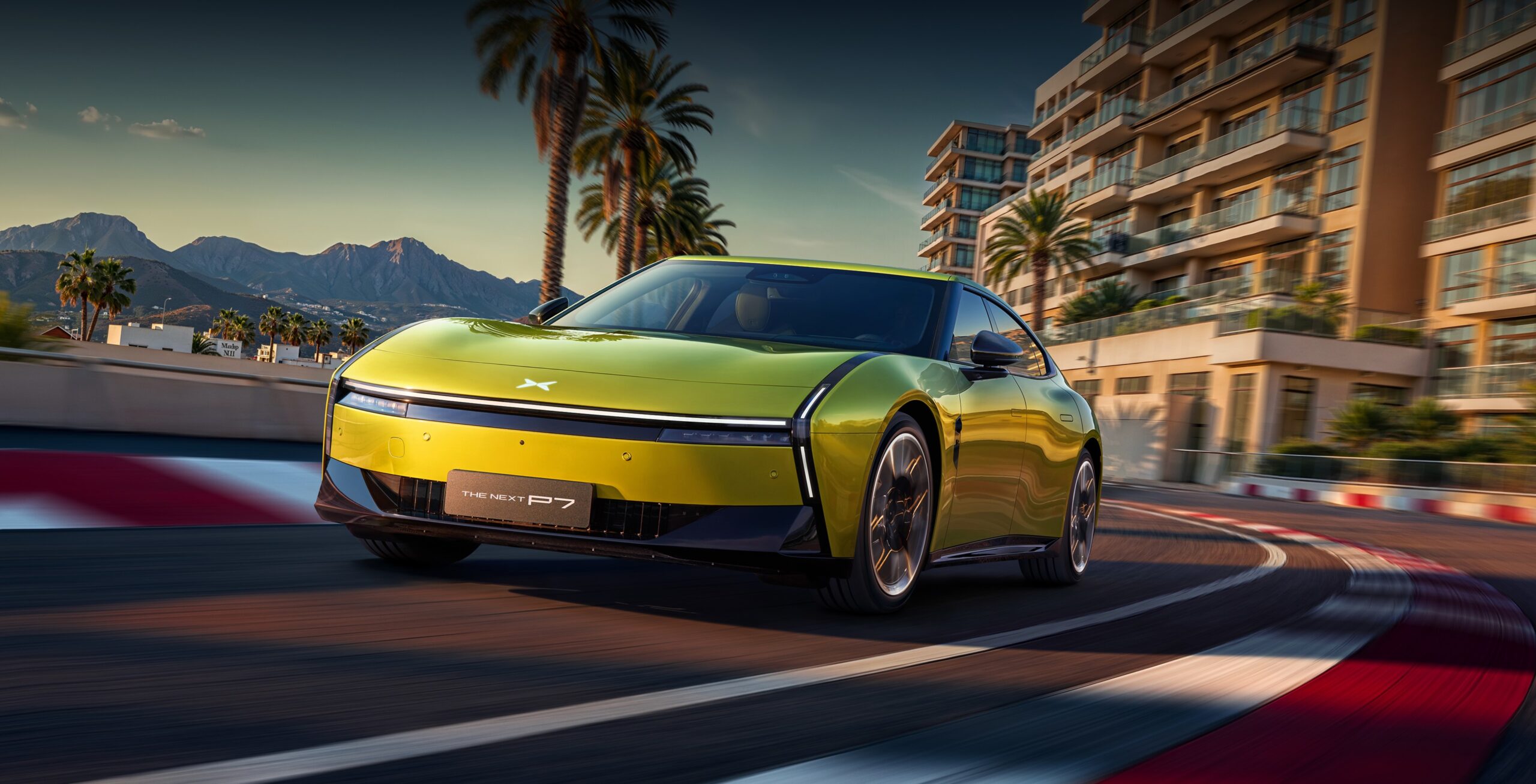
Why New P7 matters outside China. This is where XPENG puts its newest hardware first. The 5C pack, the Turing compute and the second-generation VLA driving model all reach this car before the European ones get them, so it shows what arrives here later. All four trims are in Compare specs.
Prices are Chinese list prices (指导价). The configurator also showed a limited-time offer below list on every trim; the tables use the list price, because that is the figure left standing when a campaign ends. Range is CLTC, which reads higher than the WLTP figures on the European model pages.
Jump to: Which P7 is this? · Trims, prices and key specs · Dimensions and space · Platform and chassis · Body, safety and battery · Cabin and equipment · Assisted driving and AI compute · China launch and markets · Europe and Denmark · XPENG Guru: Seen and driven in Denmark · Configurator: colours, wheels and interior · First reveal, May 2025 · Gallery · Sources
Which P7 is this?
Three different cars share the P7 name, and coverage mixes them up regularly.
| Model | Line | Where you can buy it | Page |
|---|---|---|---|
| XPENG P7 | P7, first generation | Europe | XPENG P7 |
| XPENG P7+ | Separate model line | Denmark, from January 2026 | XPENG P7+ |
| XPENG New P7 (E29) | P7, second generation | China, from August 2025 | This page |
Trims, prices and key specs
| Trim | Drive | List price | Range (CLTC) | 0-100 km/h | 10-80% | Battery |
|---|---|---|---|---|---|---|
| 702 Max | RWD | ¥209,800 ~€27,200 | 702 km | 5.8 s | 12 min | LFP 5C |
| 820 Max | RWD | ¥229,800 ~€29,800 | 820 km | 5.4 s | 11.3 min | NMC 5C |
| 750 AWD Max | AWD | ¥249,800 ~€32,400 | 750 km | 3.7 s | 11.3 min | NMC 5C |
| 750 AWD Pengyi Ultra | AWD | ¥313,800 ~€40,700 | 750 km | 3.7 s | 11.3 min | NMC 5C |
XPENG’s headline figures for the car: 593 hp, 230 km/h, 0-100 km/h in 3.7 s and 100-0 km/h in 33.16 m. The 3.7 s matches the two all-wheel-drive trims above.
Launch offer at the time of writing: 702 Max ¥203,800, 820 Max ¥223,800, 750 AWD Max ¥243,800, 750 AWD Pengyi Ultra ¥301,800.
The two rear-drive cars split on battery chemistry rather than power: 702 Max uses an LFP pack, 820 Max a nickel-manganese-cobalt one that carries the longer range. Both all-wheel-drive cars quote the same 750 km and 3.7 seconds, so the step up to Pengyi Ultra buys the third Turing chip, the Pengyi wing doors and the carbon-fibre kit.
Smart packages
- Ultra SE Smart Upgrade Package - ¥12,000 (~€1,600): two Turing AI chips for assisted driving, second-generation VLA, OMS cabin camera
- Ultra Smart Upgrade Package - ¥20,000 (~€2,600): two Turing AI chips for assisted driving, one Turing AI chip for the cockpit, second-generation VLA, OMS cabin camera, Face ID entry, in-vehicle VLM model, full-scenario dialogue
- Electric lifting rear wing - ¥6,000 (~€800). Height switches with speed; ten levels of manual adjustment. Shown as limited-time free on the 750 AWD Pengyi Ultra.
- Zero-gravity front passenger seat - ¥6,000 (~€800). Front passenger seat reclines into a zero-gravity position on one touch.
Dimensions and space
| Measure | New P7 |
|---|---|
| Length | 5017 mm |
| Width | 1970 mm |
| Height | 1427 mm |
| Wheelbase | 3008 mm |
| Seats | 5 |
| Boot | 575 l rear · 56 l front · 1929 l with the rear seats folded |
| Drag coefficient | Cd 0.201 |
| Length to height | 3.57 |
| Width to height | 1.40 |
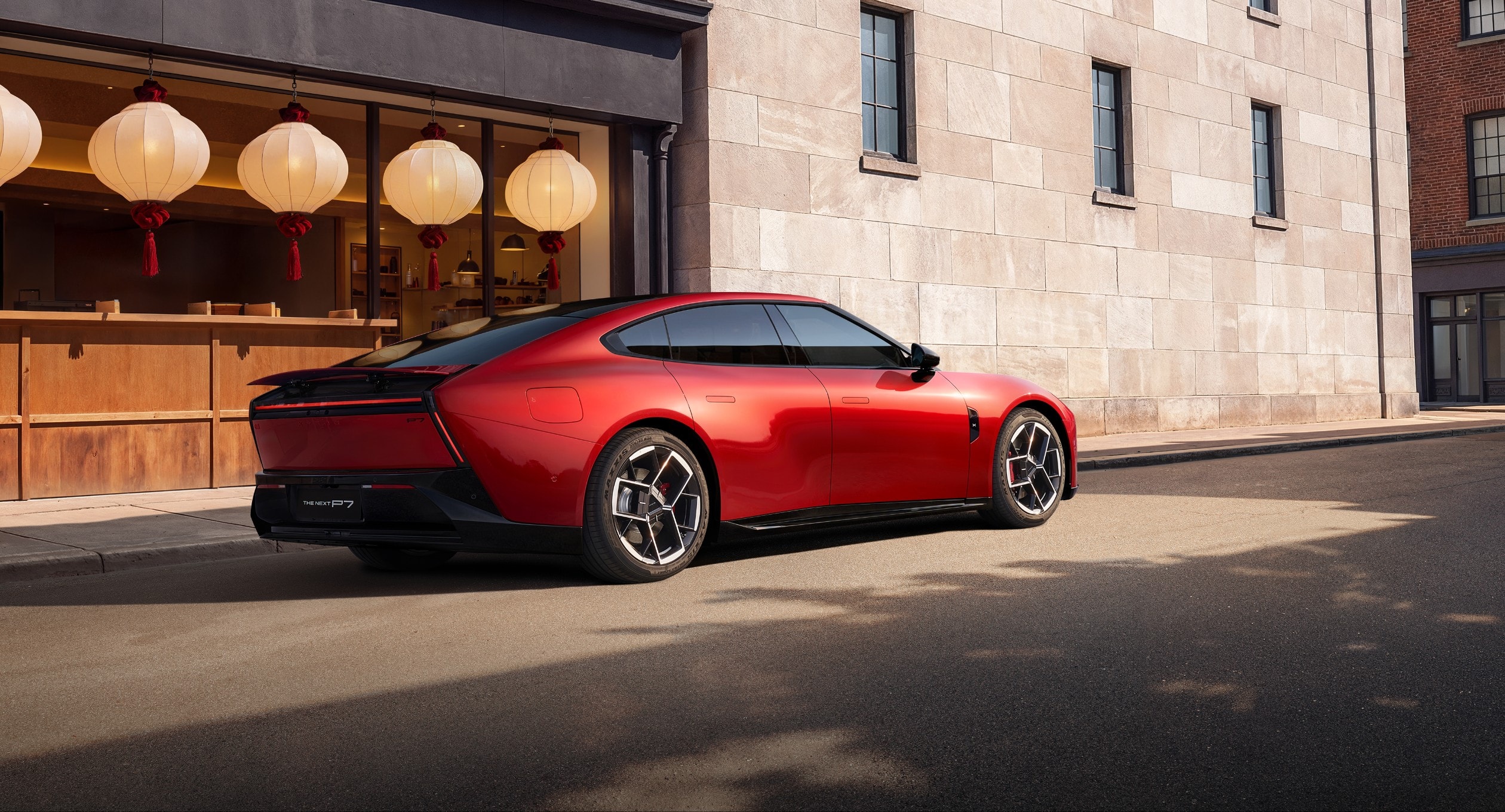
At 5017 mm, New P7 is 54 mm shorter than the P7+ sold in Denmark, on a wheelbase within 8 mm of it. The difference a buyer would notice is height: 1427 mm here against 1512 mm on the P7+. XPENG puts the drag figure at Cd 0.201 and credits more than twenty-five aerodynamic changes, worth more than 90 km of range on their own numbers.
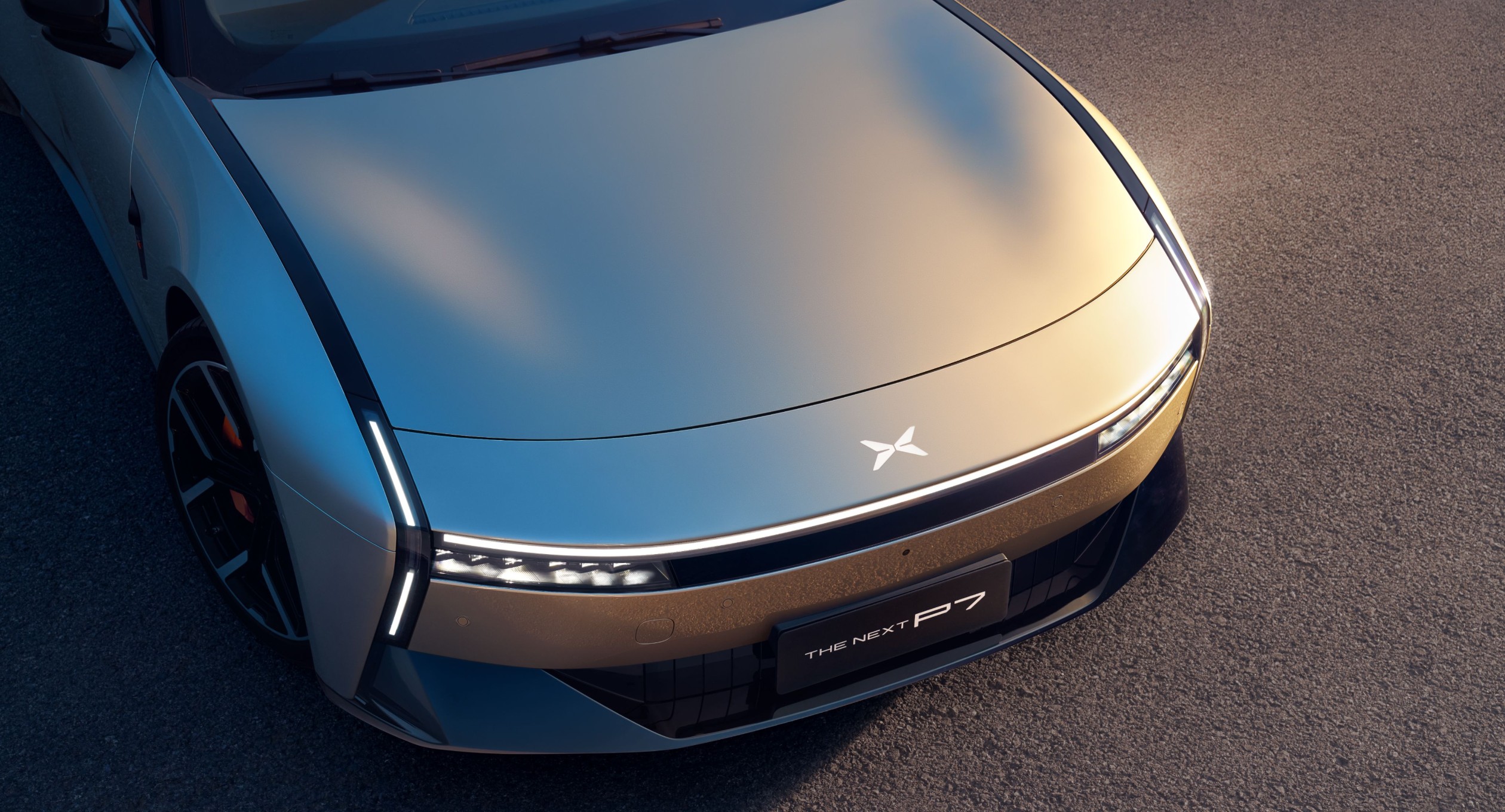
Airflow over the front end, from XPENG’s own aero film.
Luggage and proportion figures are XPENG’s own, from the stat blocks on the model page. The 1929-litre figure carries a footnote there.
Platform and chassis
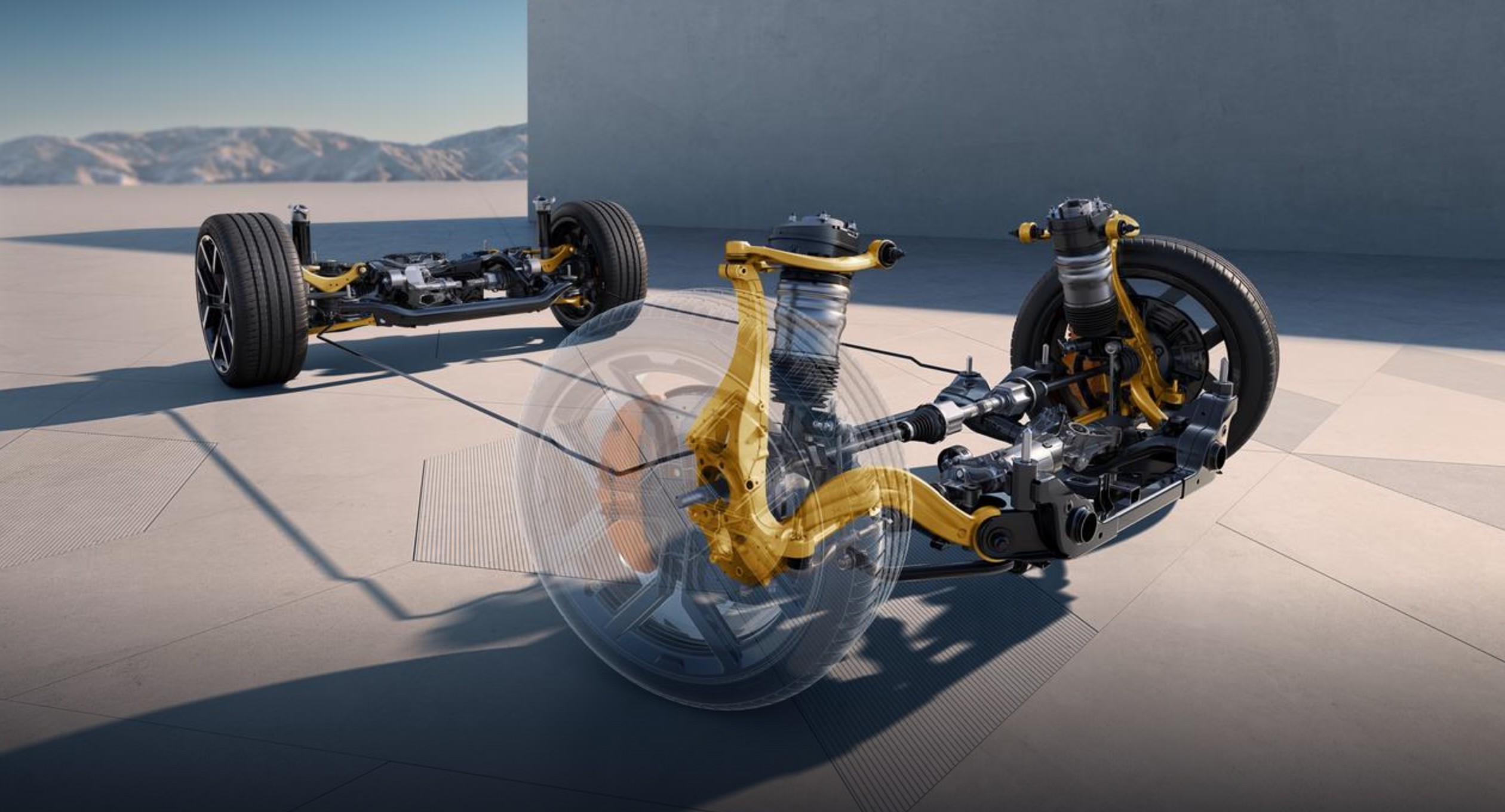
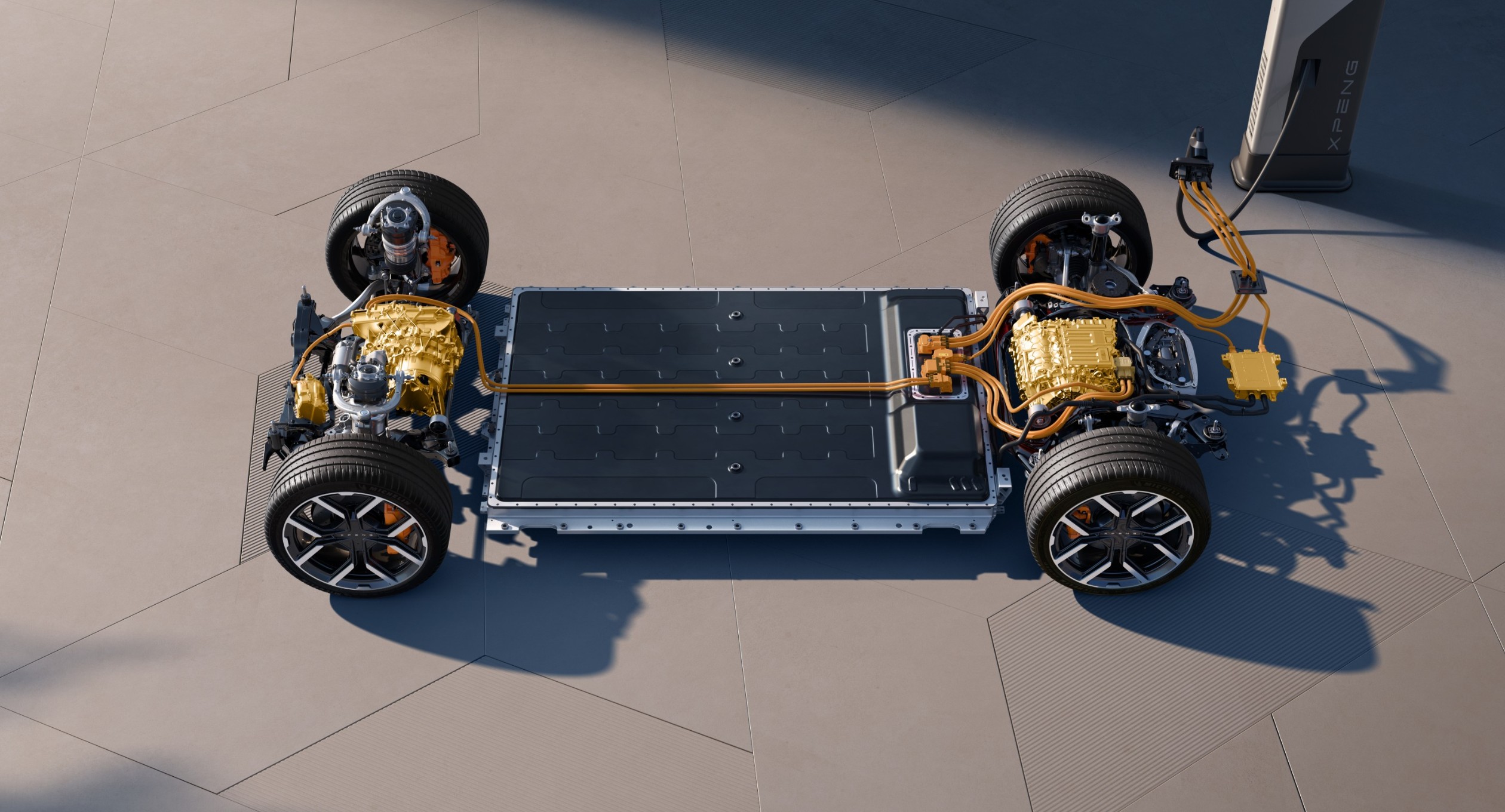
The motor sits ahead of the rear axle, which XPENG uses to reach a 50:50 weight split with 81 per cent of the mass between the axles. Suspension is an all-aluminium double wishbone at the front and a five-link at the rear, on dual-chamber air springs.
- Ride height adjusts from -20 mm to +30 mm
- Air spring rate varies between 100 and 140 per cent
- Dampers adjust across a 10 to 100 per cent range, up to a thousand times a second
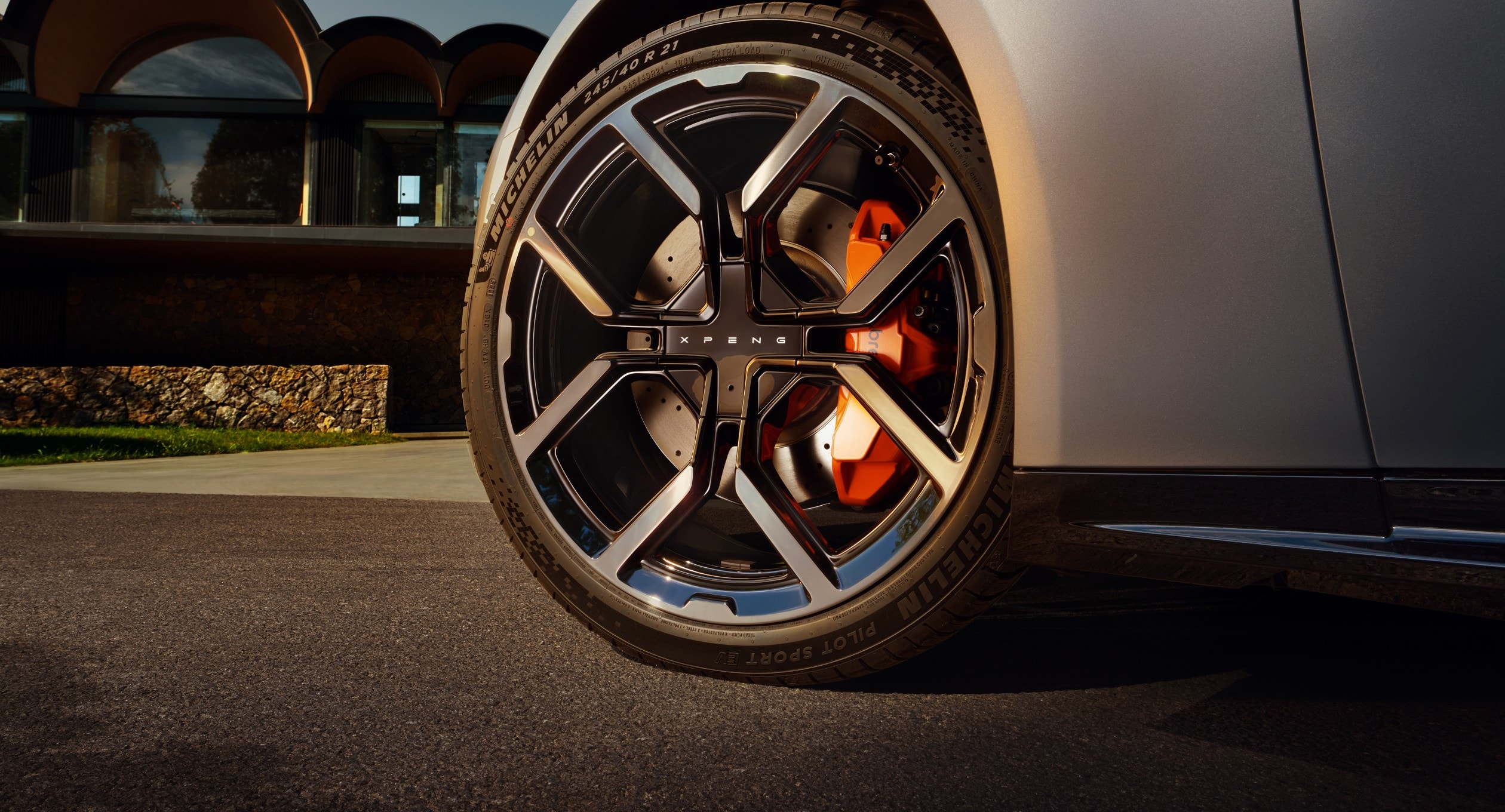
- Brembo brake calipers
- Boost, racer and drive modes on the right steering-wheel knob; launch mode is its own feature
XPENG quotes a 1:38.767 lap of the Zhejiang circuit, and a 24-hour endurance run of 3961 km. The lap footnote matters: it was set by the 750 AWD Ultra on the track pack XPENG sells separately - high-temperature brake fluid, low-metallic pads and Giti track tyres - and for closed-course use.
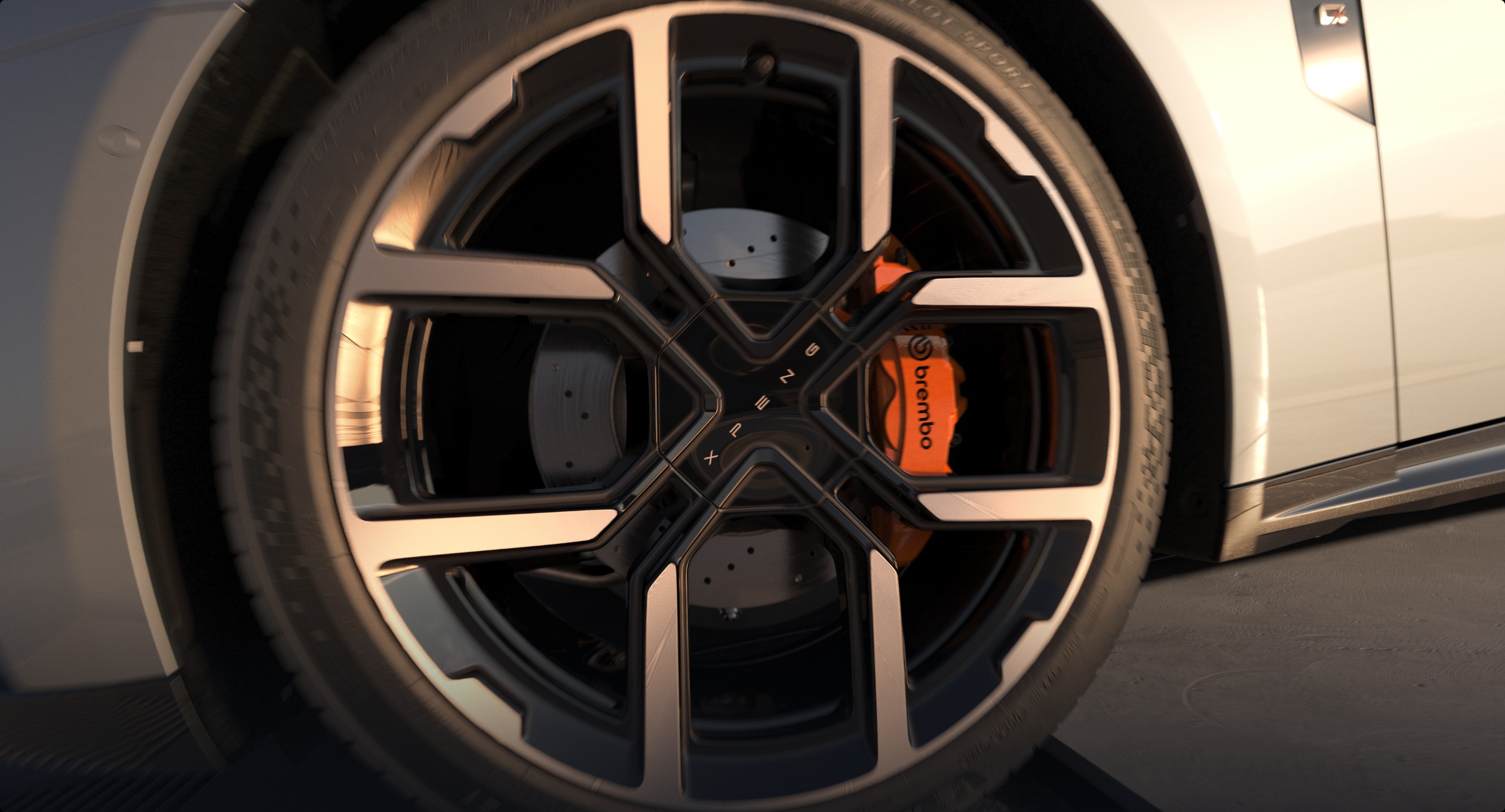
Brembo brake calipers (搭载Brembo制动卡钳; XPENG).
XPENG’s own footage from the Zhejiang circuit.
Charging
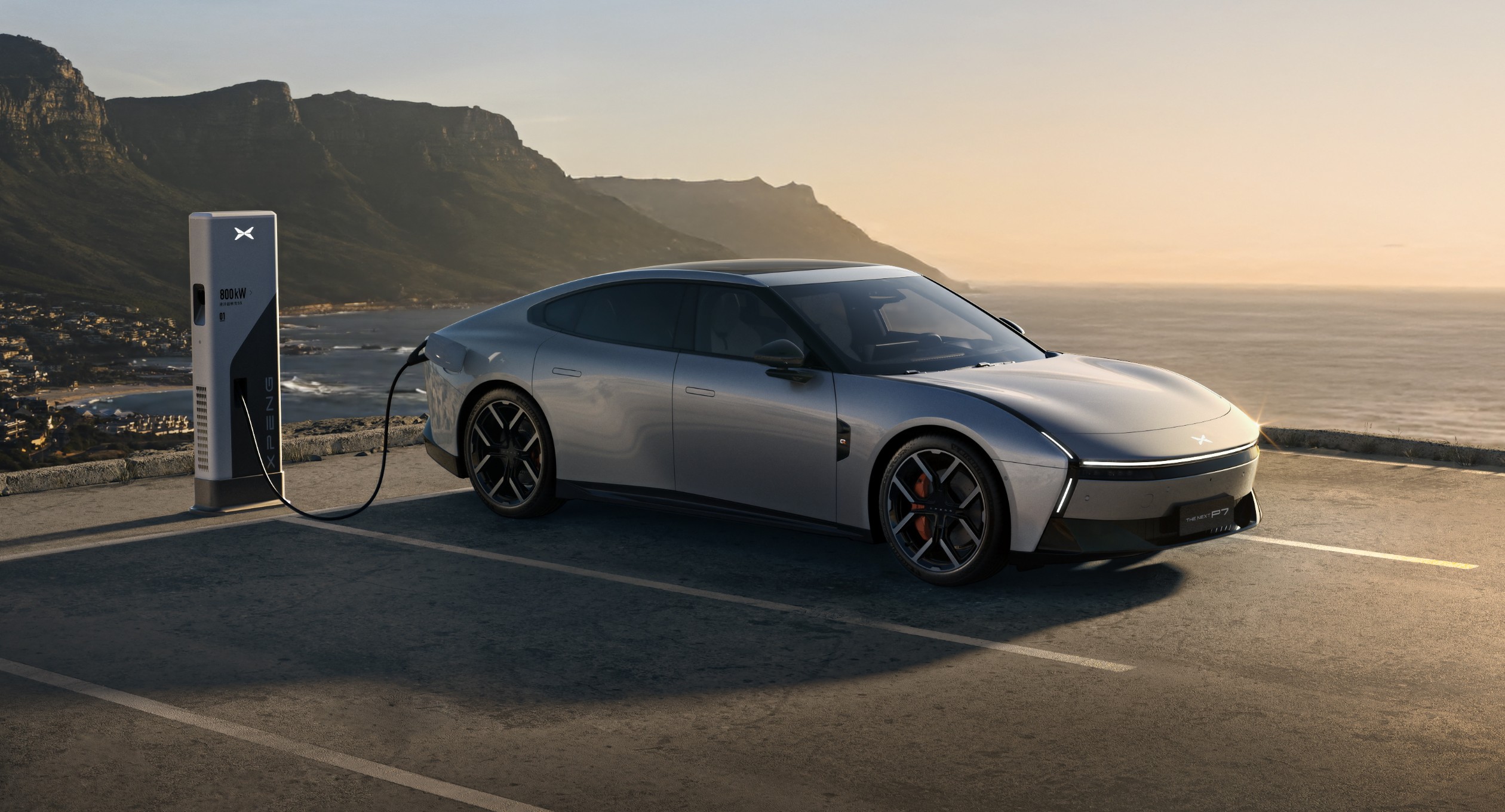
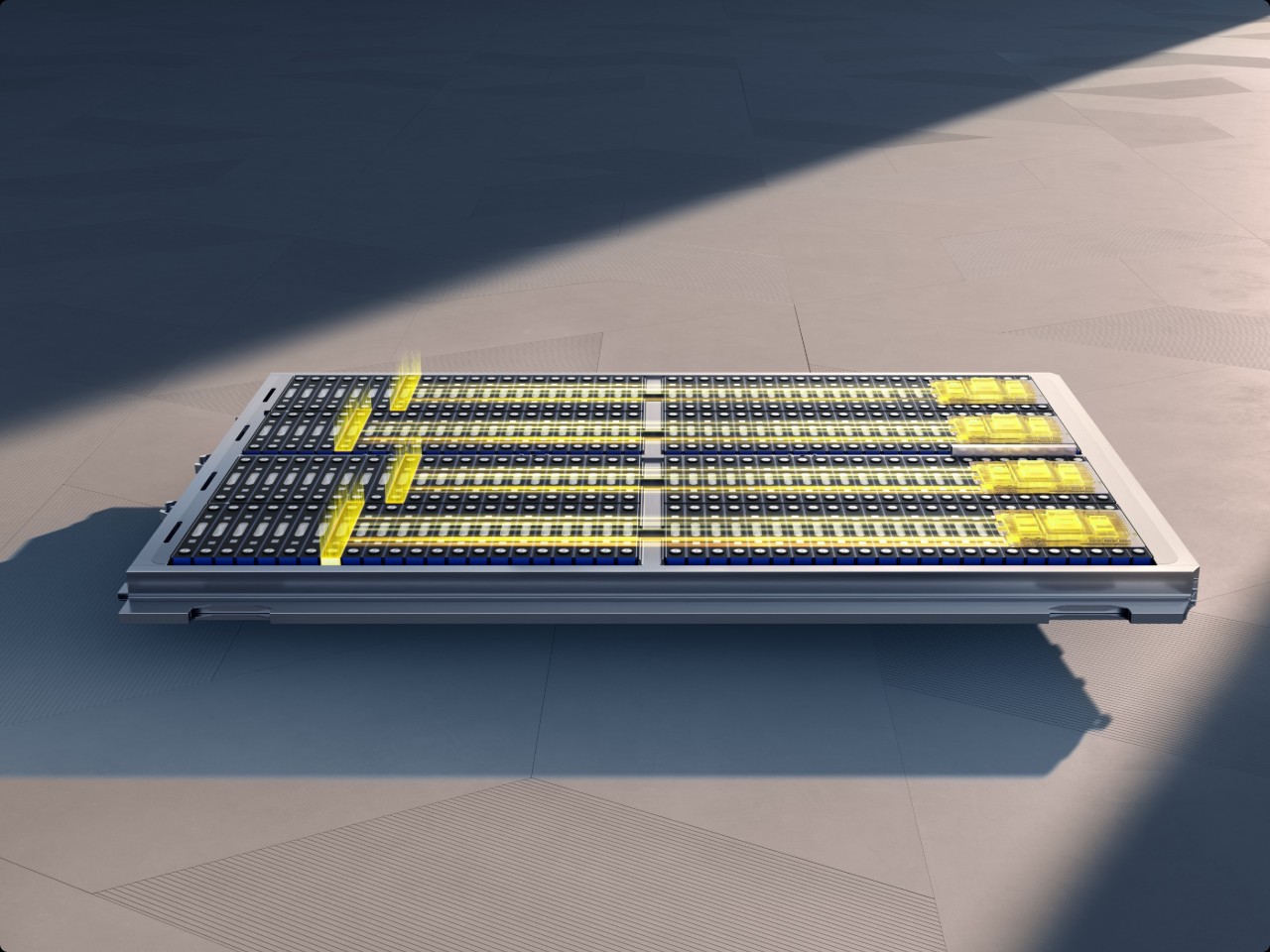
Every trim charges at 5C. XPENG quotes 10 to 80 per cent in 12 minutes on the 702 Max and 11.3 minutes on the rest, around 525 km added in ten minutes, and consumption from 12.0 kWh per 100 km.
Body, safety and battery
The figures below are XPENG’s own, from the Chinese model page.
- Developed against the C-NCAP five-star and C-IASI 3G+ standards
- 16000T single-piece aluminium castings front and rear
- 43000 N·m/deg torsional rigidity, with 2000 MPa hot-formed steel
- Seven airbags as standard, including a driver centre airbag
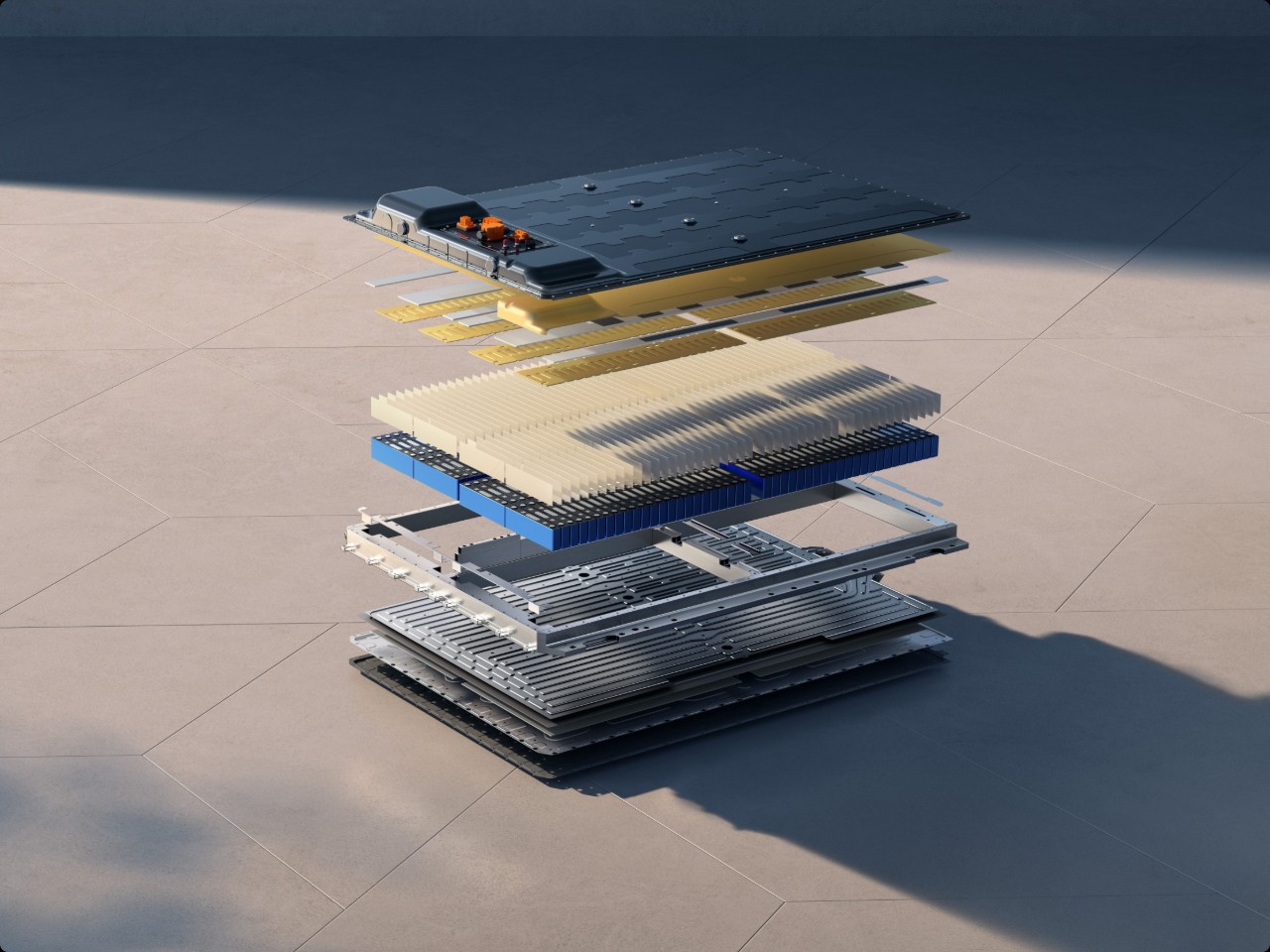
- Round-the-clock battery monitoring across fourteen pre-diagnostic strategies
- Pack underbody impact resistance at 4.67 times the new national standard
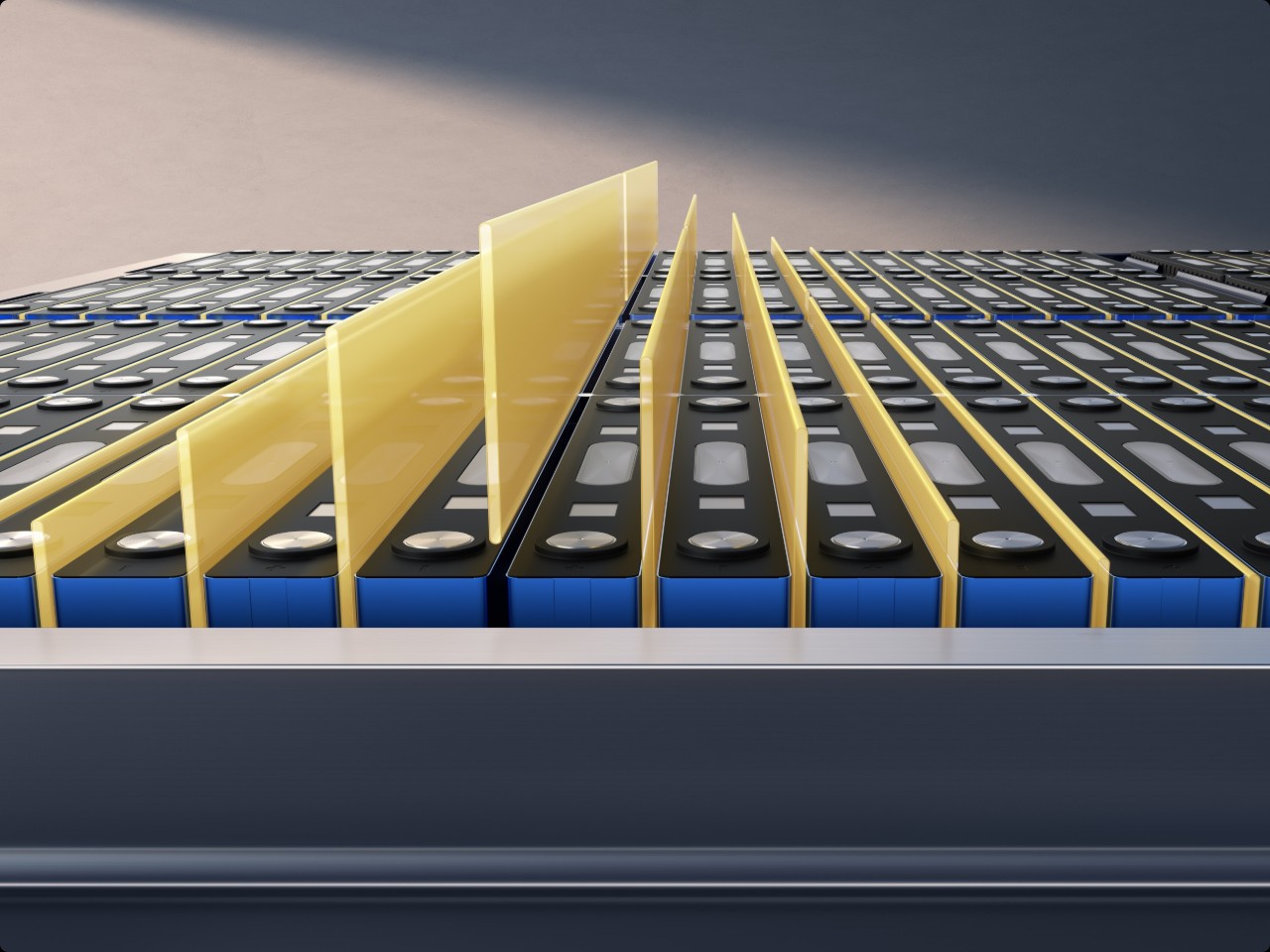
- Thermal-runaway observation time at twelve times the standard
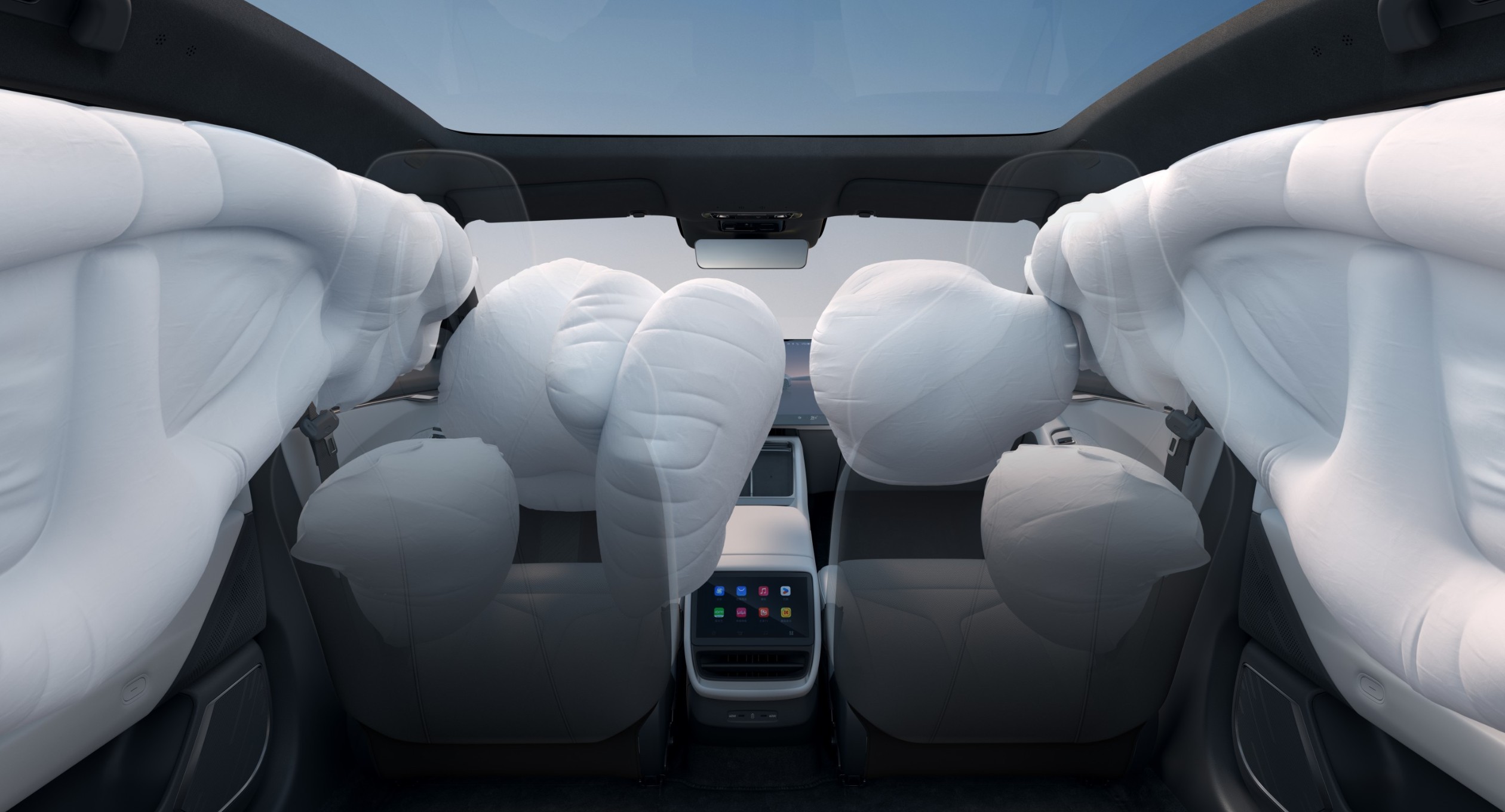
Seven airbags as standard, including a driver centre airbag (全系标配7个安全气囊; XPENG).
Cabin and equipment
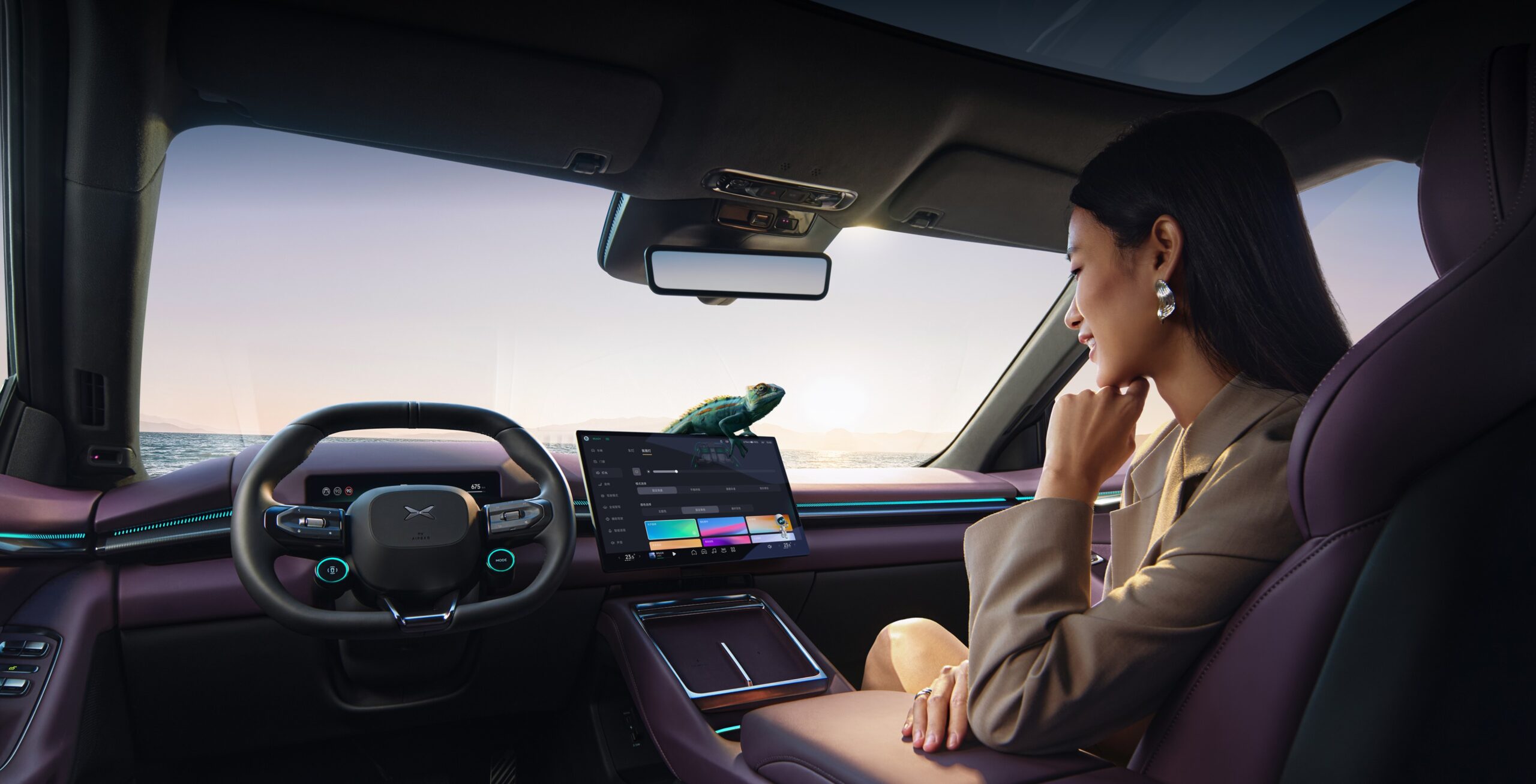
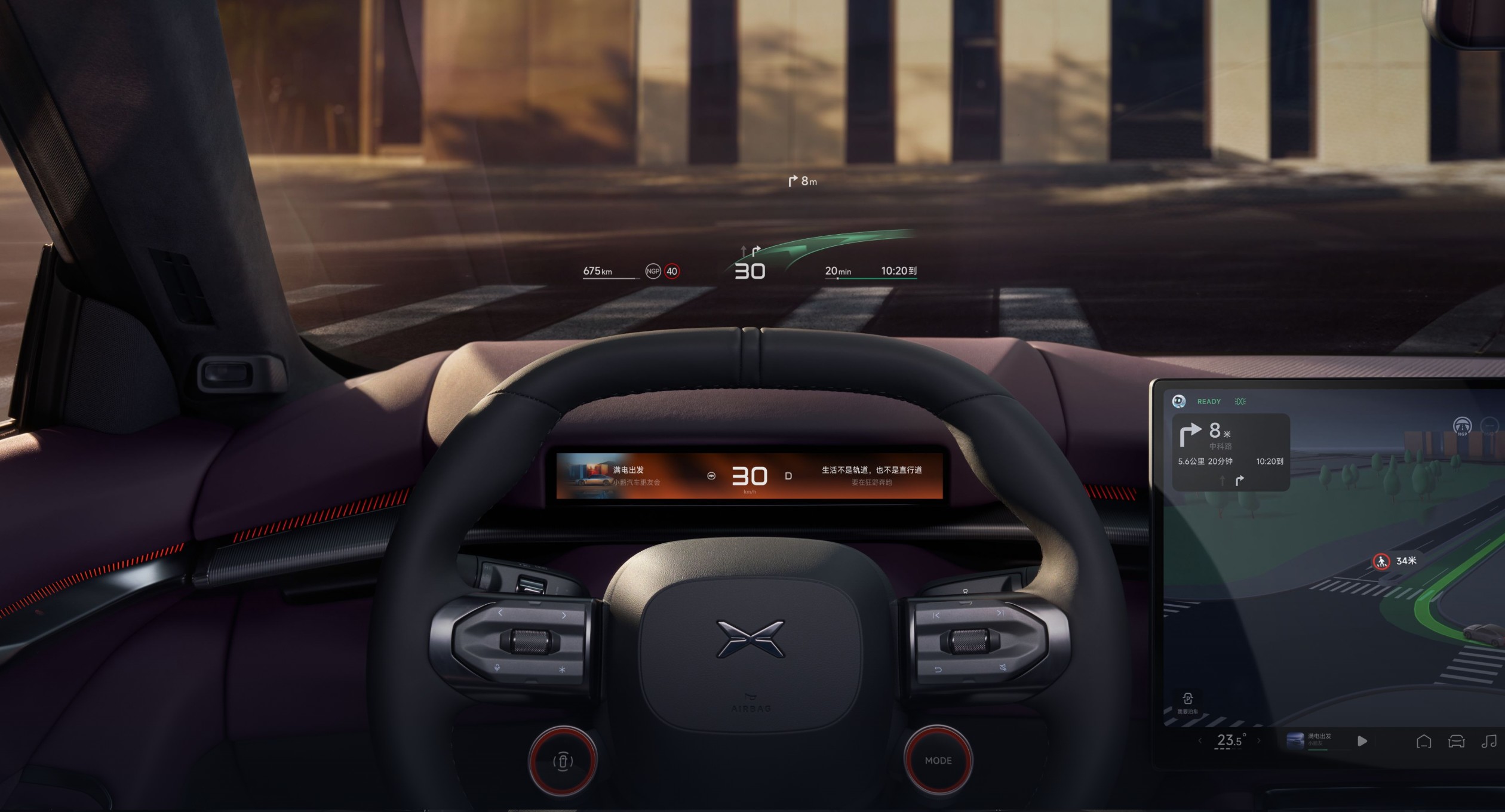
The dashboard is built around a raised centre housing XPENG calls the tech island. Above it sits an 87-inch augmented-reality head-up display that carries navigation, assisted-driving state, speed and suspension settings on the windscreen.
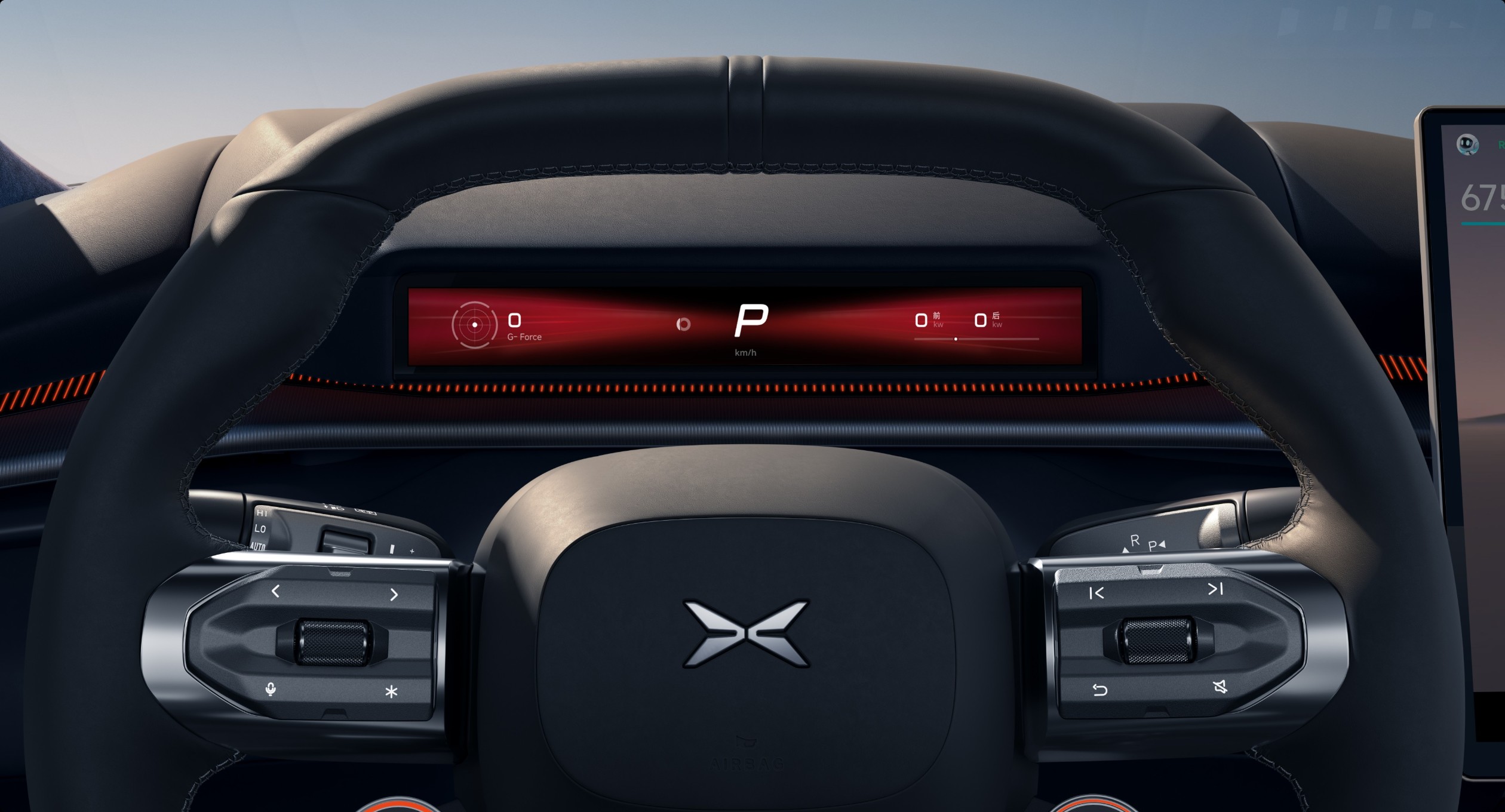
- Three-spoke Nappa steering wheel with a satellite knob on each side: assisted driving and suspension on the left, drive modes on the right
- Touch pads in both door panels for custom vehicle controls
- Integrated sport seats in Nappa and Dinamica, with an active bolster on the driver’s side
- Panoramic glass roof: 1.84 m² fixed triple silver-coated glass roof (the roof does not open / no traditional sunroof functionality), quoted at 99.99 per cent UV and 99.58 per cent infrared rejection
- 120 mm of rear knee room, a 513 mm rear cushion and a 30-degree backrest angle
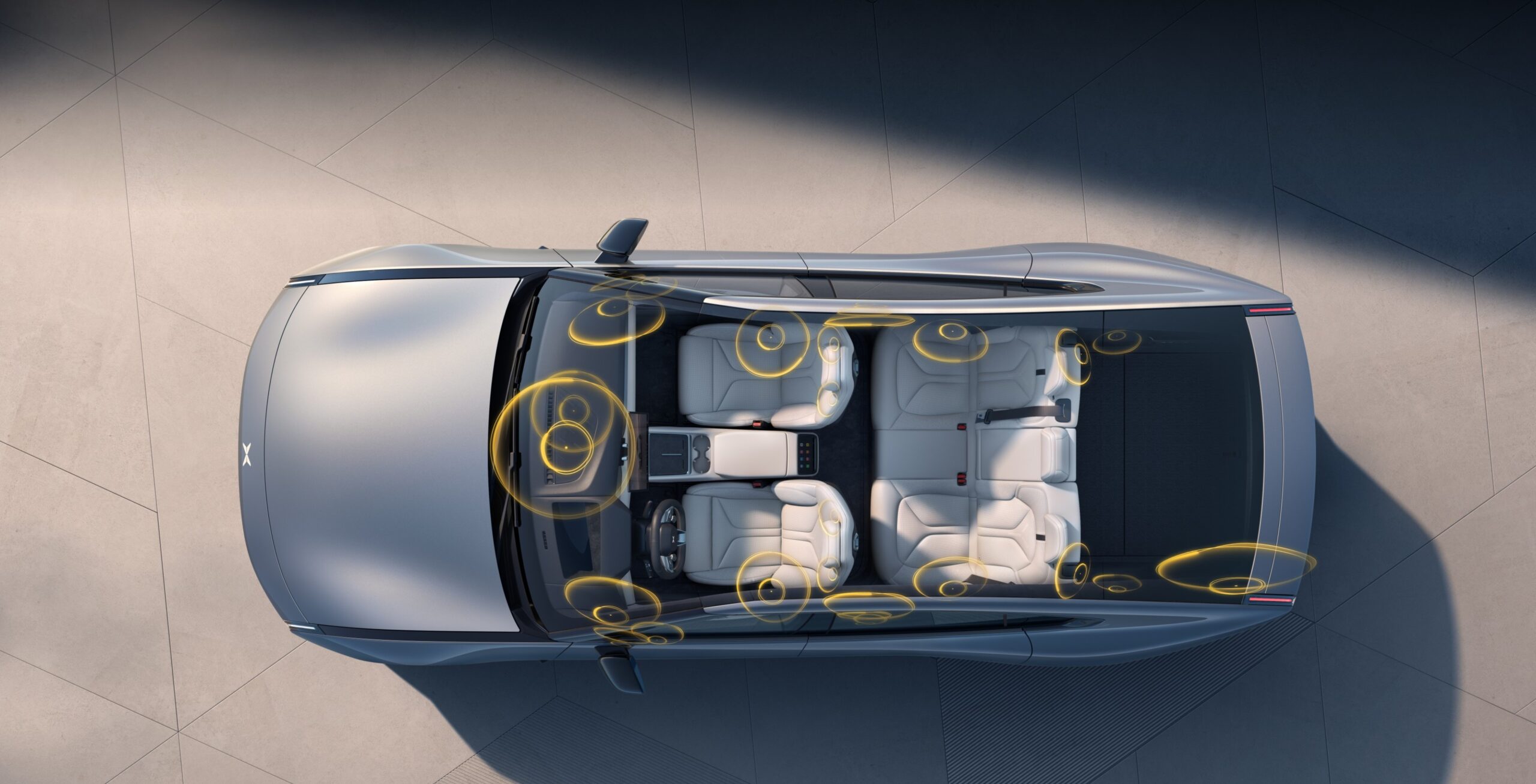
- An 8-inch rear screen, 23 speakers and a cabin fragrance system
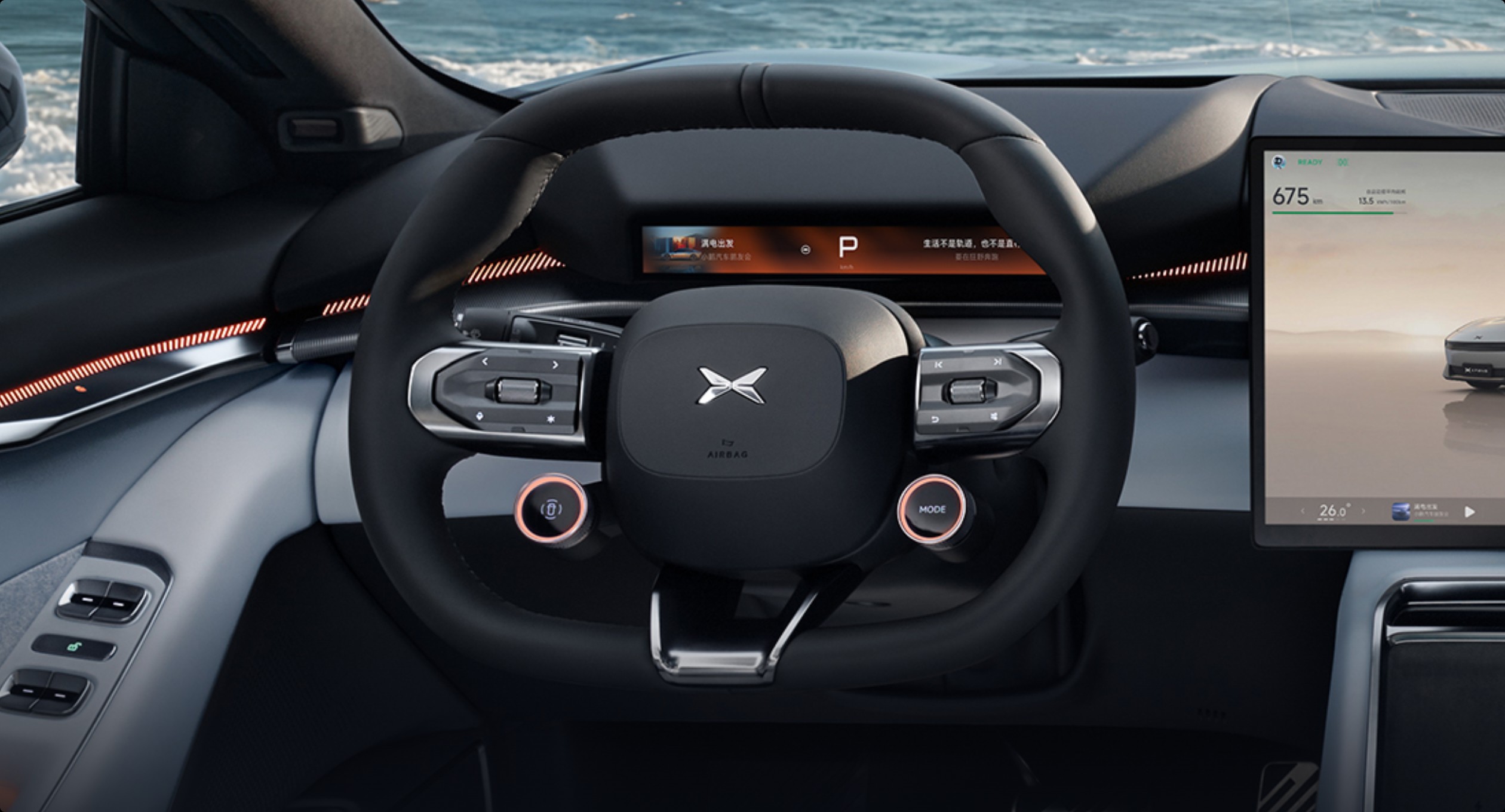
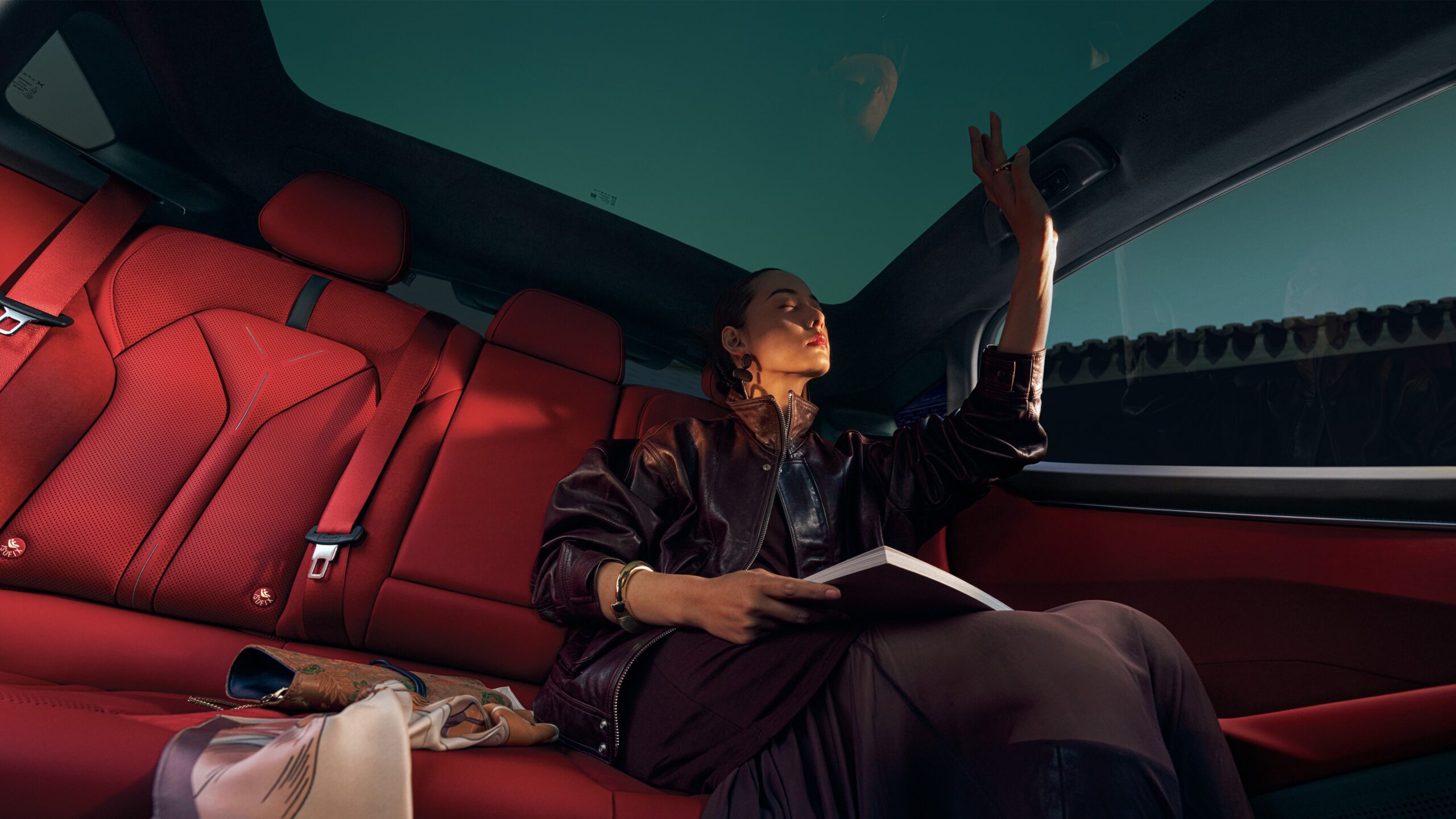
The centre screen moves on a three-axis mount.
Assisted driving and AI compute
New P7 carries up to three Turing AI chips for a quoted 2250 TOPS of effective compute, running XPENG’s second-generation VLA model with a vision-language model in the car. Assisted driving works from a standstill to 130 km/h.
- Lane-level navigation drawn onto the road ahead in the head-up display
- Assisted-driving intent shown across six situations, from traffic-light stops to lane changes
- Warnings for cars cutting in and for anyone stepping out from behind an obstruction, plus a rain and fog warning XPENG calls an industry first
- Camera views for the side and rear, for reversing and for narrow roads
- Voice control from outside the car
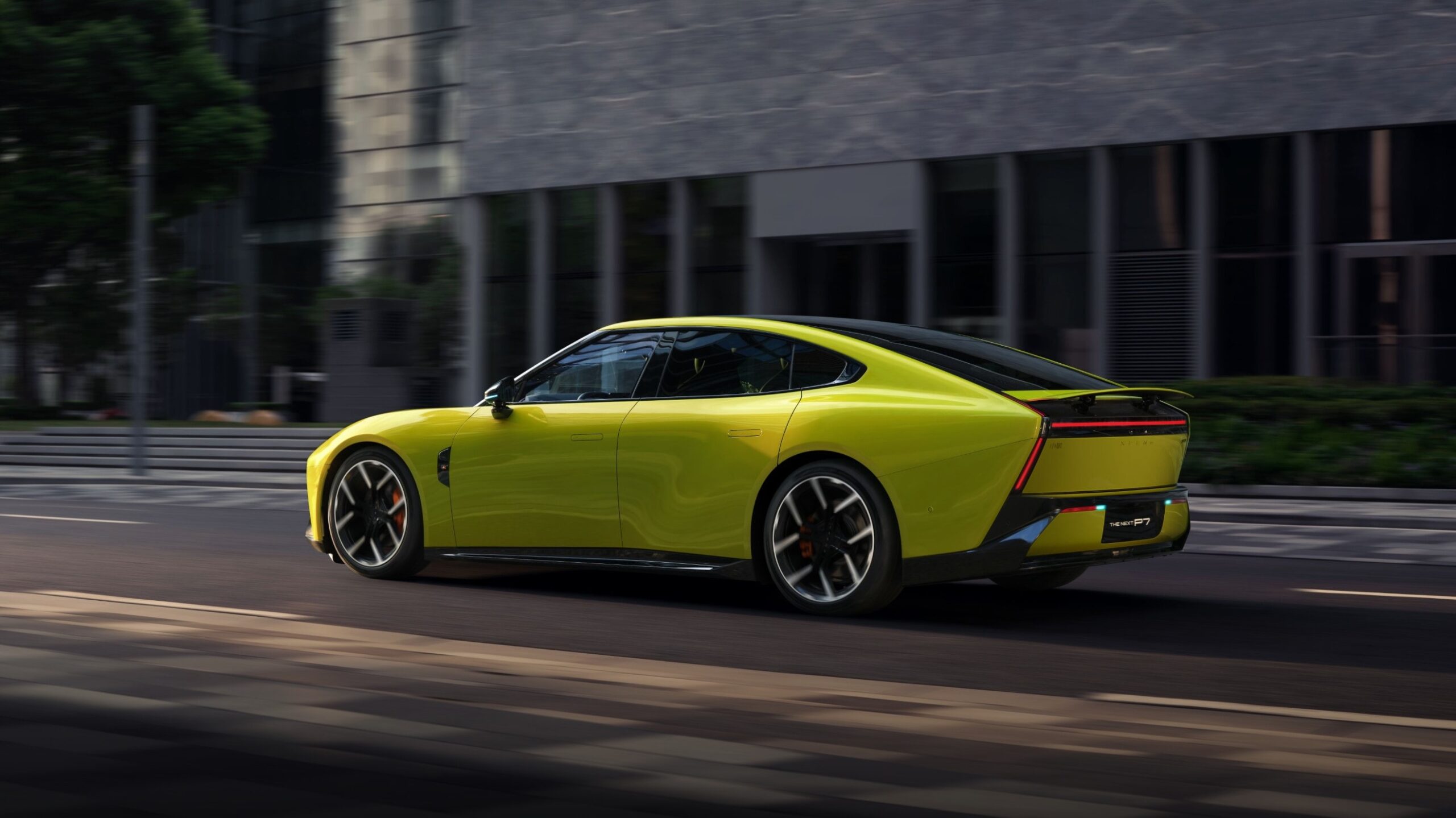
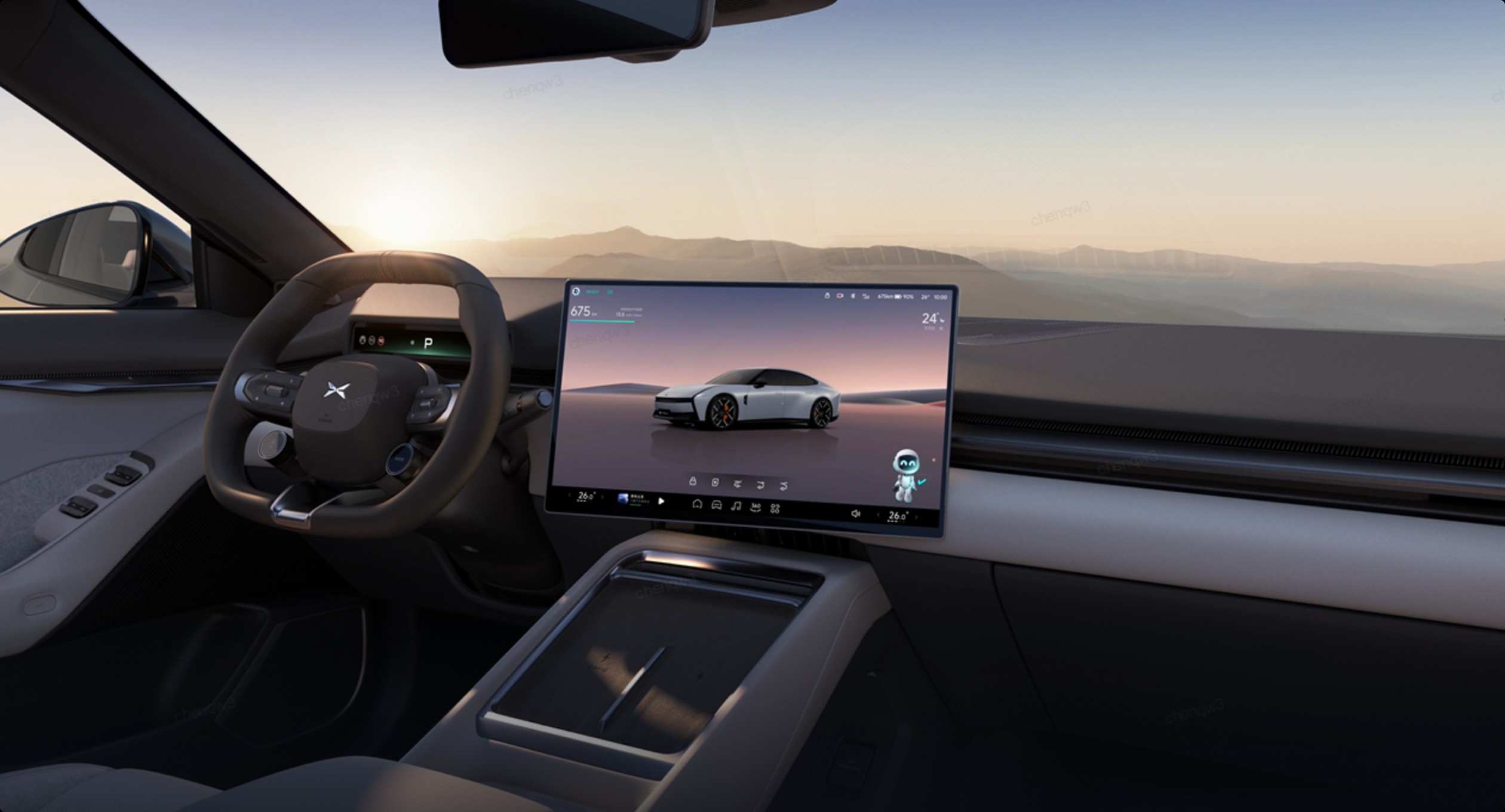
The head-up display in use.
China launch and markets
XPENG showed the car in May 2025 and opened ordering that August, in four trims across two drive layouts. Prices and options on this page come from the Chinese model page and store configurator as they stood on 16 August 2026.
Europe and Denmark
Europe has seen the car. XPENG gave it its European premiere at IAA Mobility in Munich on 8 September 2025, alongside the G6, G9 and X9, and opened its first European R&D centre in the same city that month. The sedan you can actually order here is still P7+, with its specs and prices on that page and in Compare specs. Nothing has been announced about selling New P7 west of China.
XPENG Guru: Seen and driven in Denmark
On 28 August 2025 XPENG Danmark brought a New P7 to Hillerød and showed it to a group of beta testers. It stood there on Danish plates, and as far as I know it is still the only one in Europe. Eleven days later the car had its European premiere at IAA Mobility in Munich.
My own drive was short - a loop of an industrial estate, never above 50 km/h. That is nowhere near enough for a verdict, so read this as a first impression. What came through was the seating position - low and snug, with everything angled at the driver. It feels like a sporty car built around whoever is driving it.
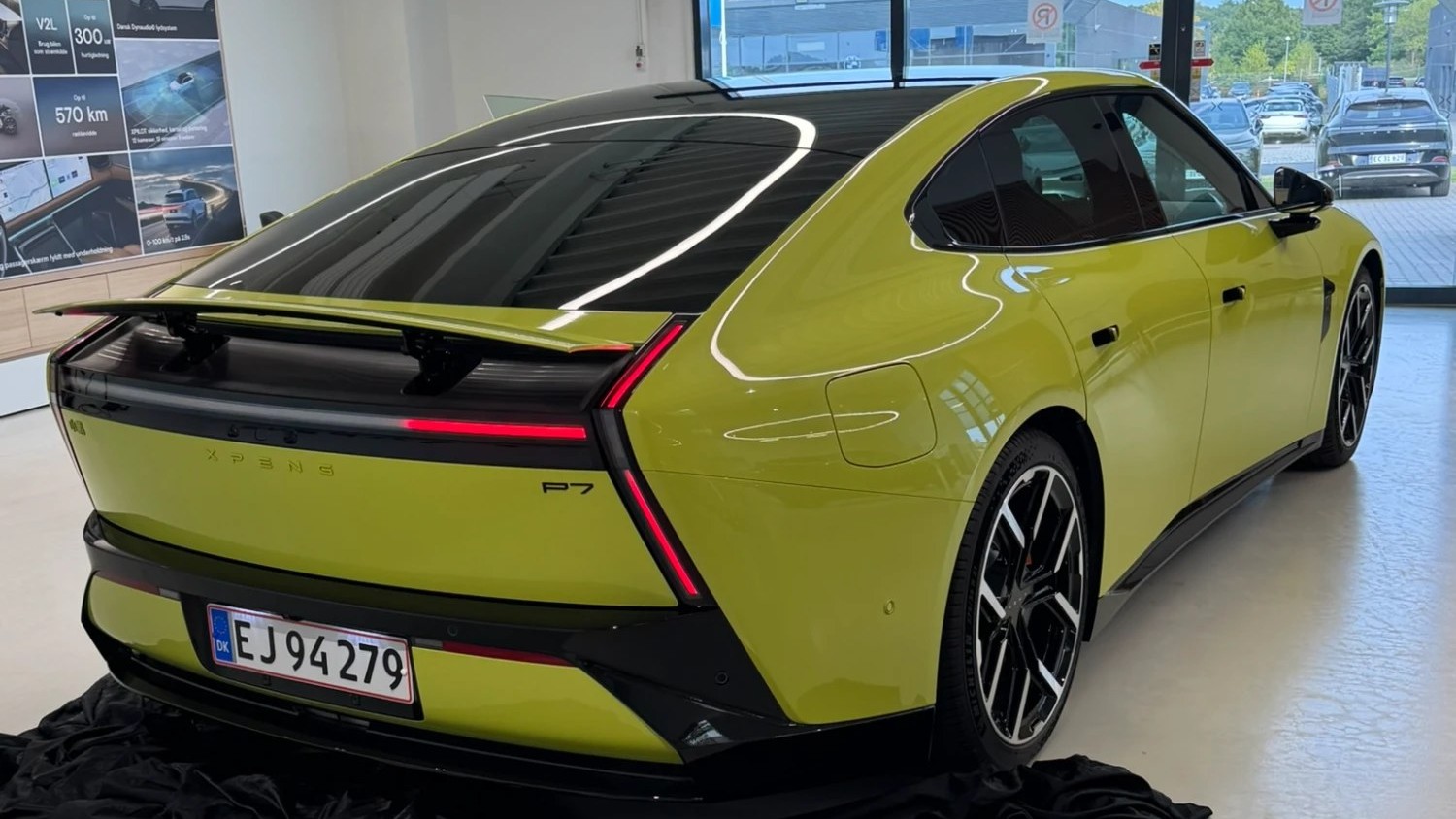
The car XPENG Danmark showed in Hillerød, on Danish plates, with the rear wing raised.
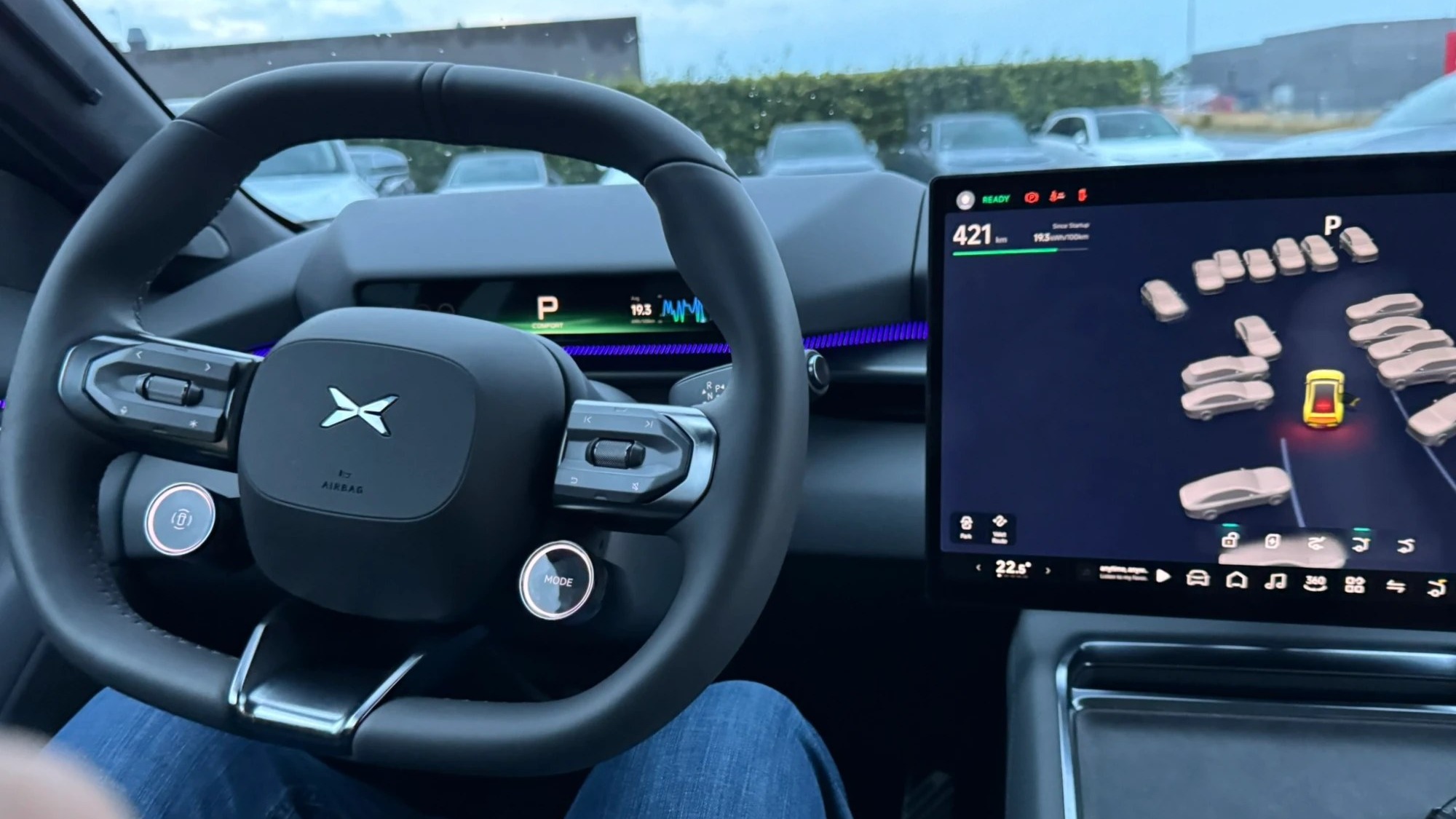
First impressions of the cockpit - three-spoke wheel, slim cluster, HUD and a motorised centre screen.
Configurator: colours, wheels and interior
What the Chinese store listed at the time of writing. Availability varies by trim, and prices in brackets convert at the rate in the compare data.
Paint colours
 Crescent Silver (新月银)
 Nebula White (星云白)
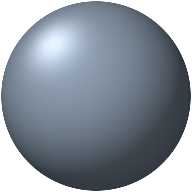 Micro Star Grey (微星灰)
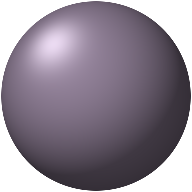 Twilight Purple (星暮紫)
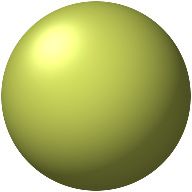 Rhythm Yellow (律动黄)
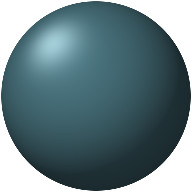 Stellar Green (星瀚绿)
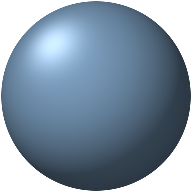 Starbeam Blue (星芒蓝)
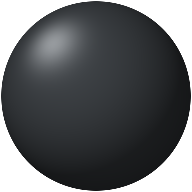 Midnight Black (暗夜黑)
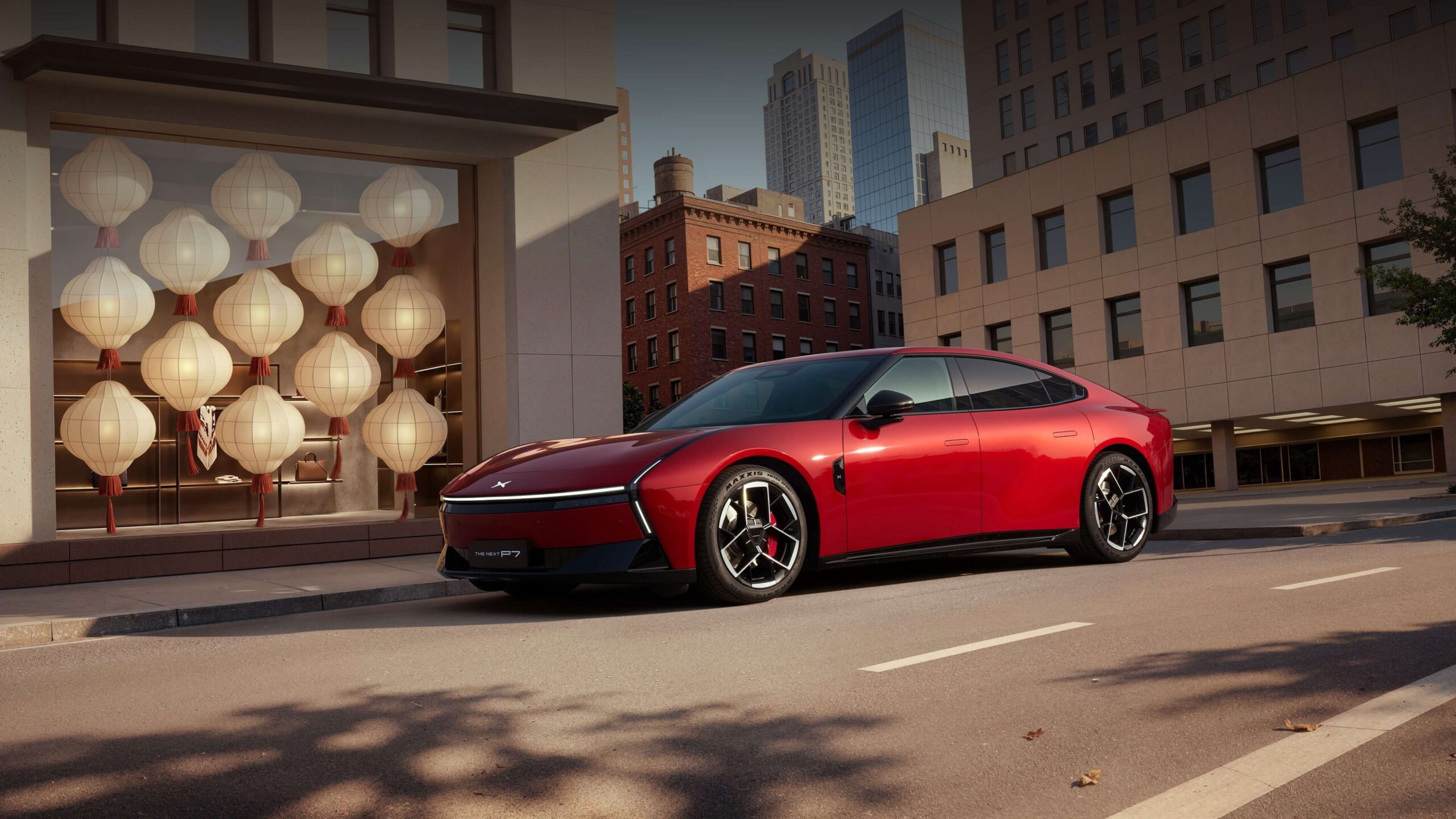
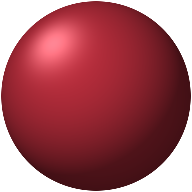 Star Blaze Red (星曜红)
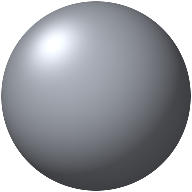 Matte Crescent Silver (哑光新月银)
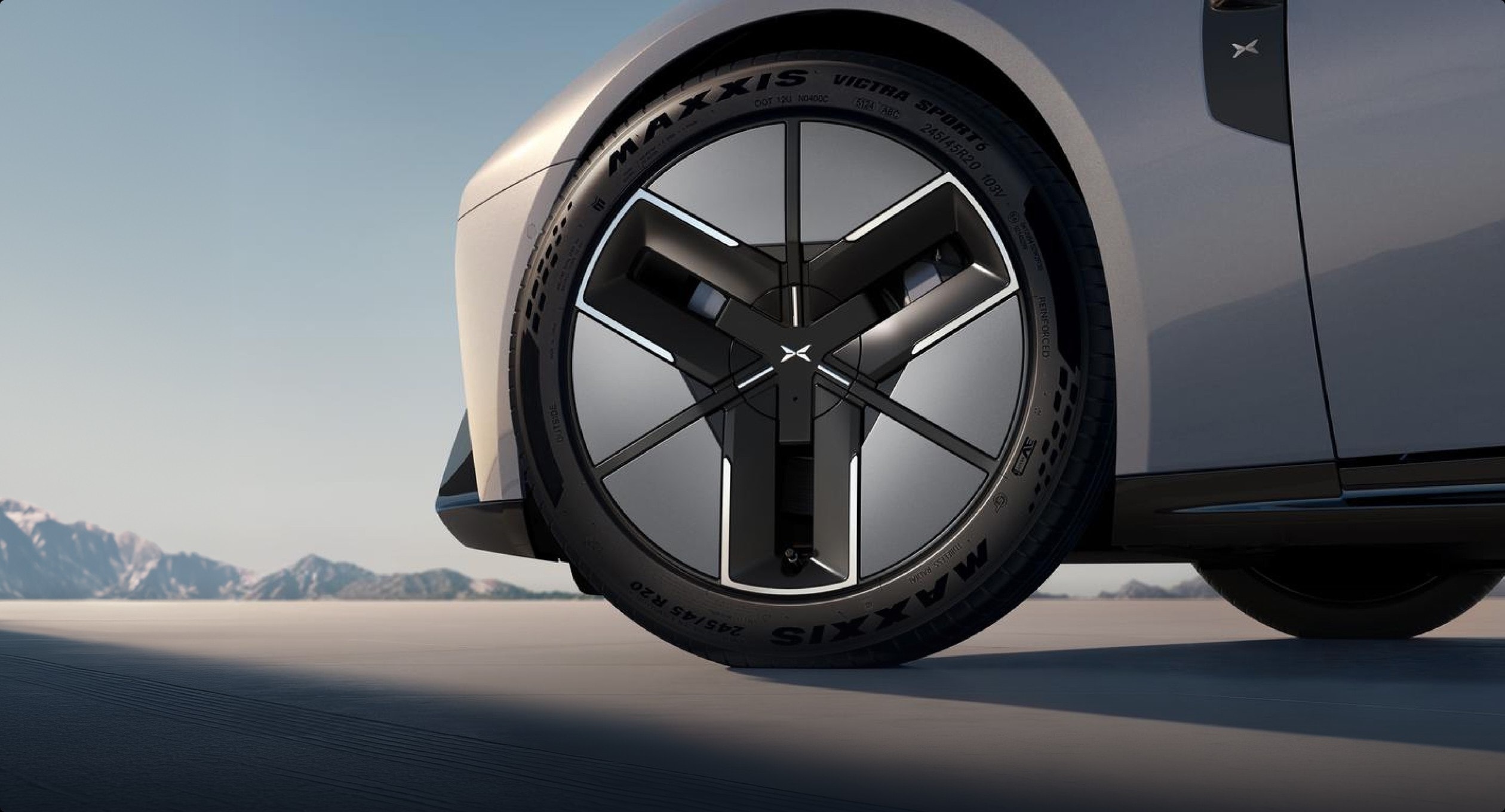
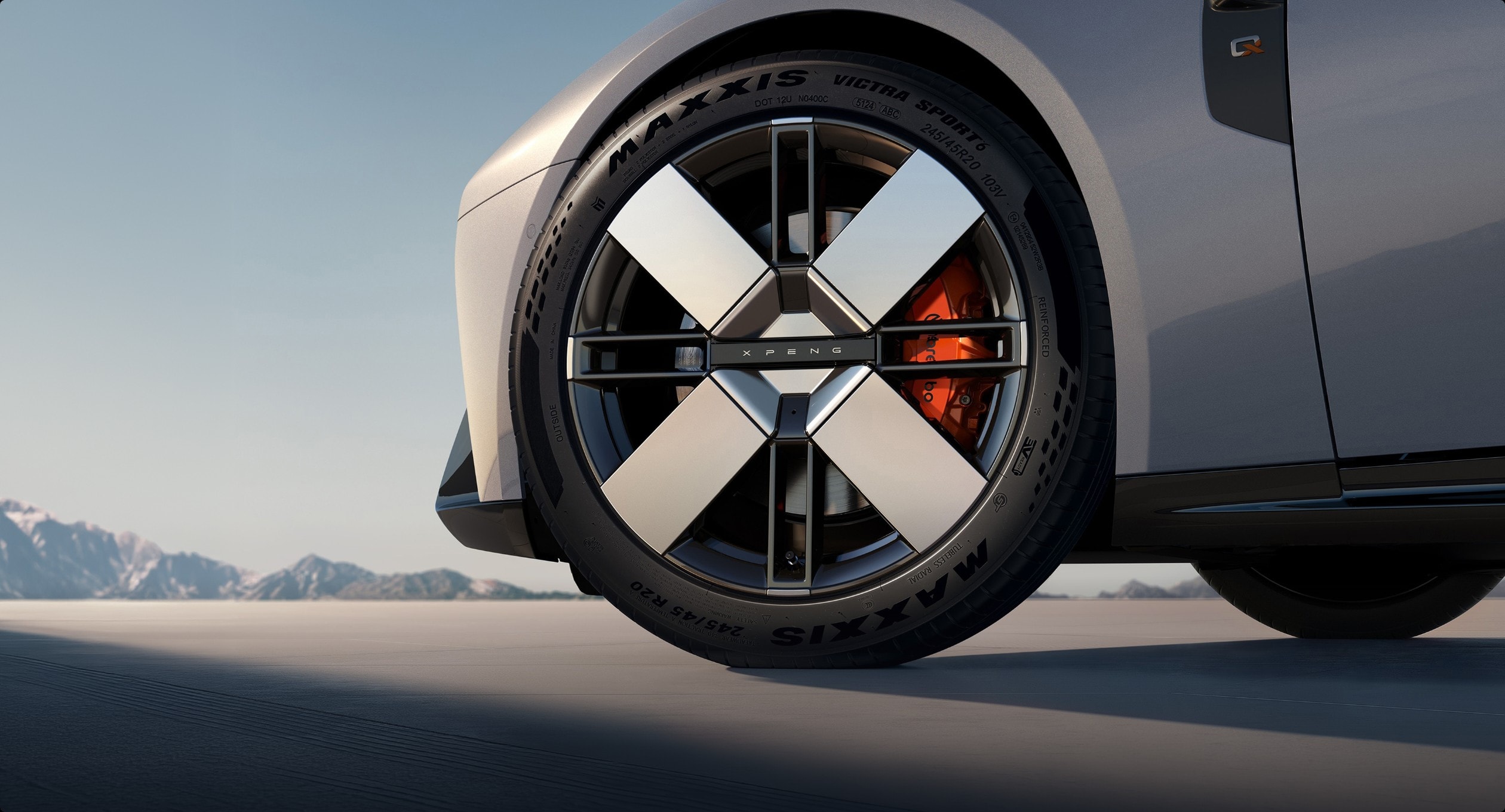
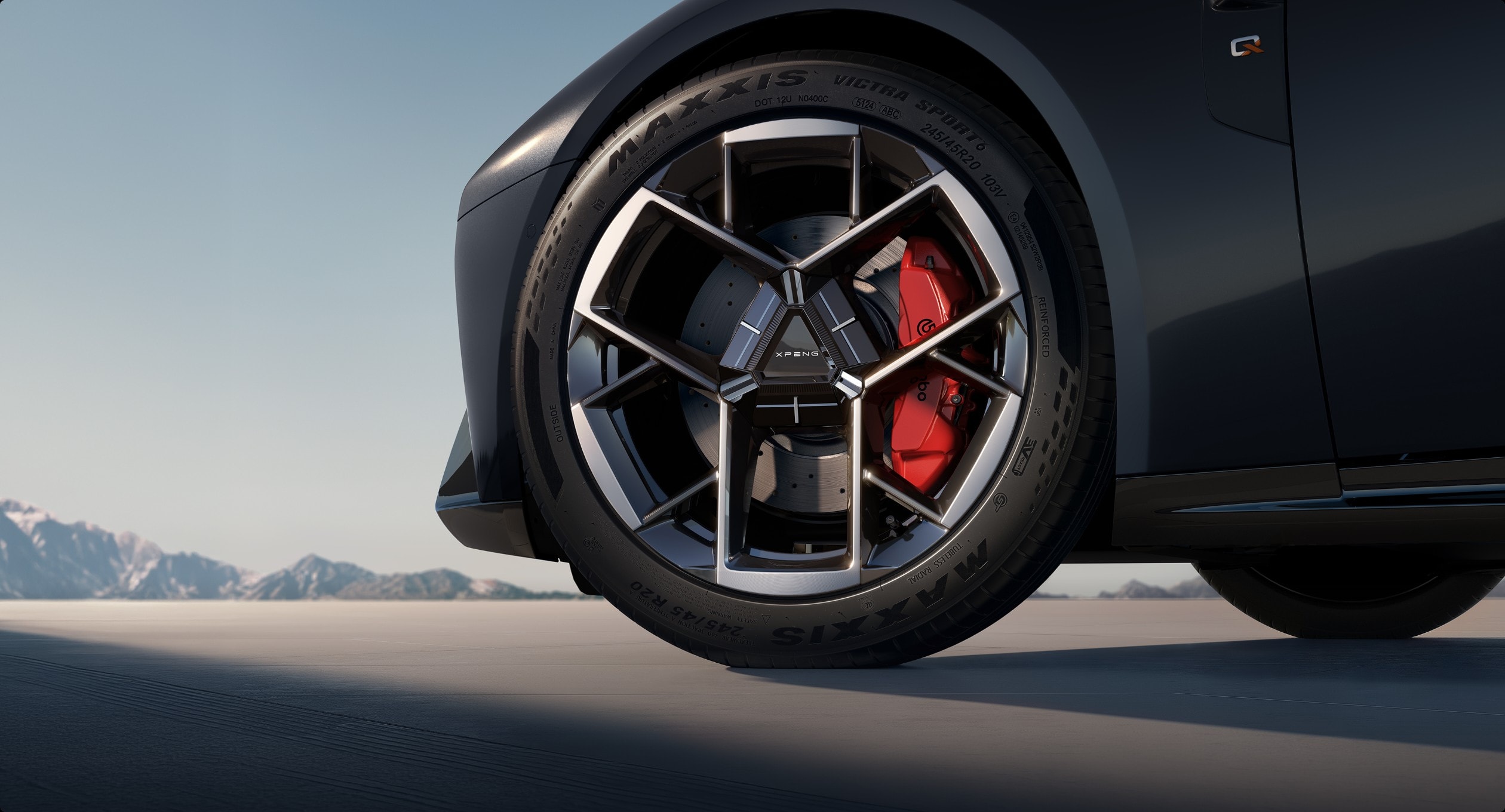
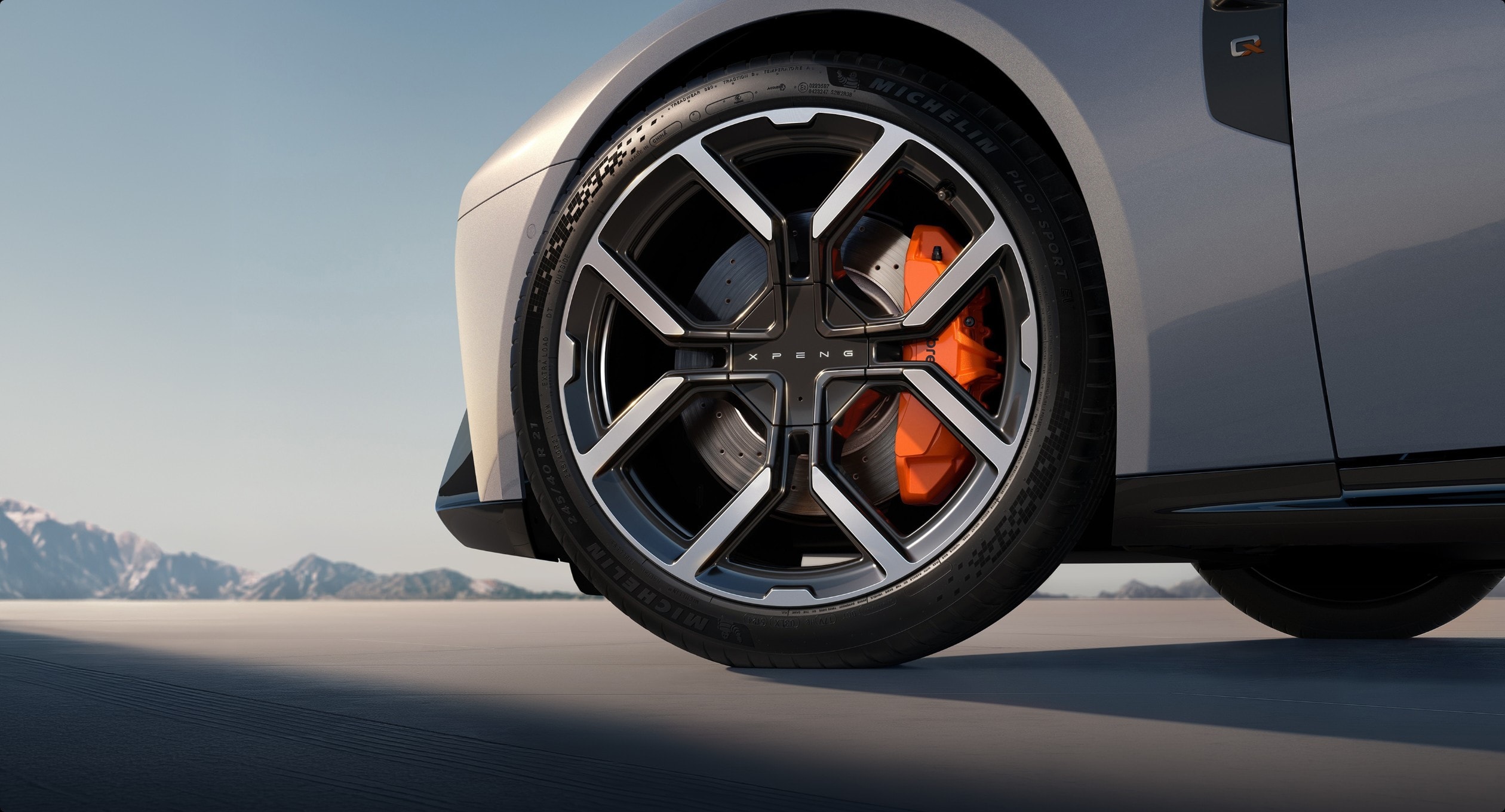
Wheels
- 20-inch low-drag (20英寸低风阻轮毂) - included
- 20-inch sport (20英寸运动轮毂) - +¥3,000 (~€400) · list ¥6,000
- 20-inch six-spoke sport (20英寸六辐运动轮毂) - on the model page
- 21-inch forged (21英寸锻造轮毂) - +¥8,000 (~€1,000) · list ¥16,000
- 21-inch matte grey forged (21英寸哑灰锻造轮毂) - on the model page
Interior colours
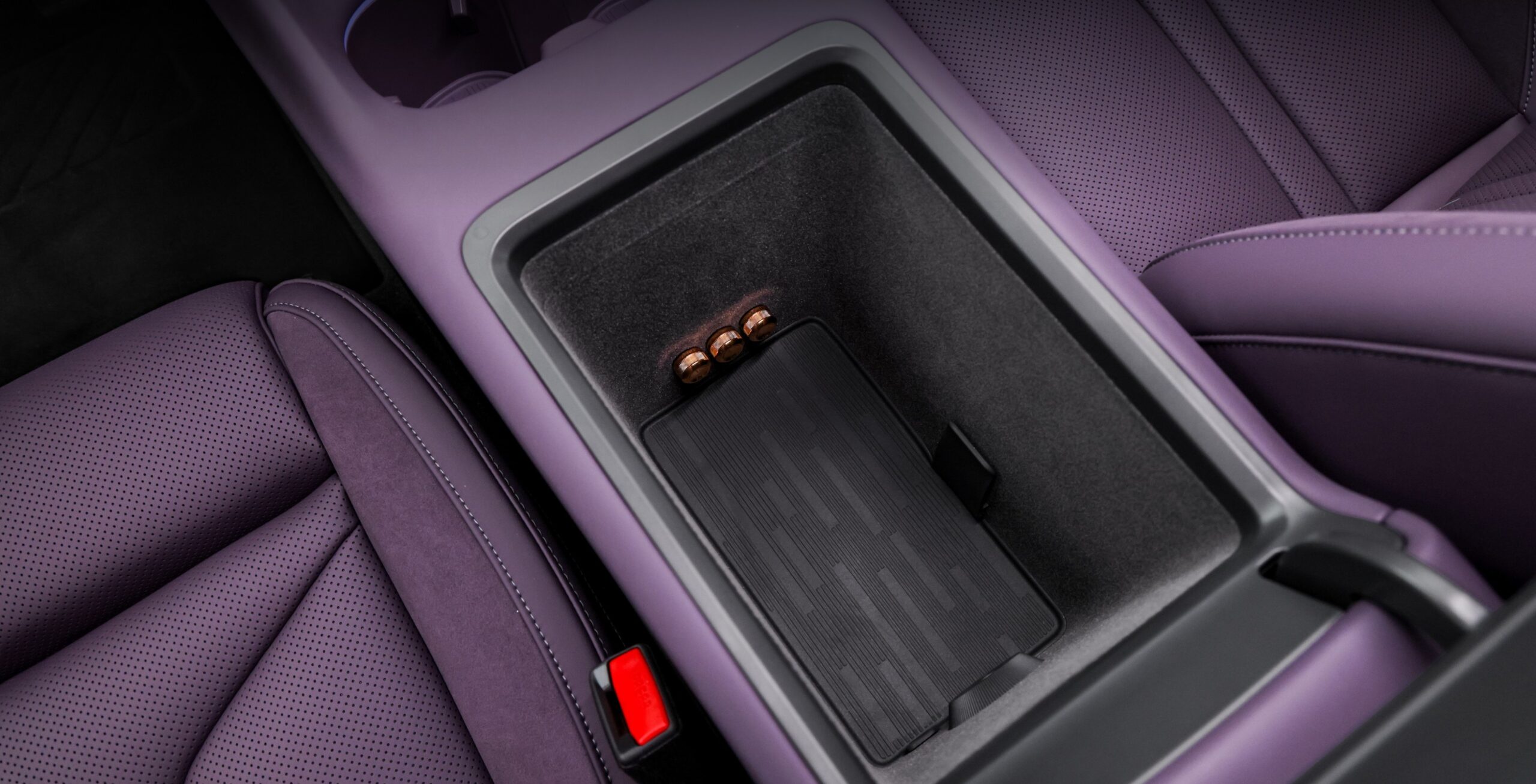
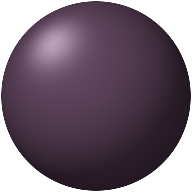 Planet Purple (星球紫)
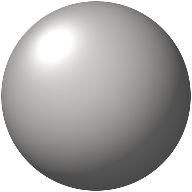 Poise Grey (气宇灰)
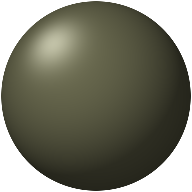 Deep Space Grey (深空灰)
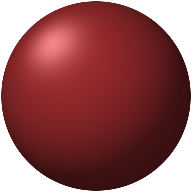 Gravity Red (引力红)
 Lava Grey (熔岩灰)
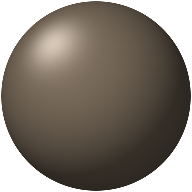 Amber Grey (橙耀灰)
Cabin 360°
Drag to look around.
Drag to look around
First reveal, May 2025
Rafik Ferrag, the designer of the original P7, posted a clip of the E29 coupé to Instagram on 13 May 2025. XPENG confirmed two days later that it would become the next P7 generation.
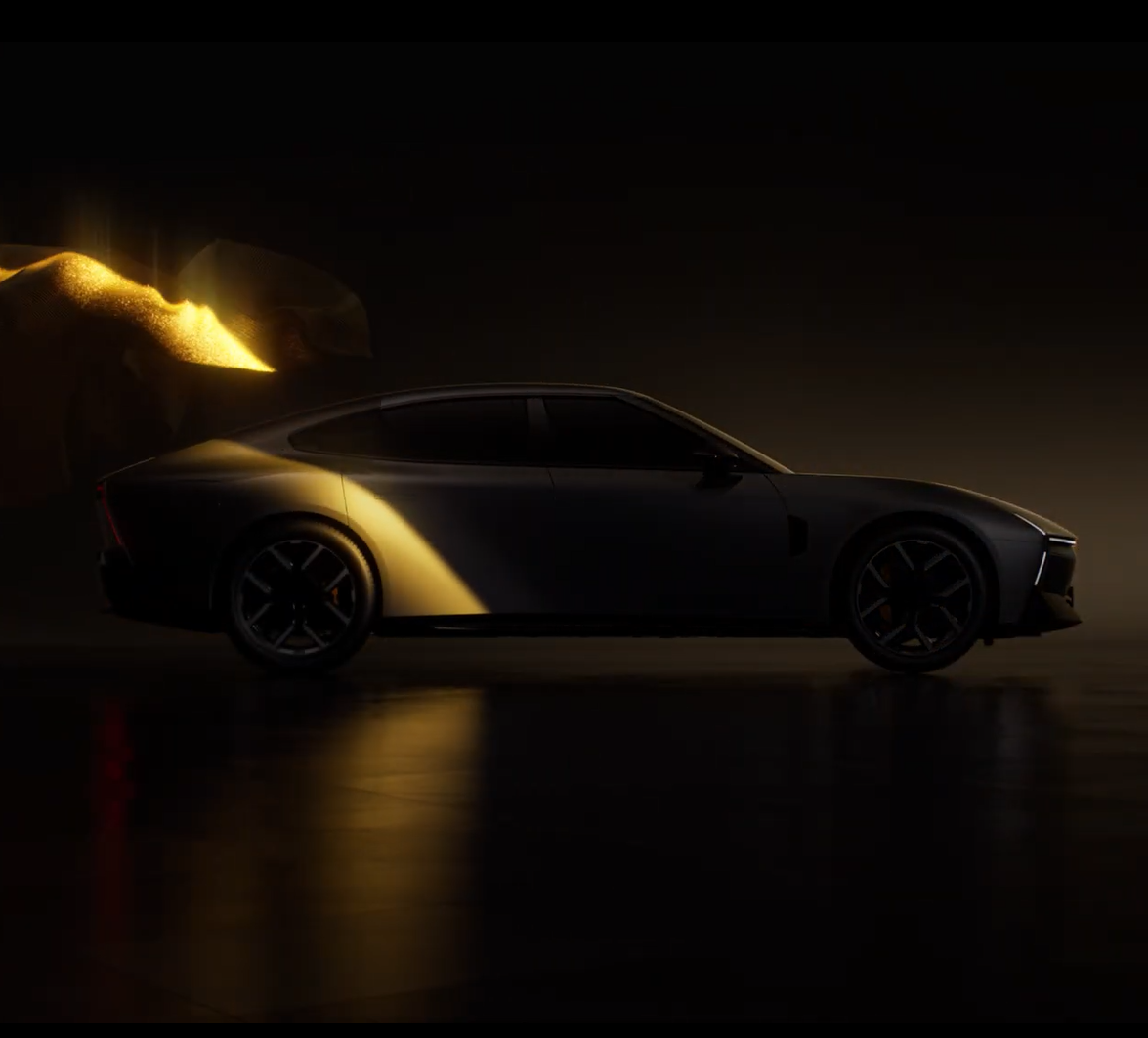
Teaser video - Rafik Ferrag / XPENG, May 2025
Original design teaser on Instagram: Rafik Ferrag - P7 teaser reel
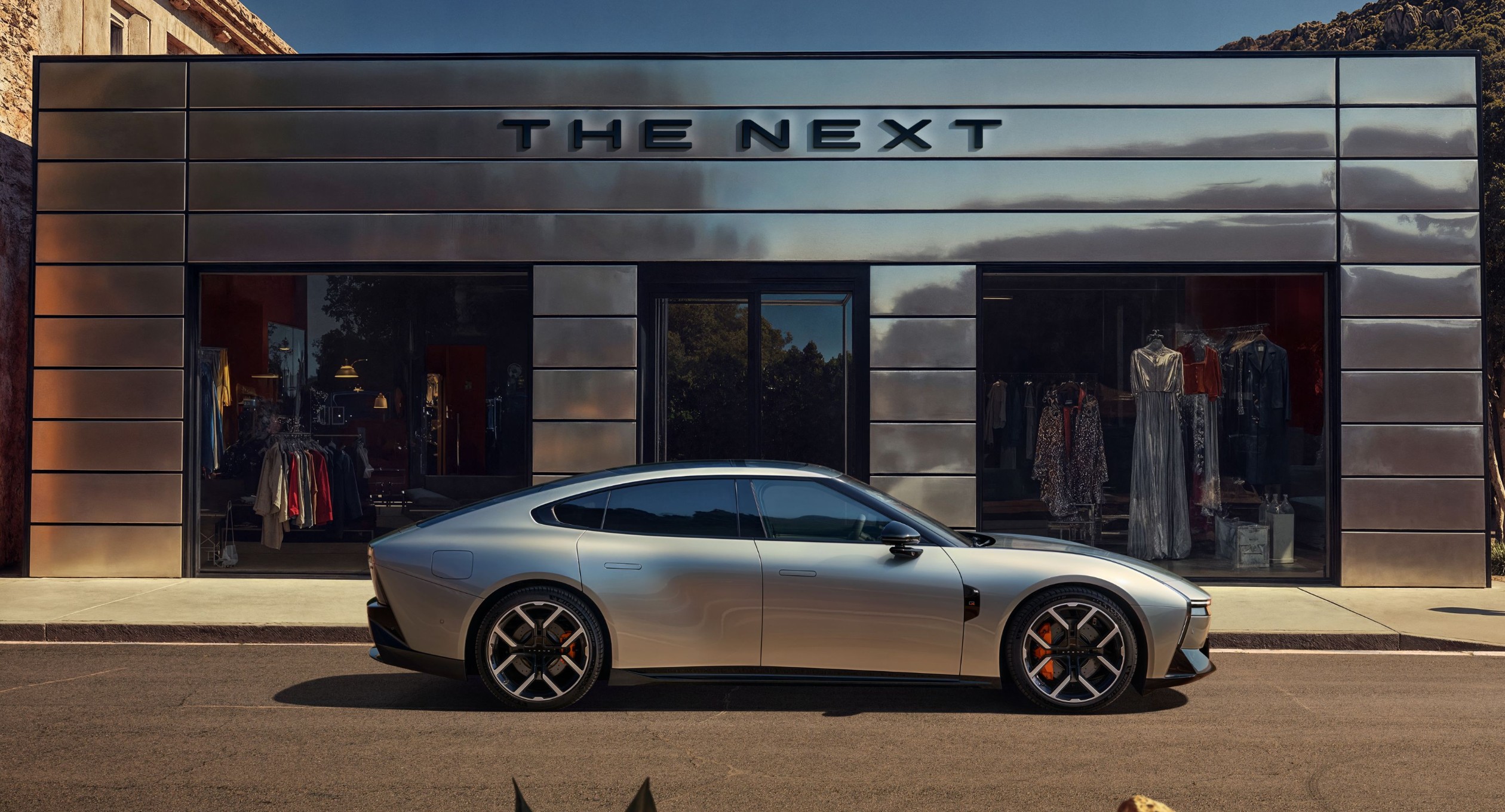
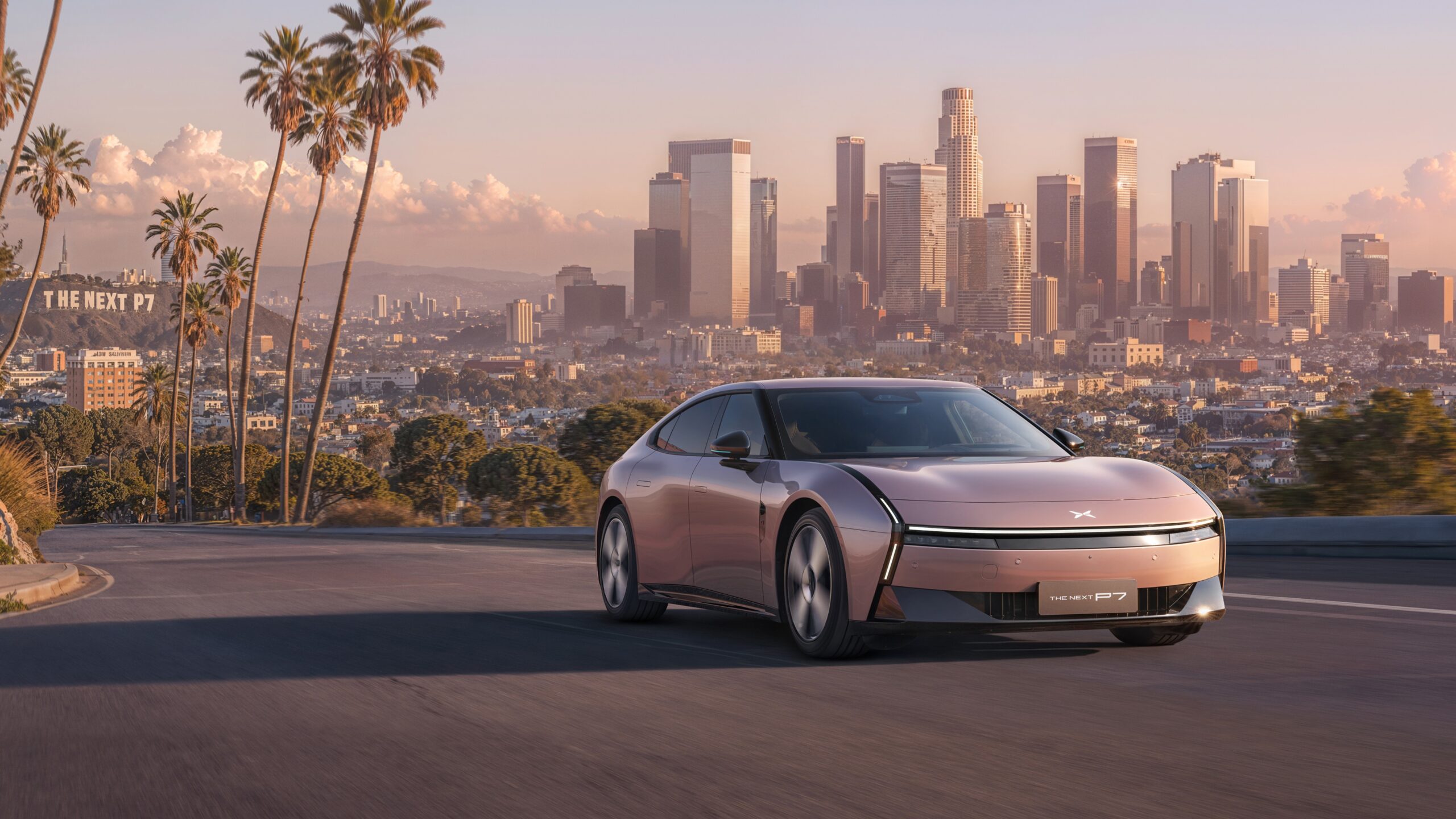
XPENG ran that campaign under the name THE NEXT P7, set under the car in the launch still below, and that is the name most coverage used at the time. The company’s own English material now calls the car New P7, in line with the New X9.
The finished car took an iF Design Award in 2026, under Product Design / Automotive. XPENG entered it in-house, and Ferrag is among the eight designers credited. The entry traces the shape to Bauhaus architecture and to Mondrian’s compositions, with the hidden door handles and the closed front keeping the profile unbroken.
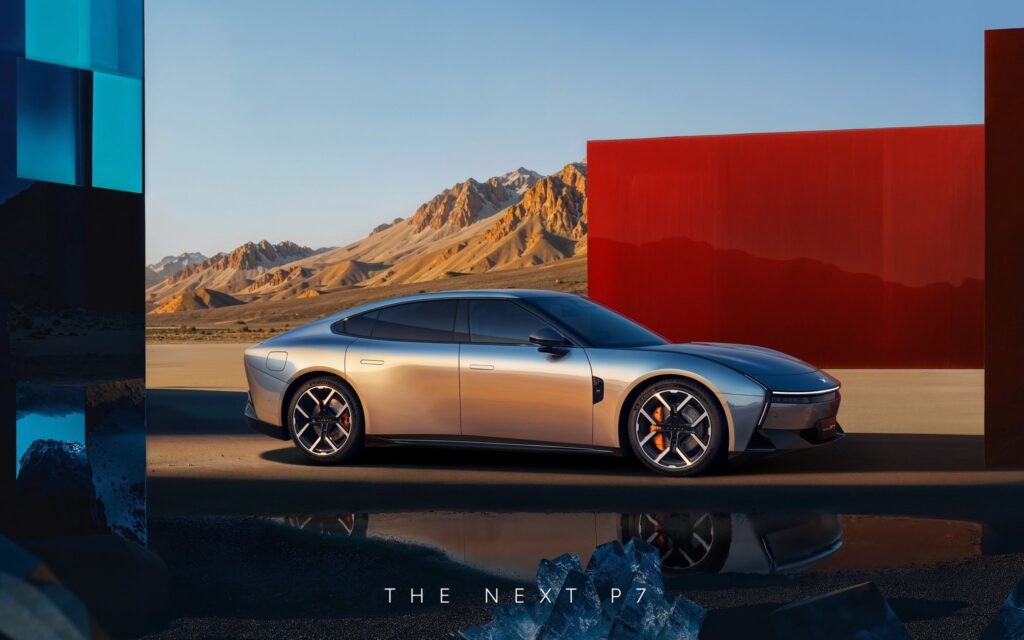
The launch campaign put the car between flat blocks of colour - the same composition the award entry points at.
Gallery
Exterior
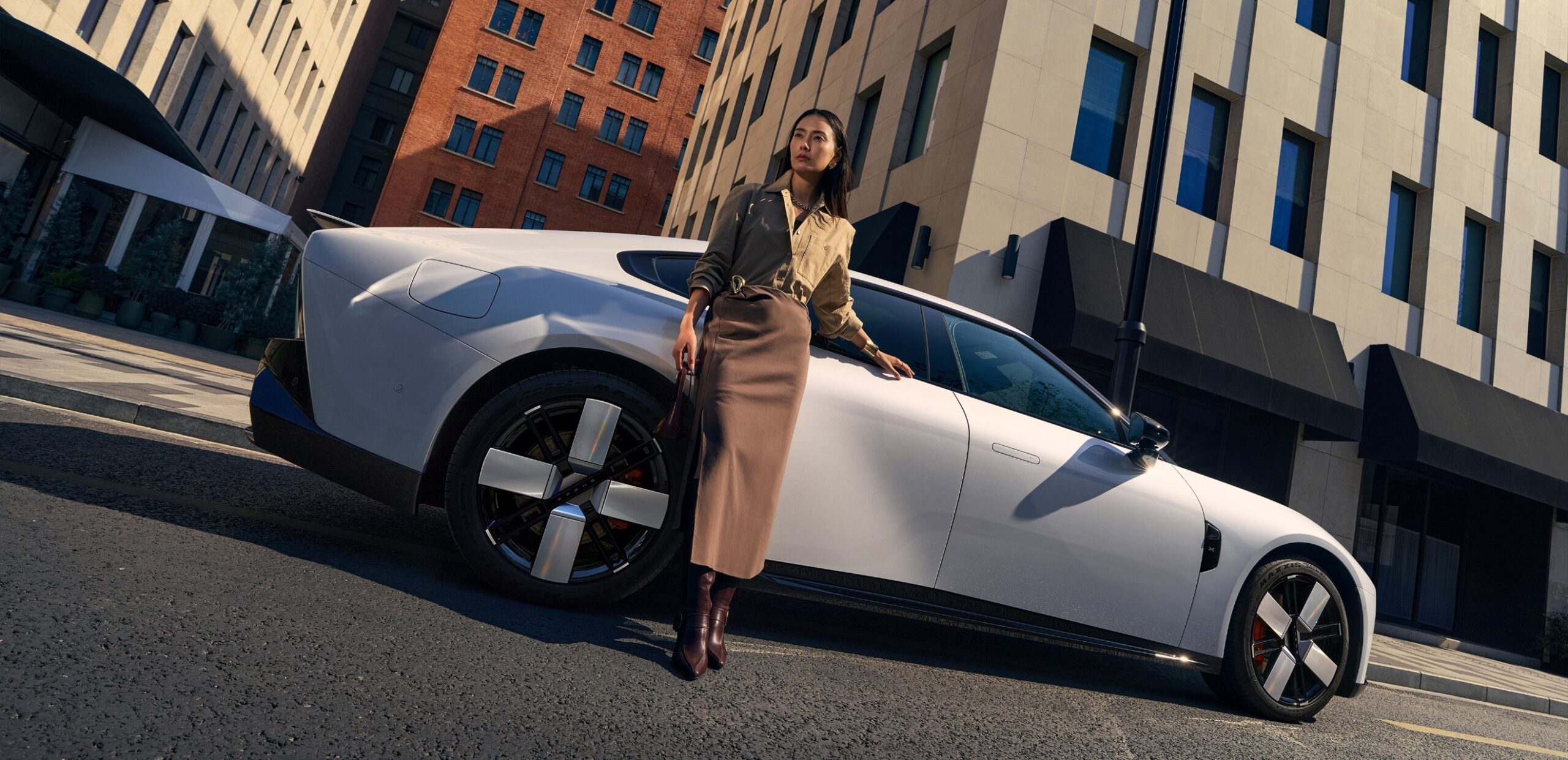
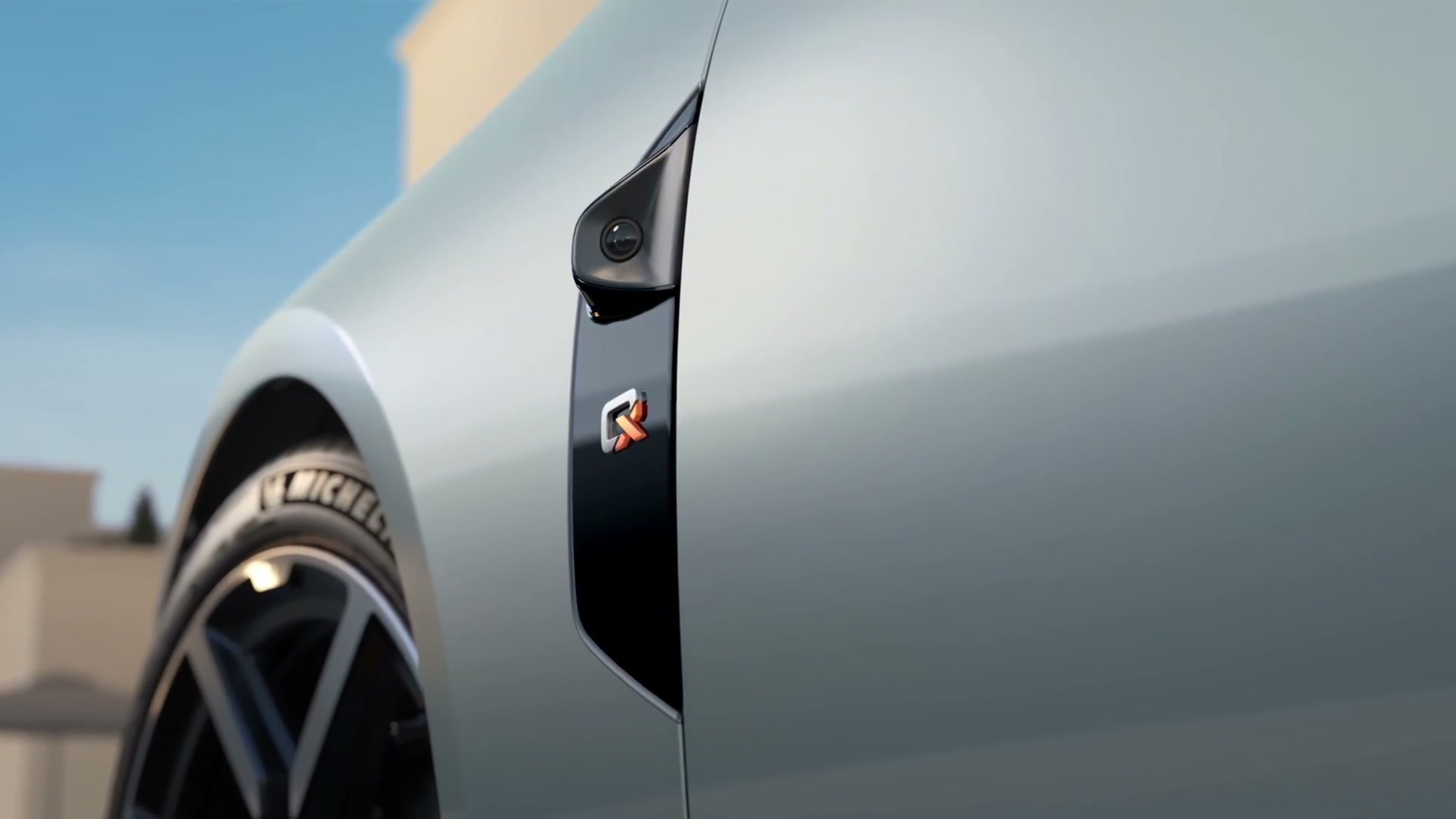
Frameless doors, frameless mirrors and the all-wheel-drive badge (生动力曲面; XPENG).
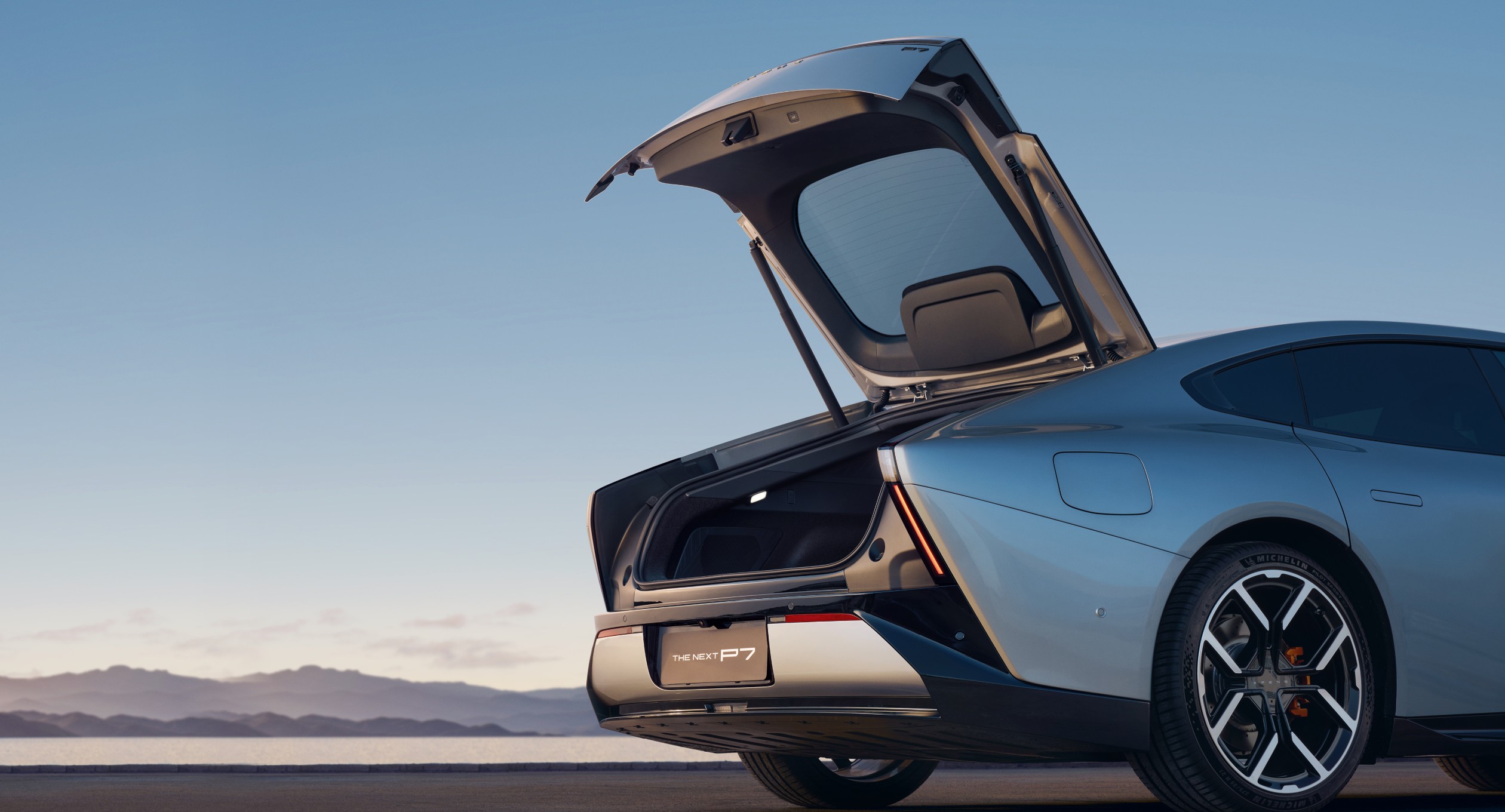
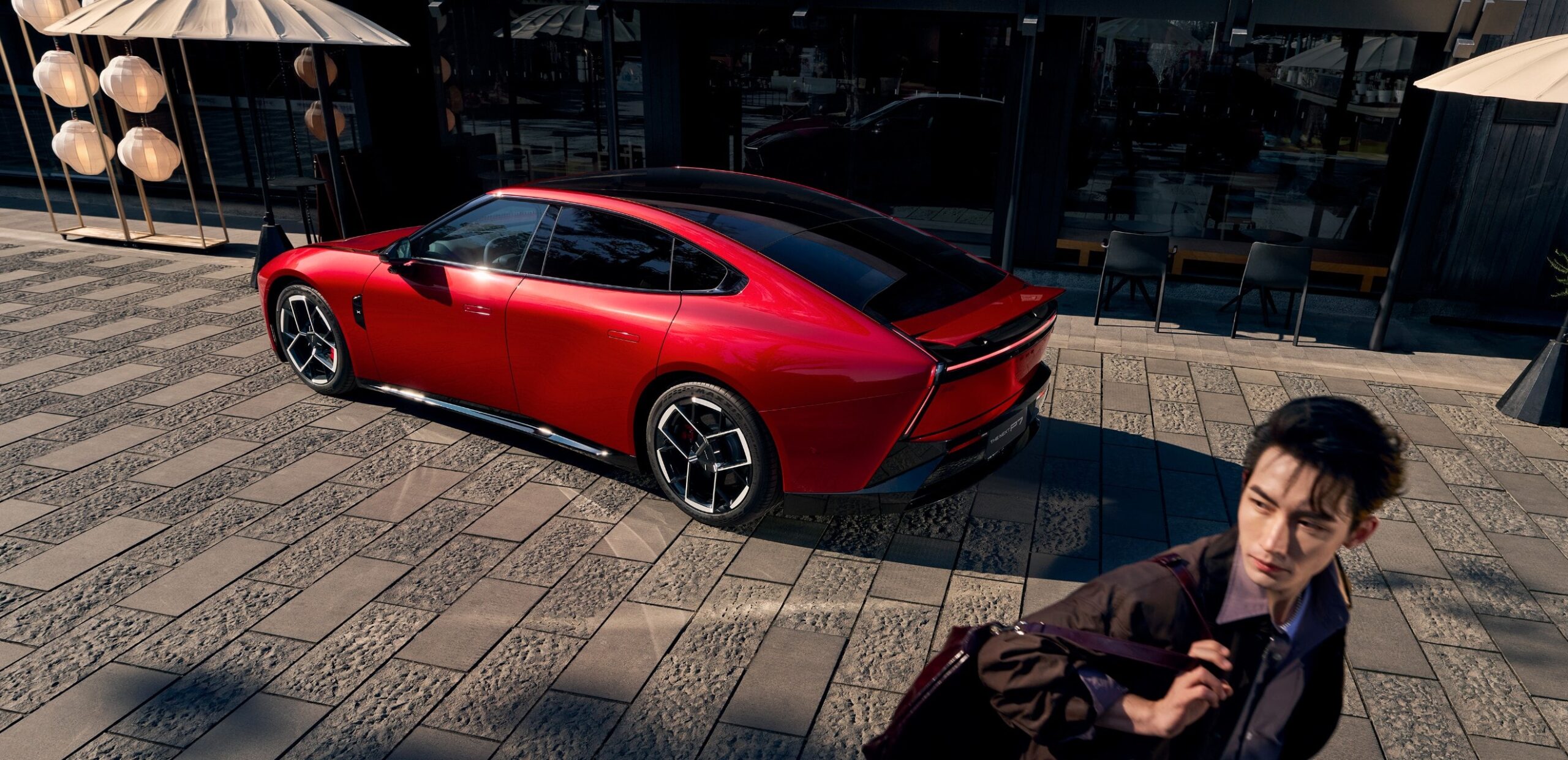
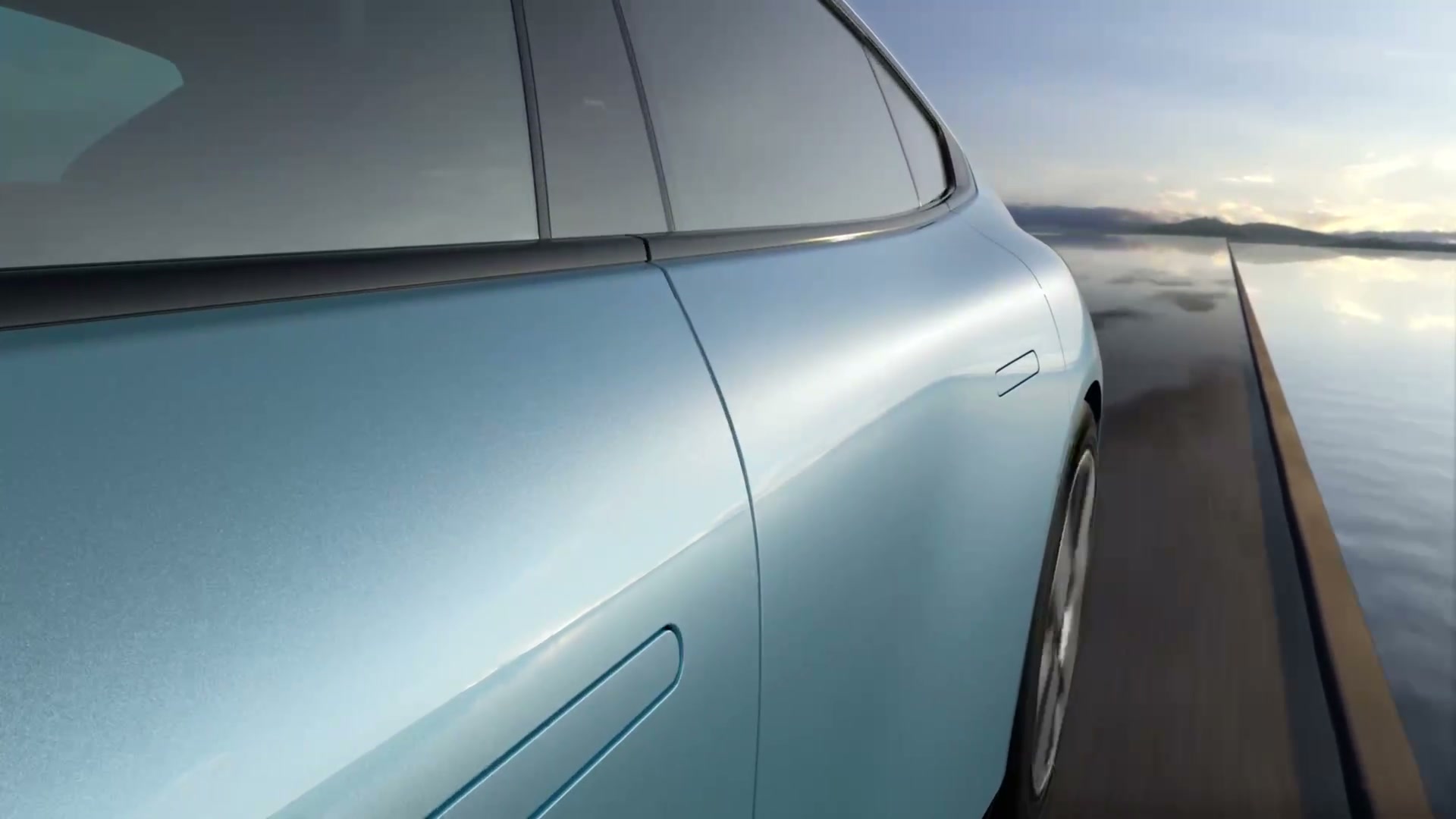
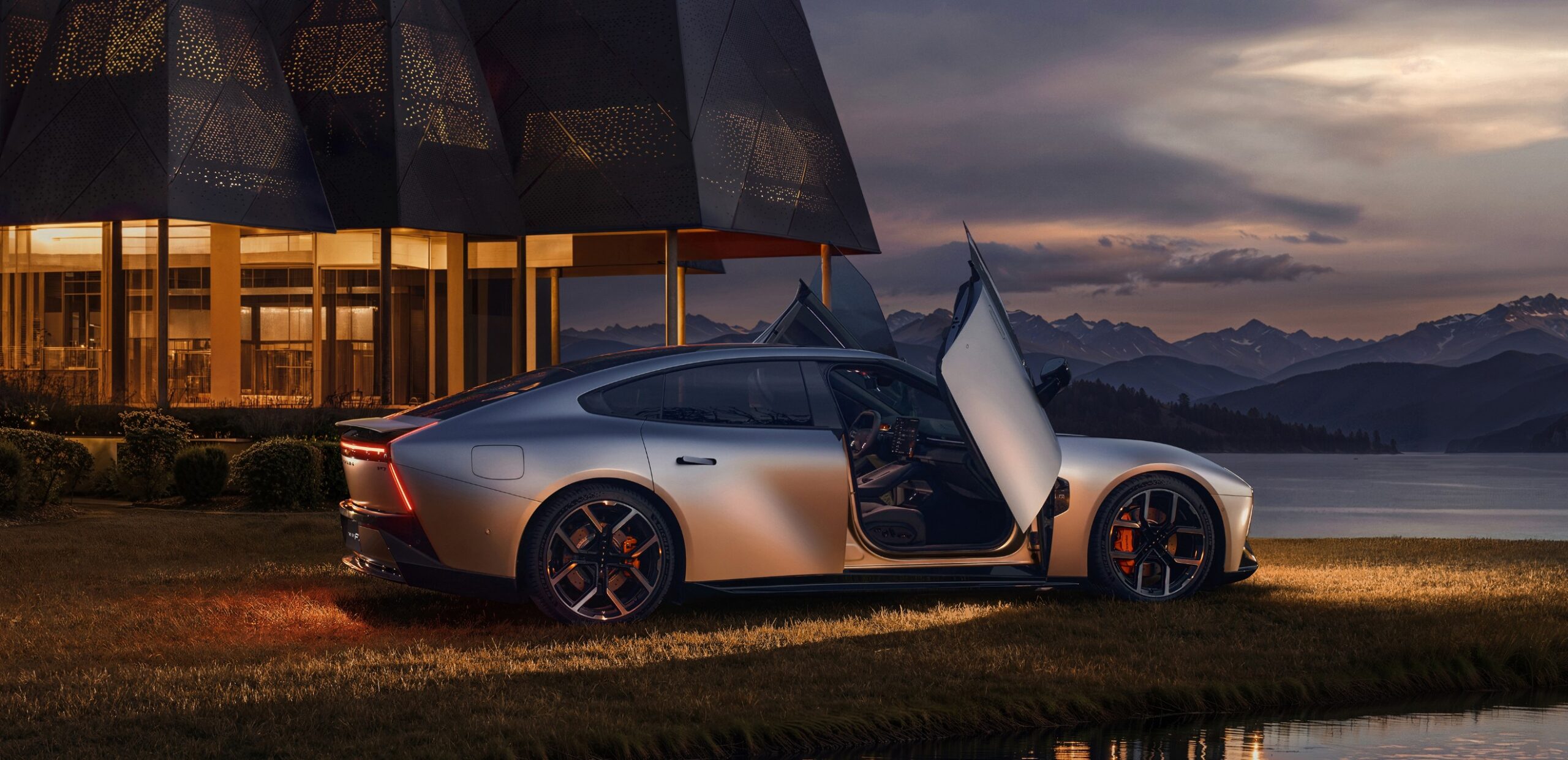
Liftback tail with the light-wing tail lights and ADS light (掀背轿跑车尾; XPENG).
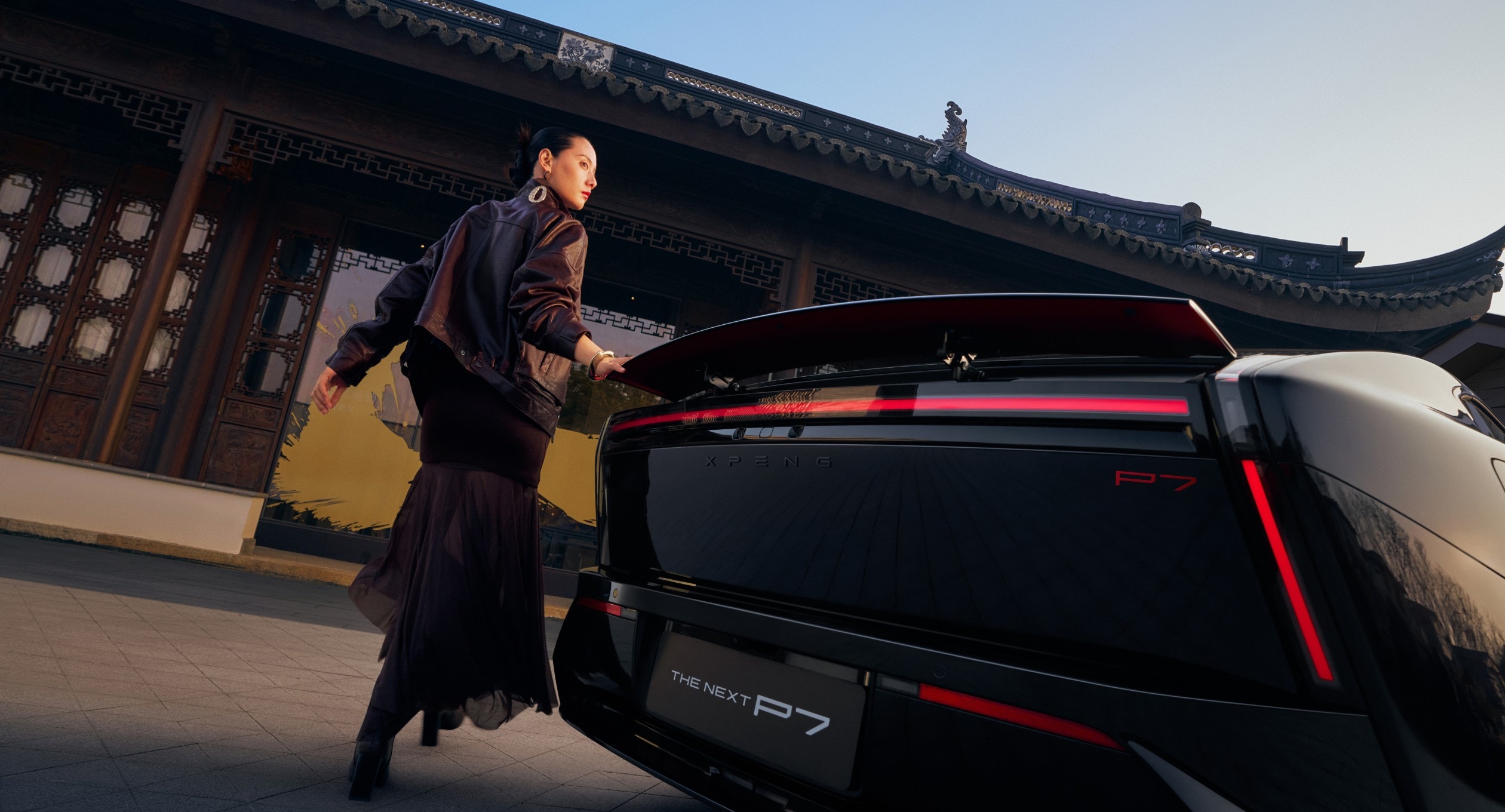
Active electric rear wing - height switches with speed, ten manual levels, up to 900 N of downforce (主动式升降电动尾翼; XPENG).
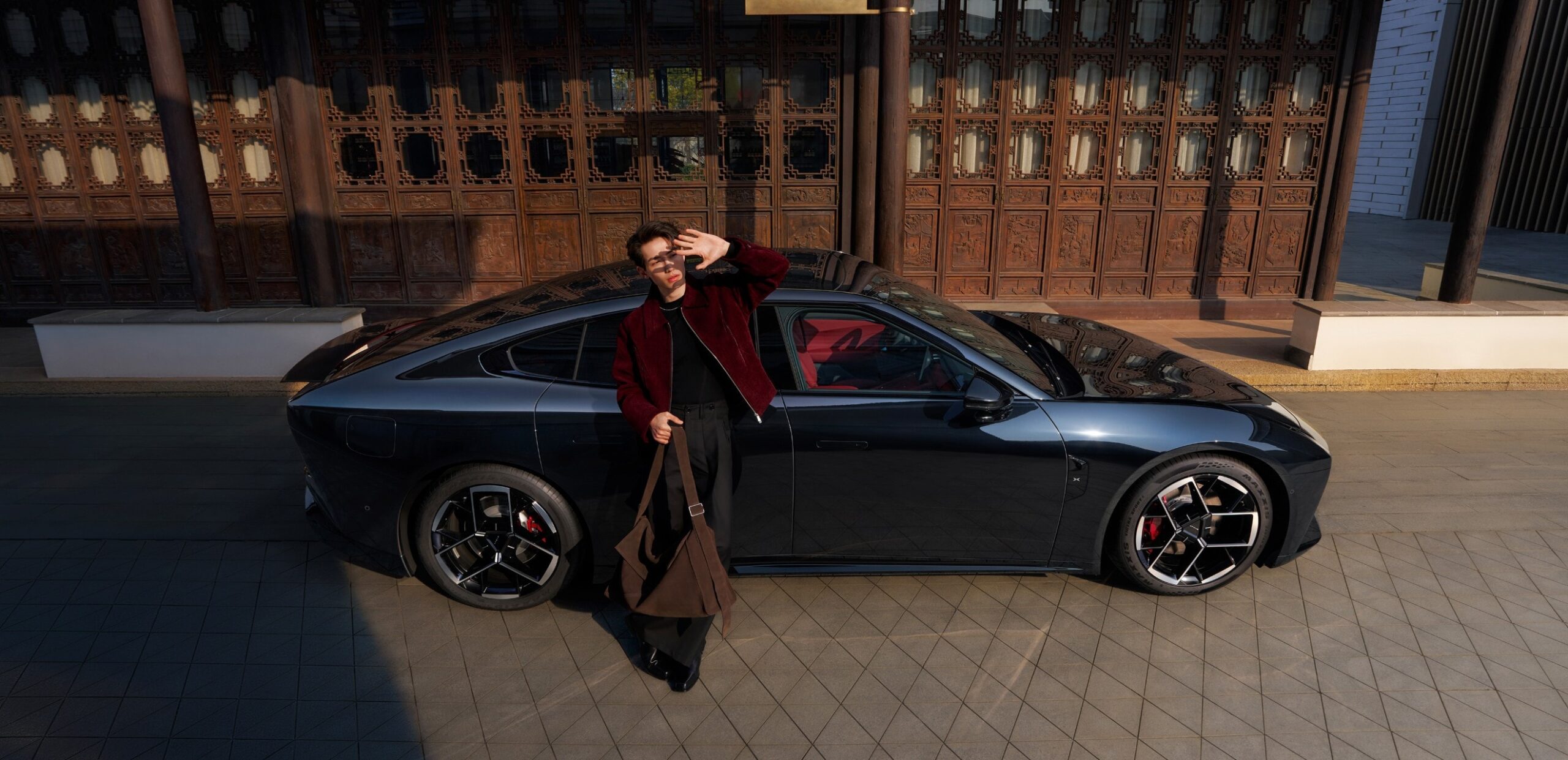
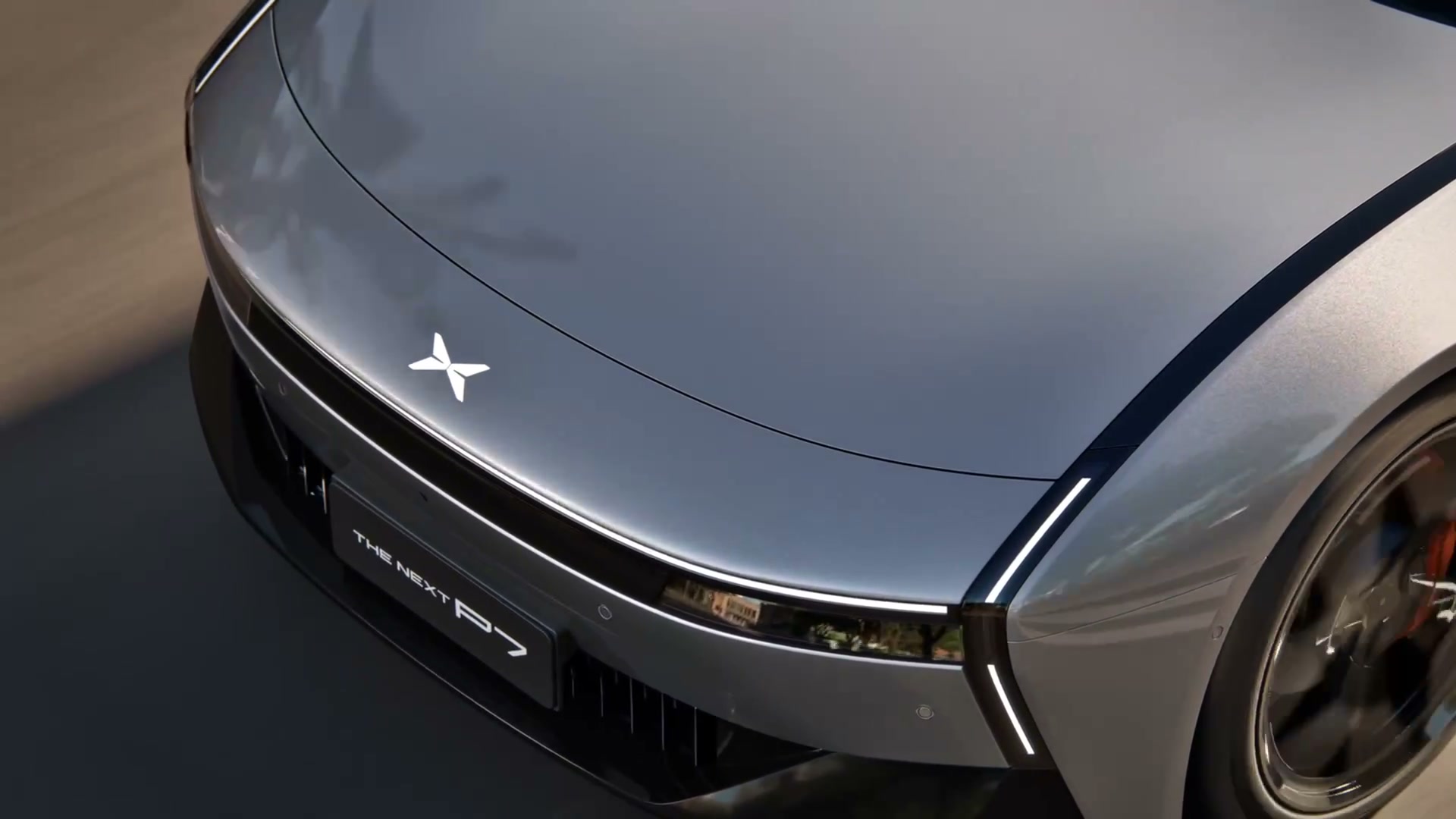
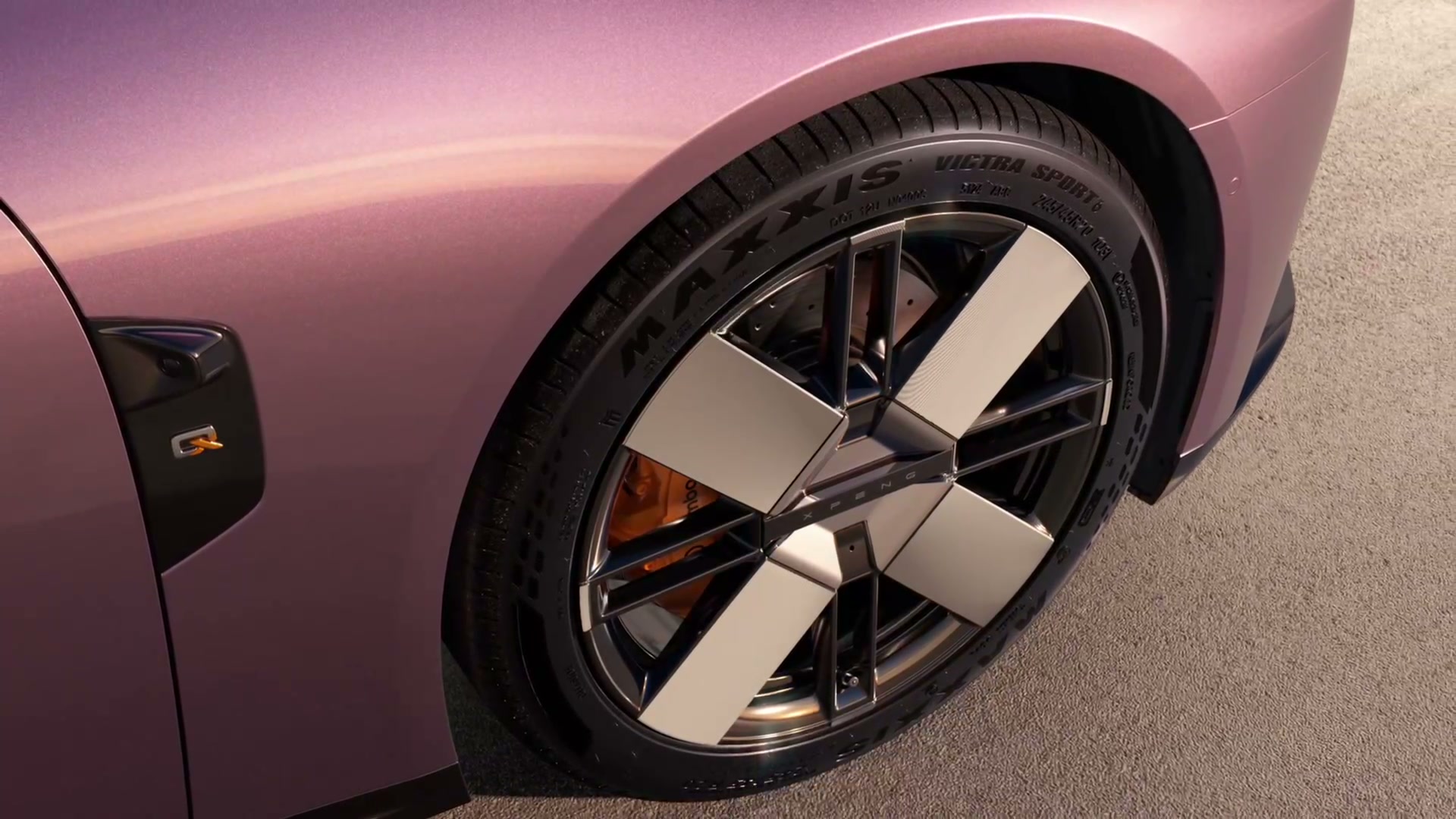
Floating number plate over the hidden active air intake (悬浮式牌照架 + 隐藏式主动进气格栅; XPENG).
Cabin
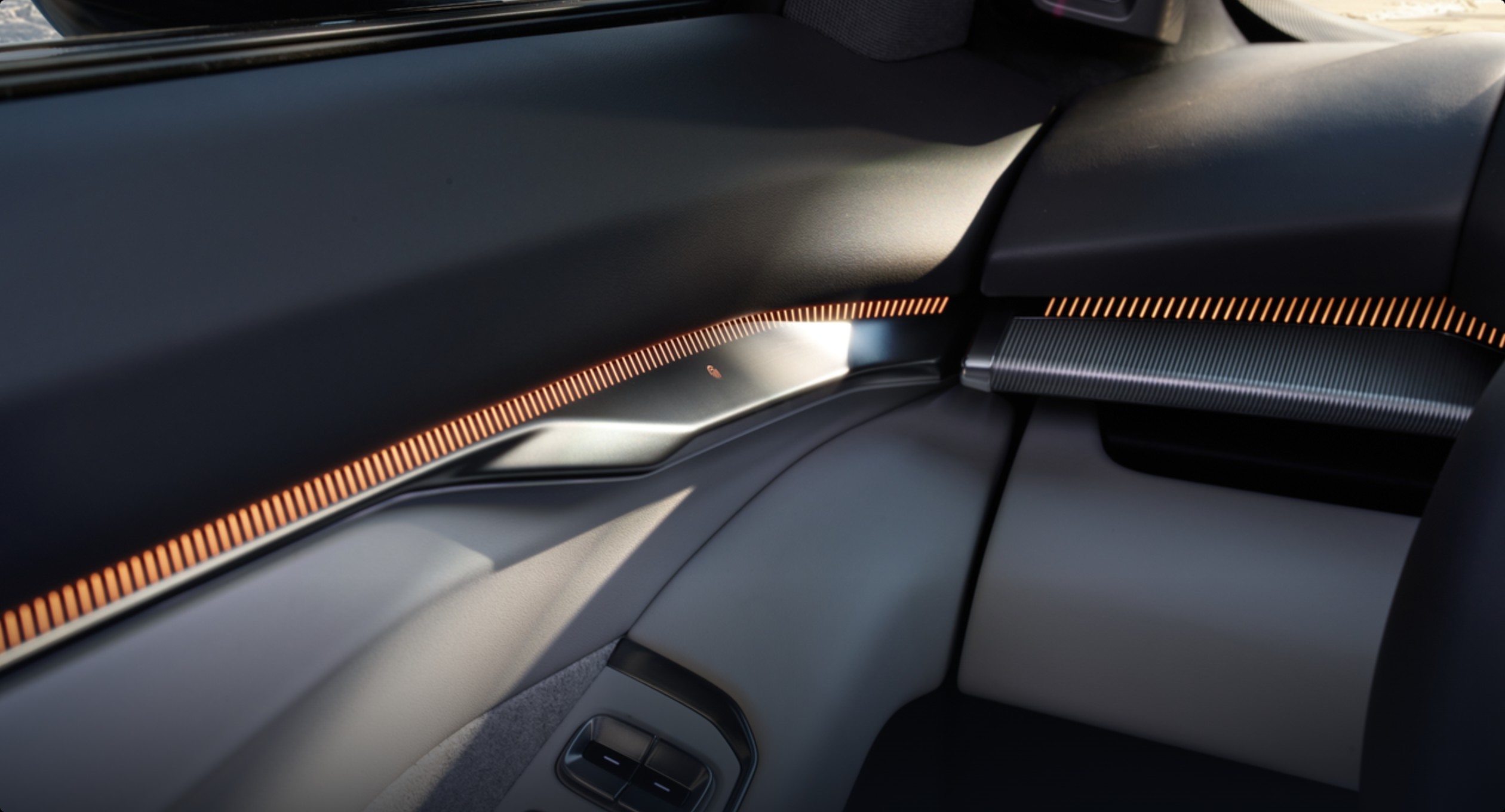
Touch Pad in each door panel, for custom vehicle controls (Touch Pad智慧触控; XPENG).
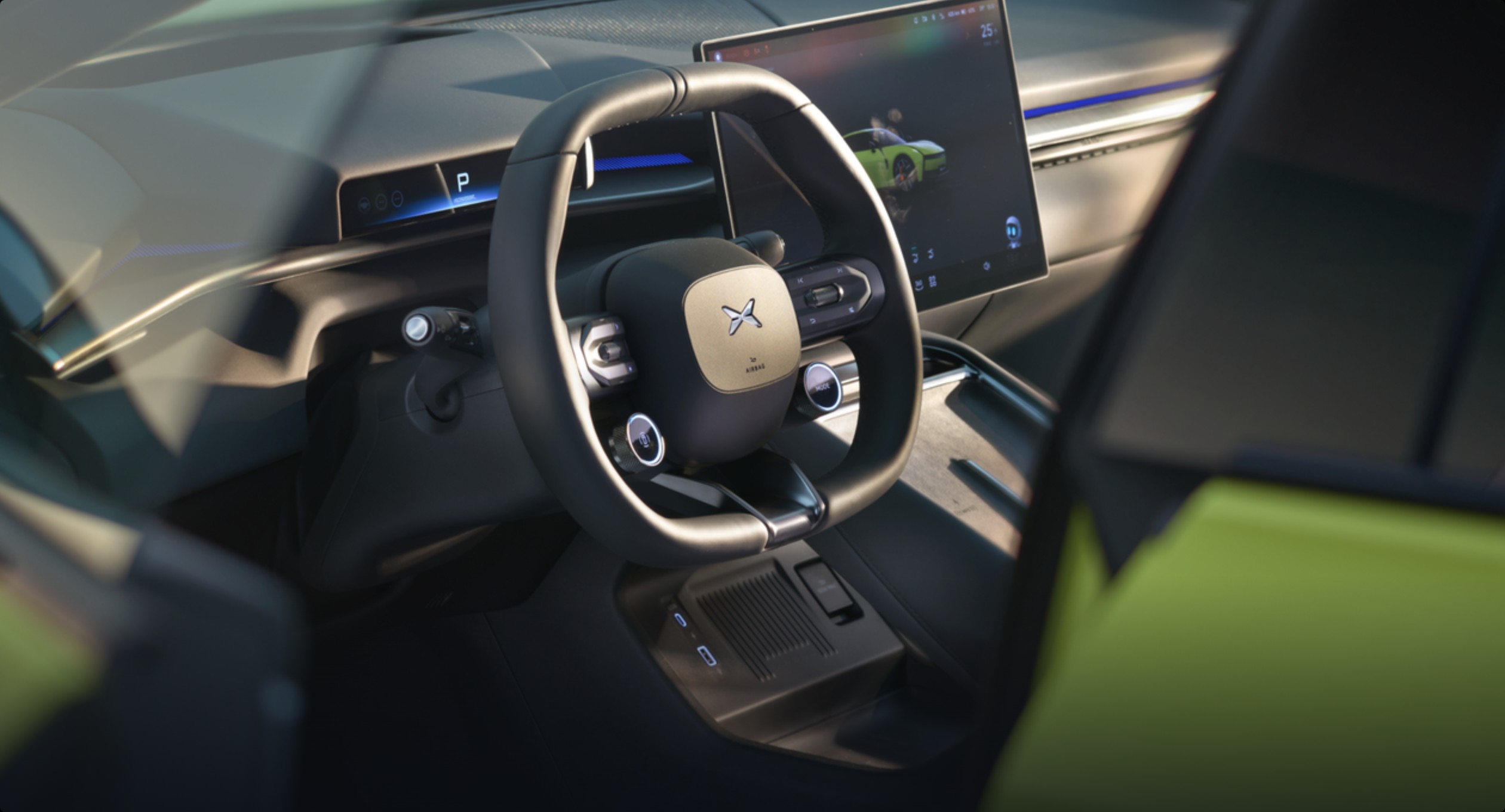
Three-spoke sport steering wheel - Nappa, electric adjustment, a satellite knob each side (三幅运动方向盘; XPENG).
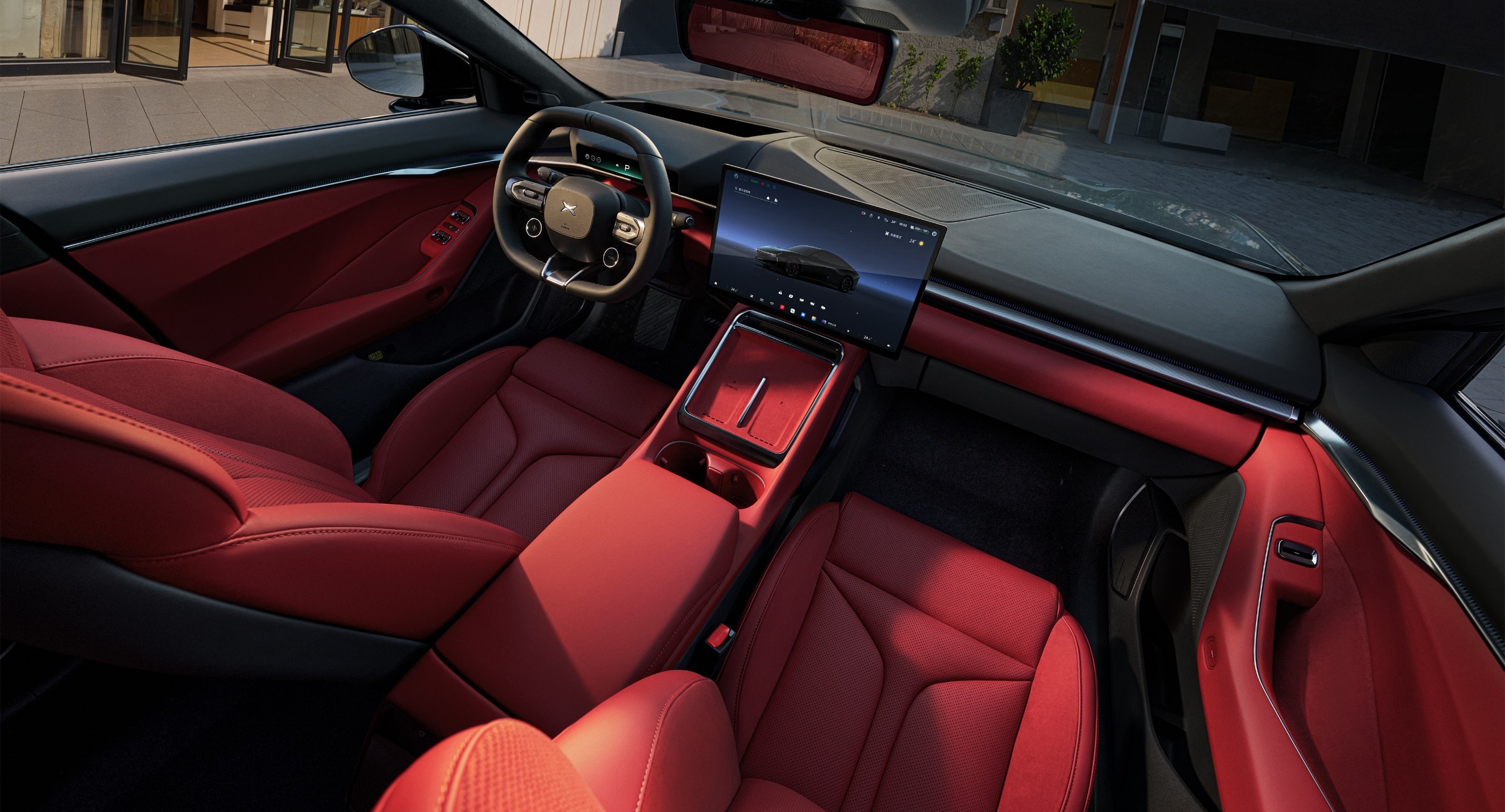
Integrated sport seats, with thigh support on the driver’s side (一体式运动座椅; XPENG).
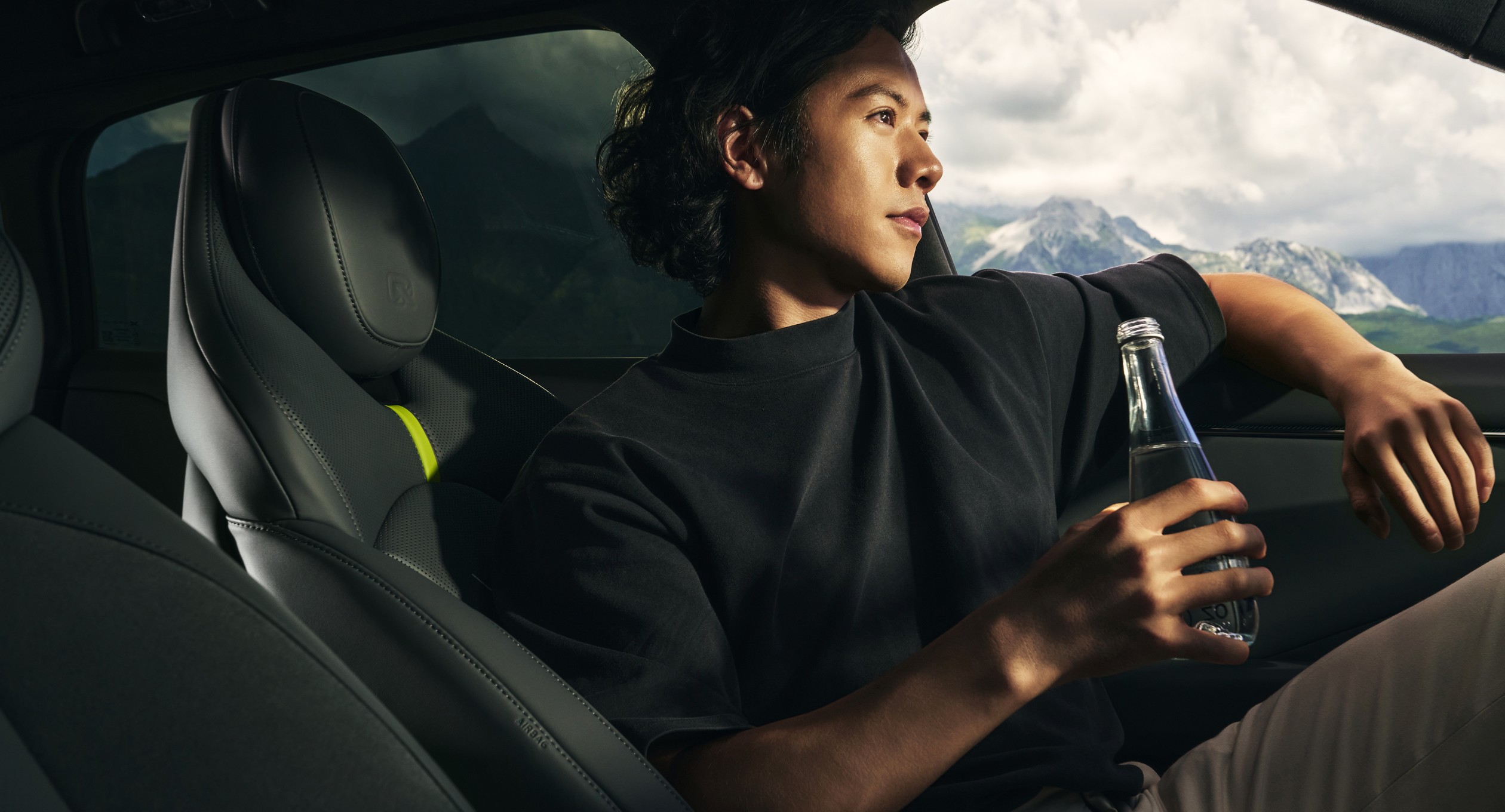
Nappa leather and Dinamica (Nappa真皮、Dinamica; XPENG).
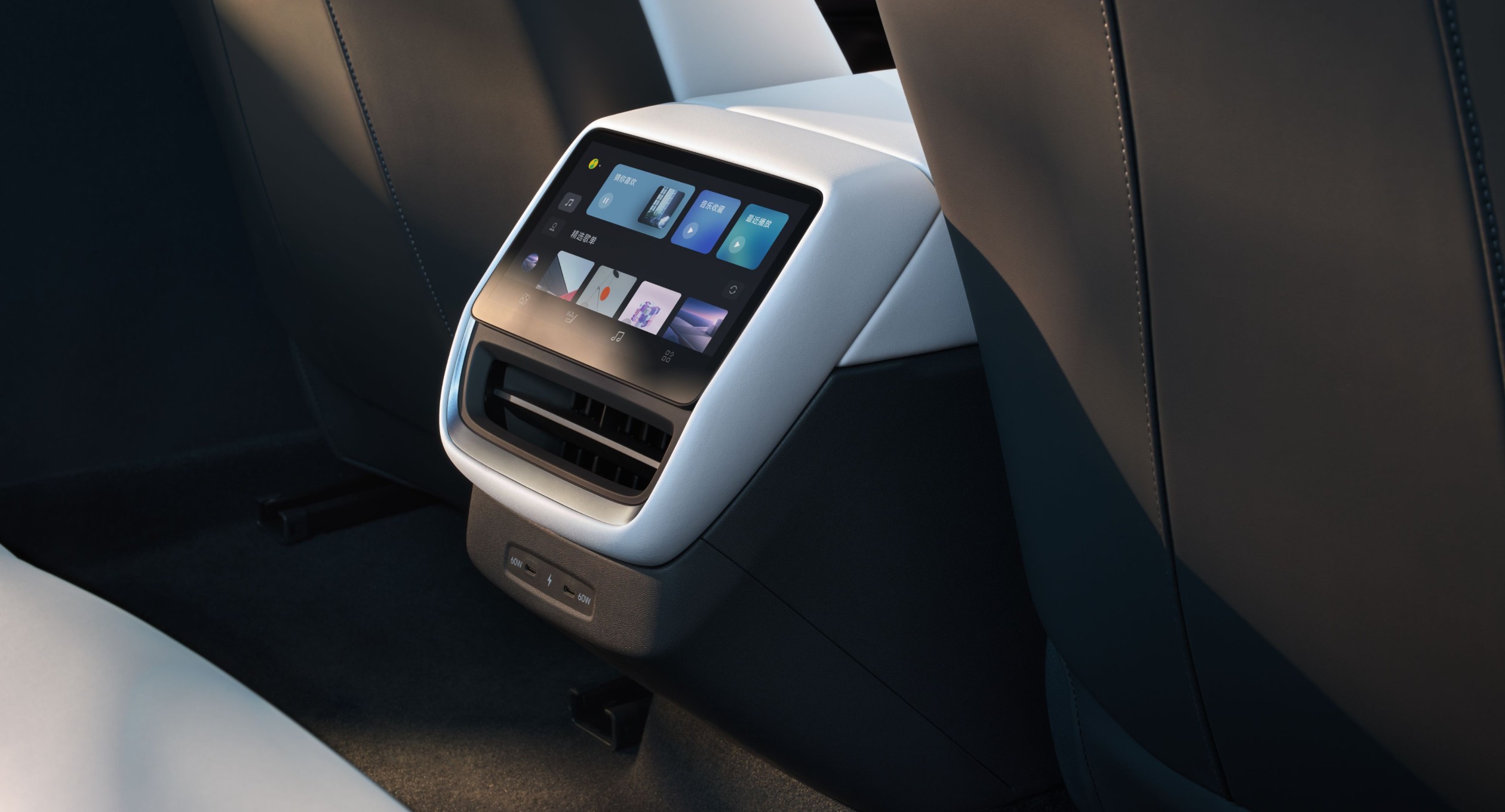
Eight-inch rear screen, with climate and media control (8英寸后排娱乐屏; XPENG).
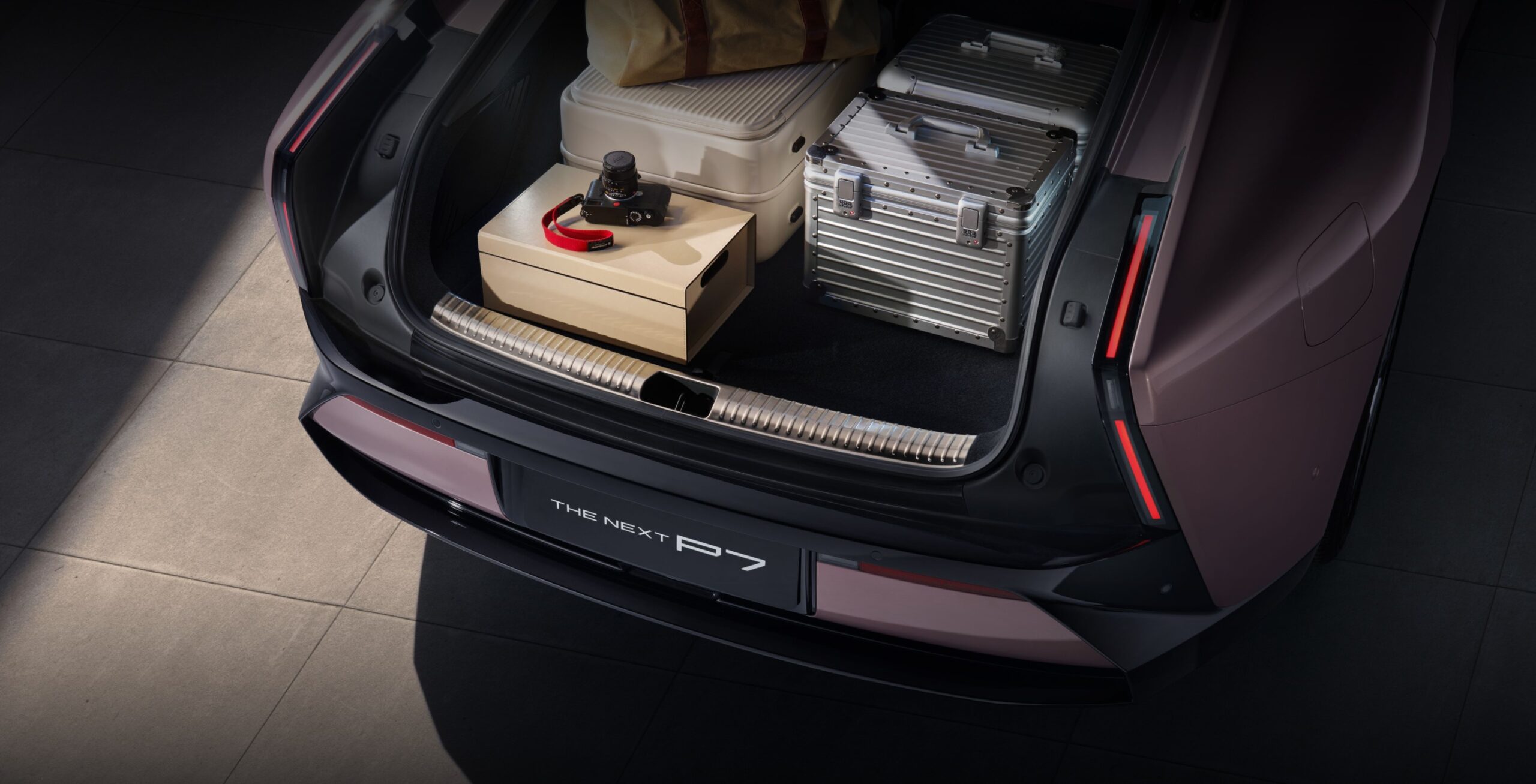
575 litres behind the rear seats, 1929 with them folded (超大后备厢; XPENG).
Interior colours
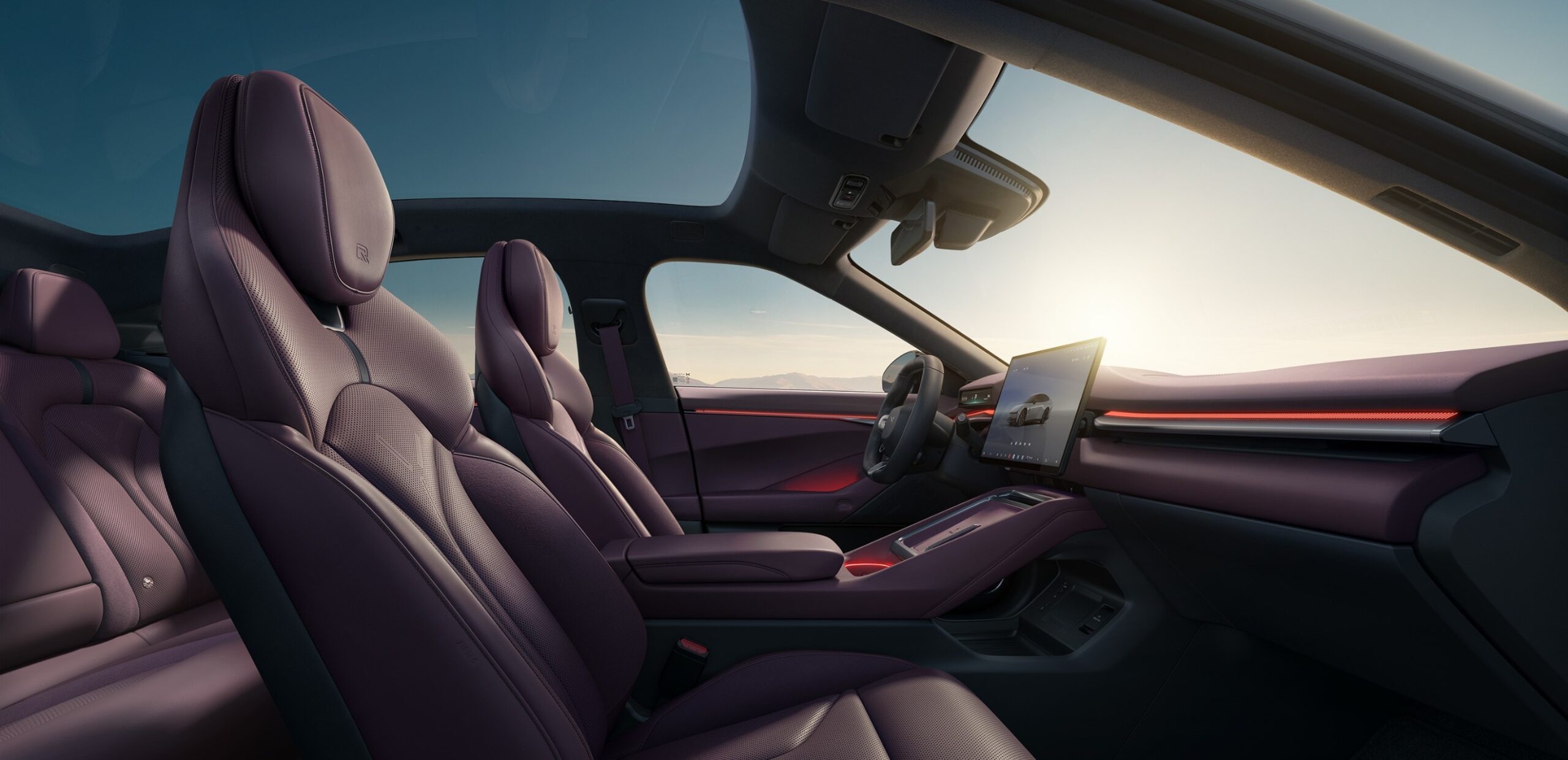
Planet Purple (星球紫)
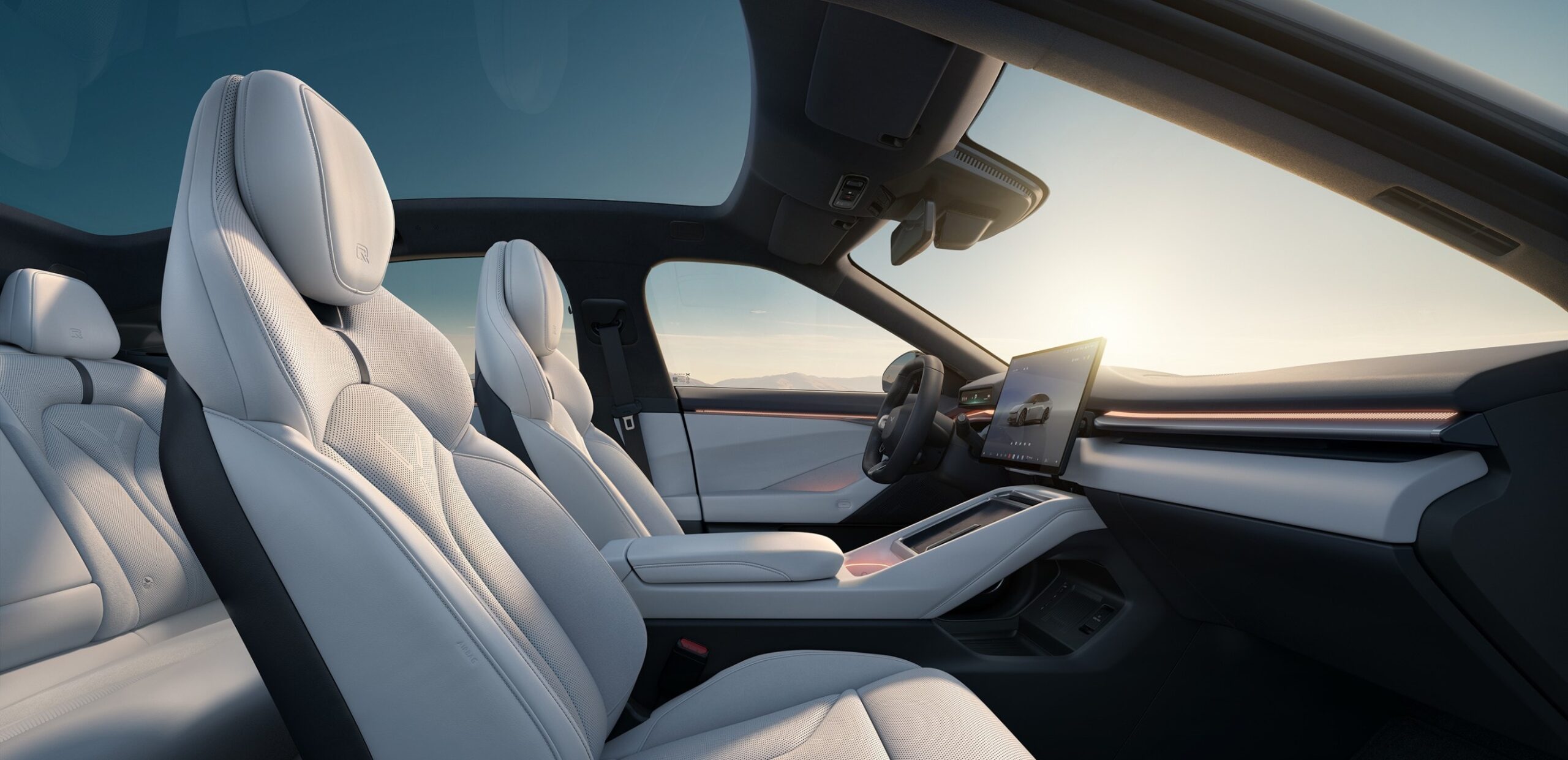
Poise Grey (气宇灰)
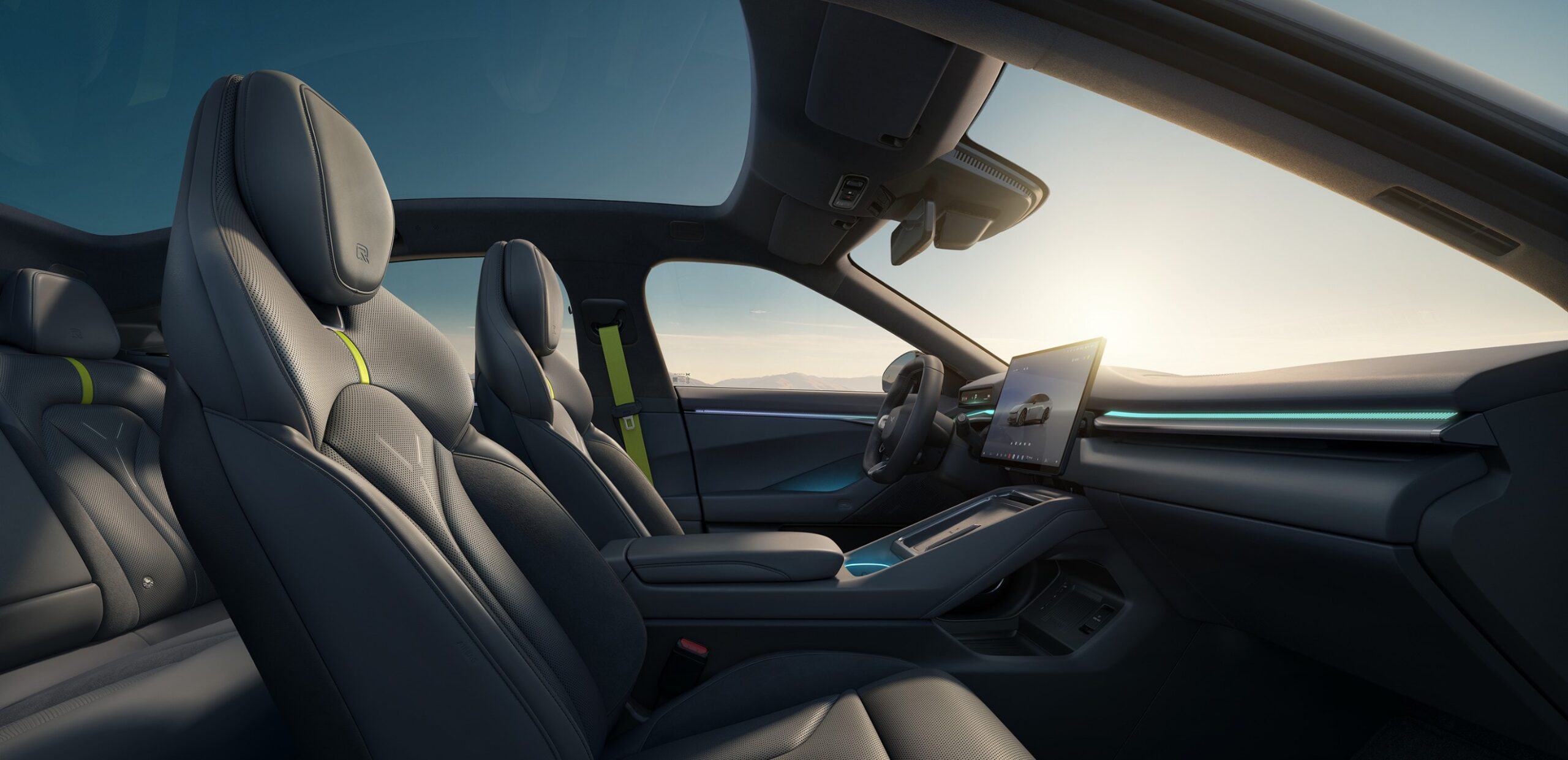
Deep Space Grey (深空灰)
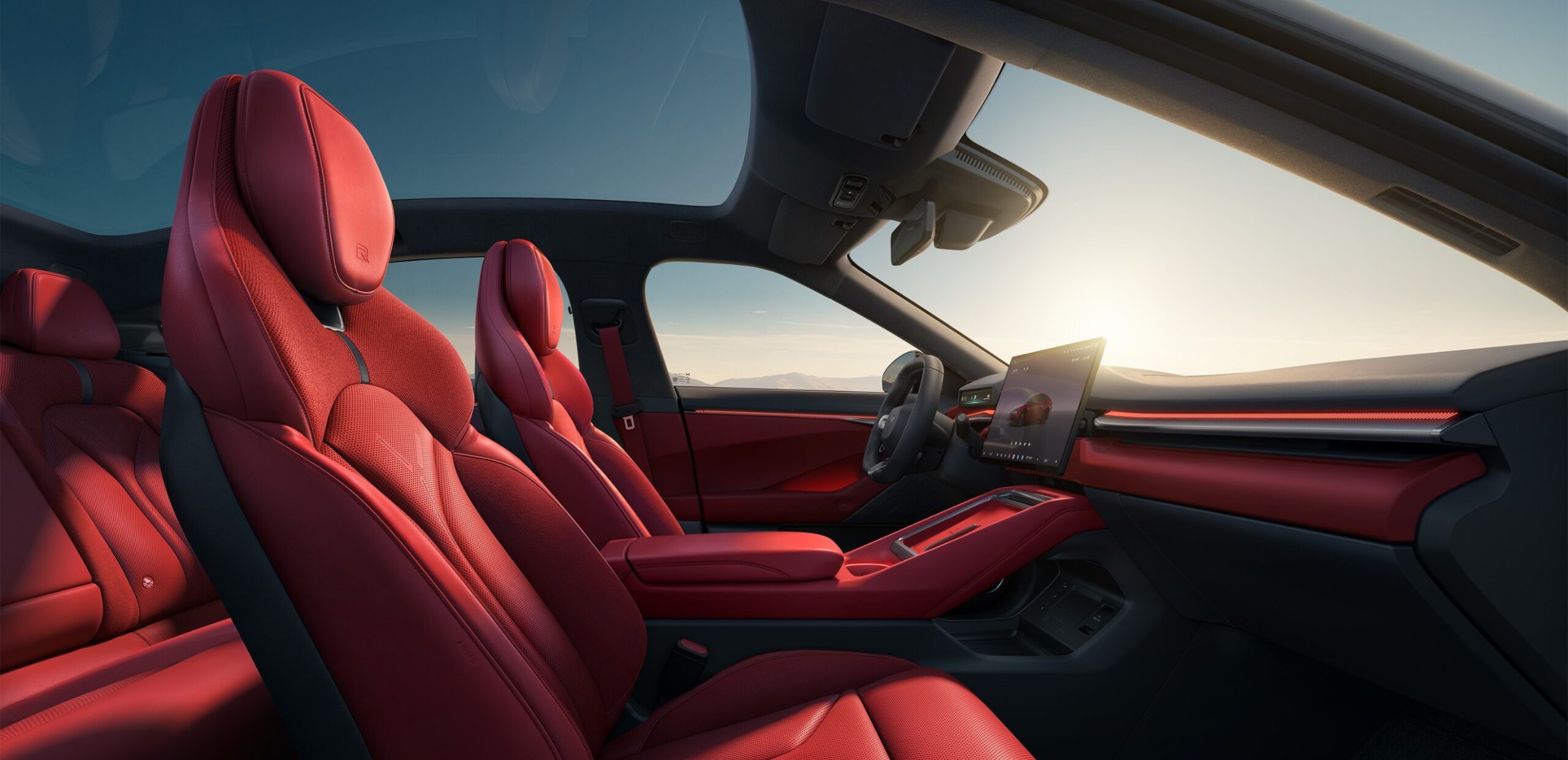
Gravity Red (引力红)
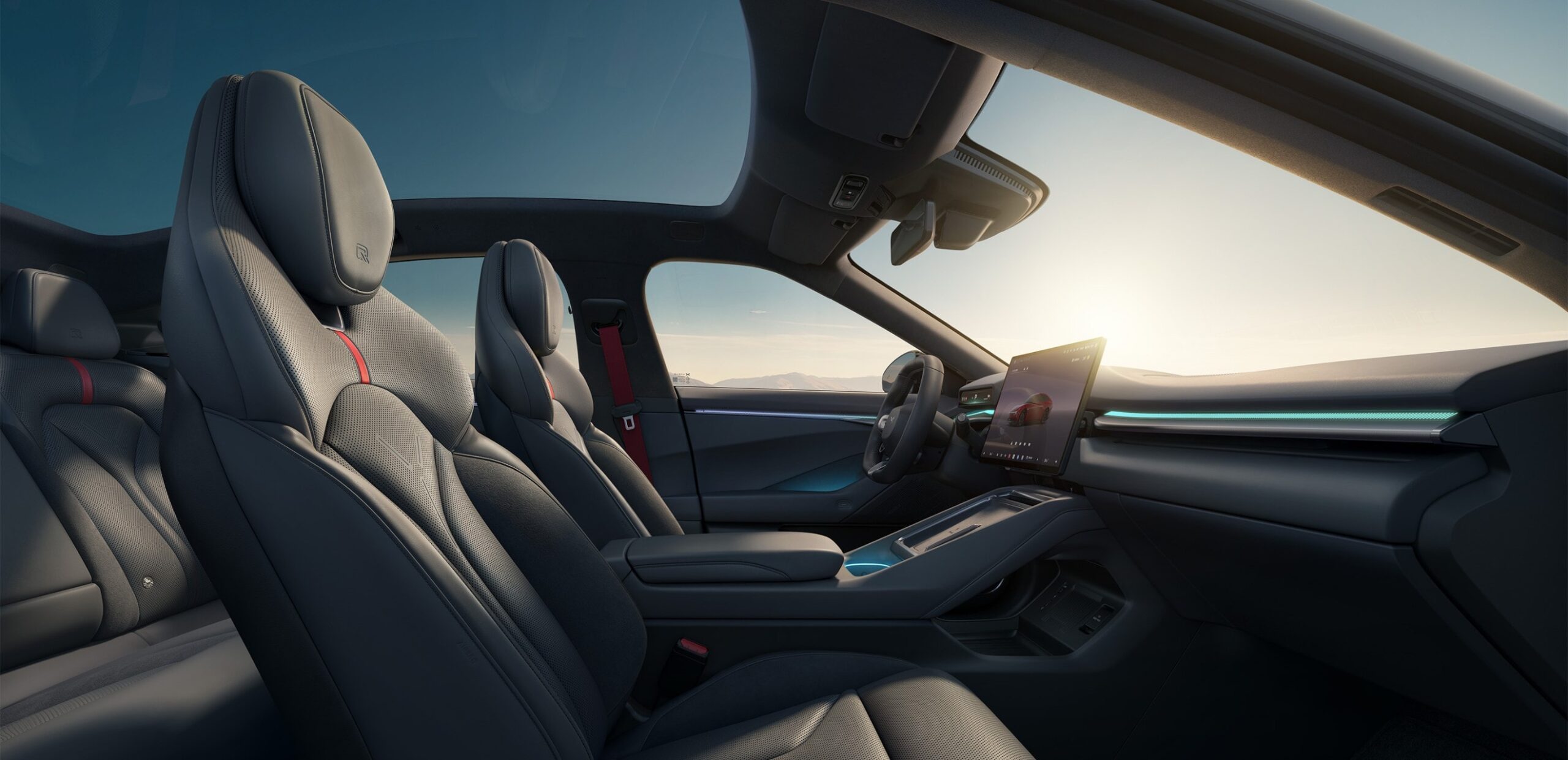
Lava Grey (熔岩灰)
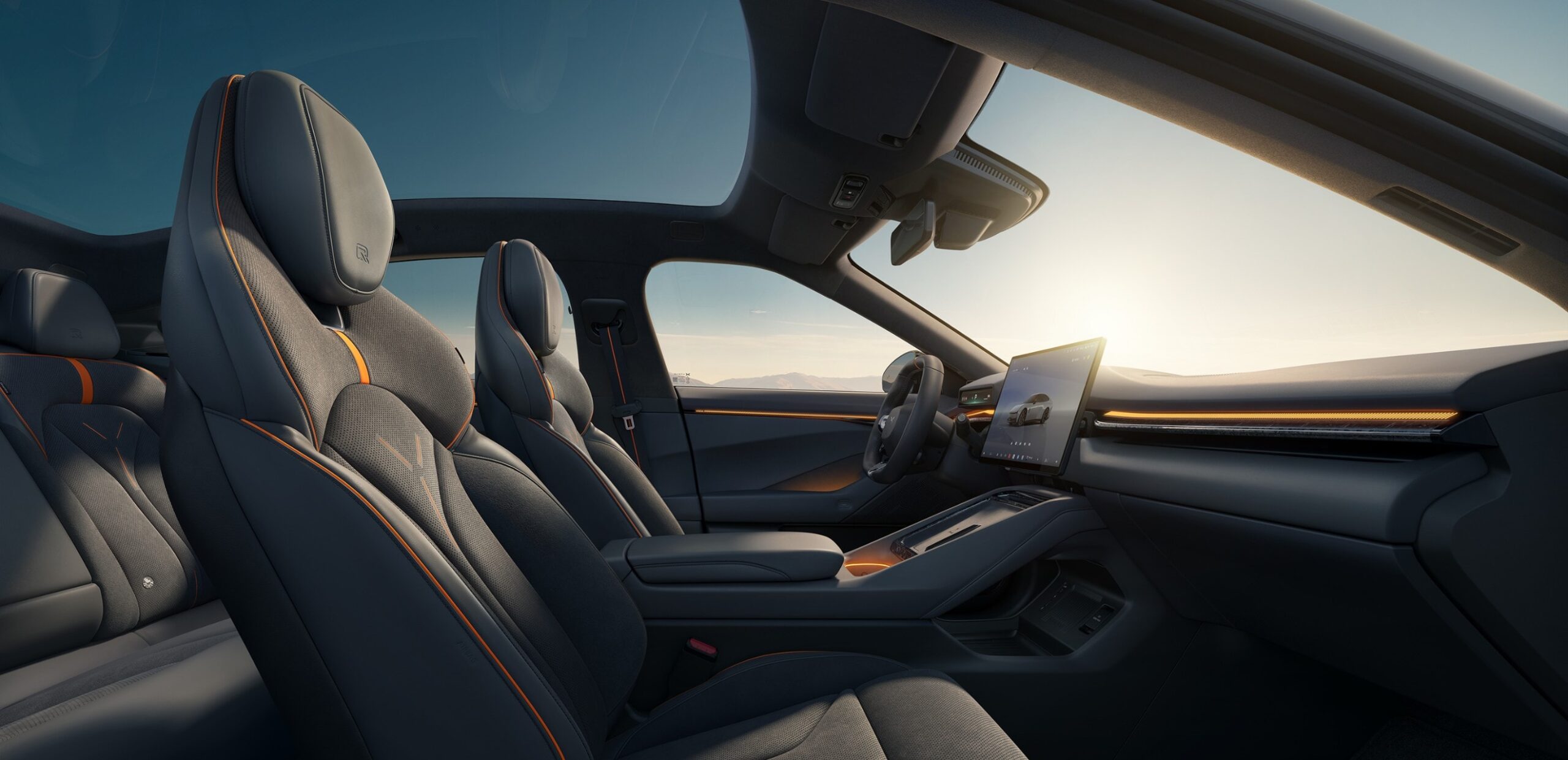
Amber Grey (橙耀灰)
AI and driving
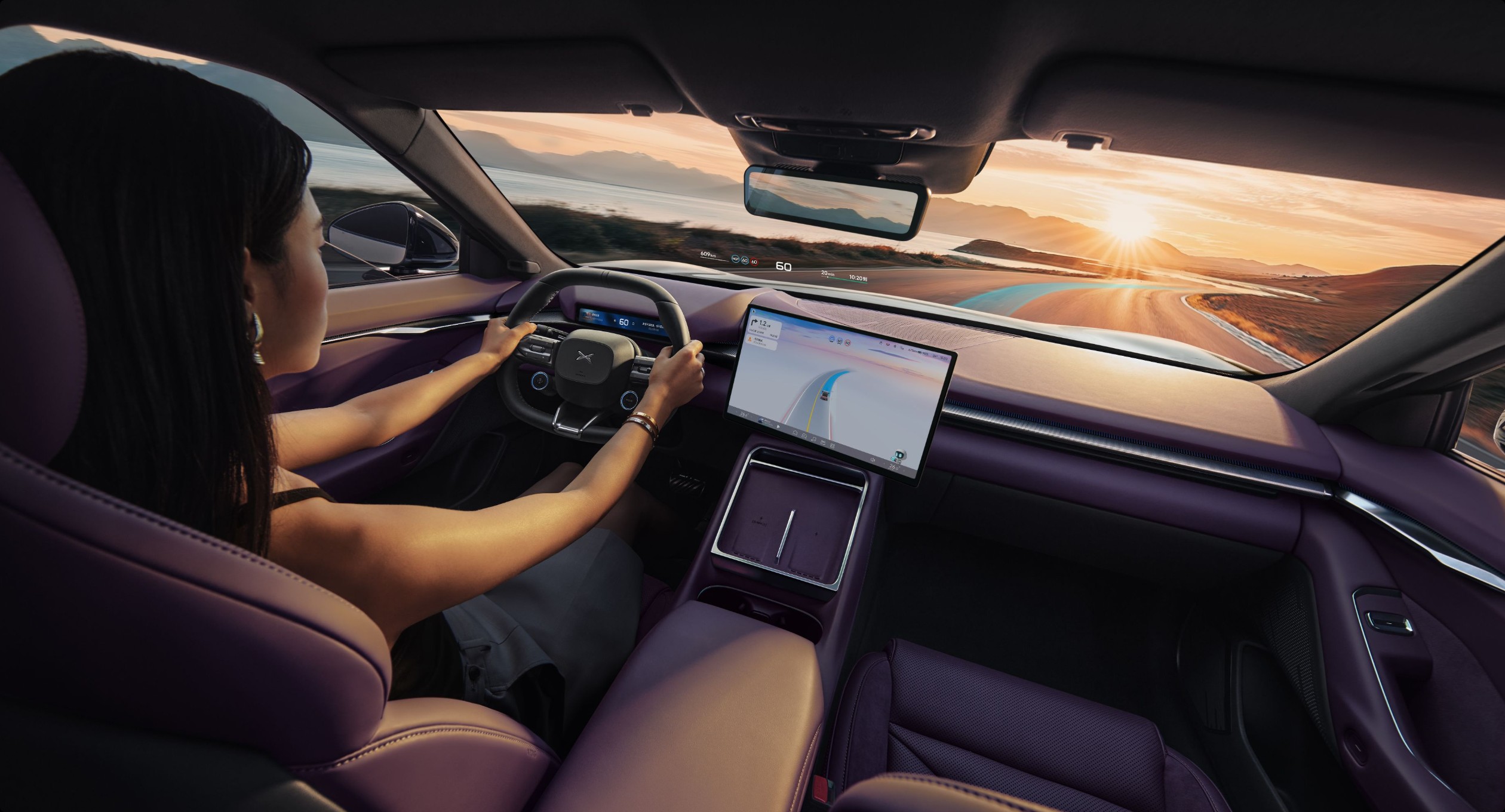
Assisted driving, usable from 0 to 130 km/h (人机共驾; XPENG).
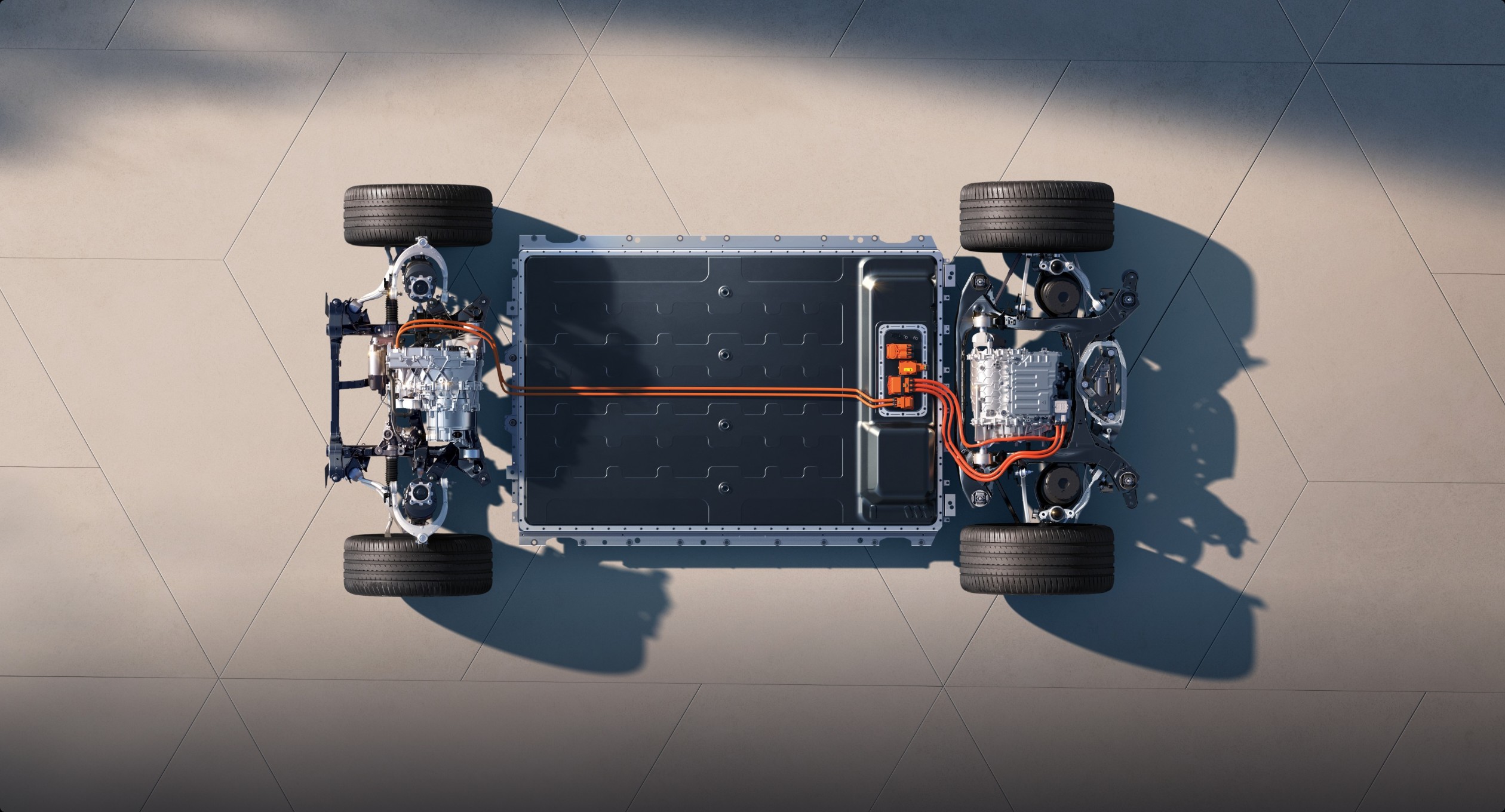
Mid-mounted drive layout - 50:50 weight split, 81 per cent of the mass between the axles (超跑级中置电驱布局; XPENG).
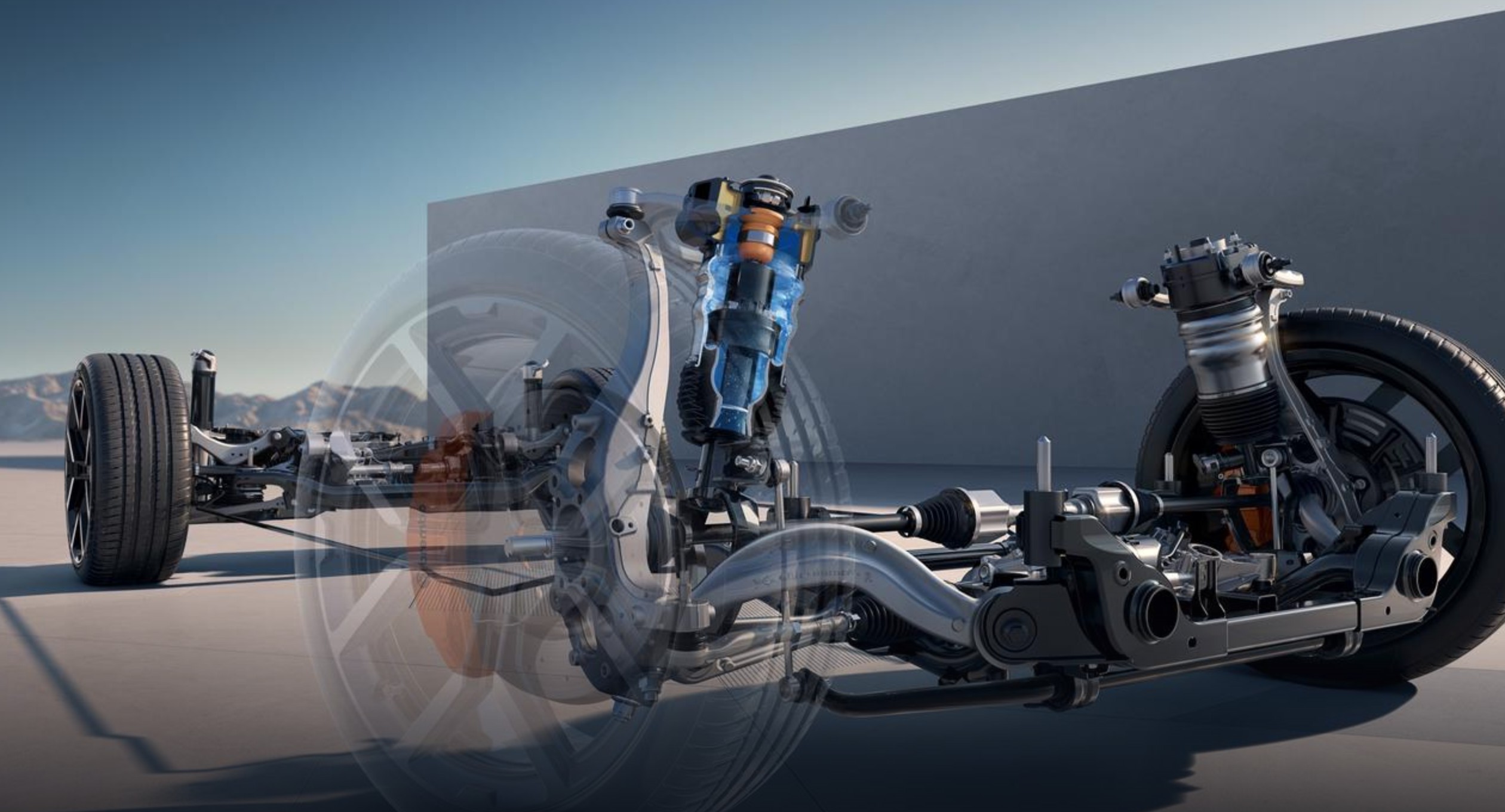
Dual-chamber air suspension - ride height -20 to +30 mm, spring rate 100 to 140 per cent (双腔空气悬架; XPENG).
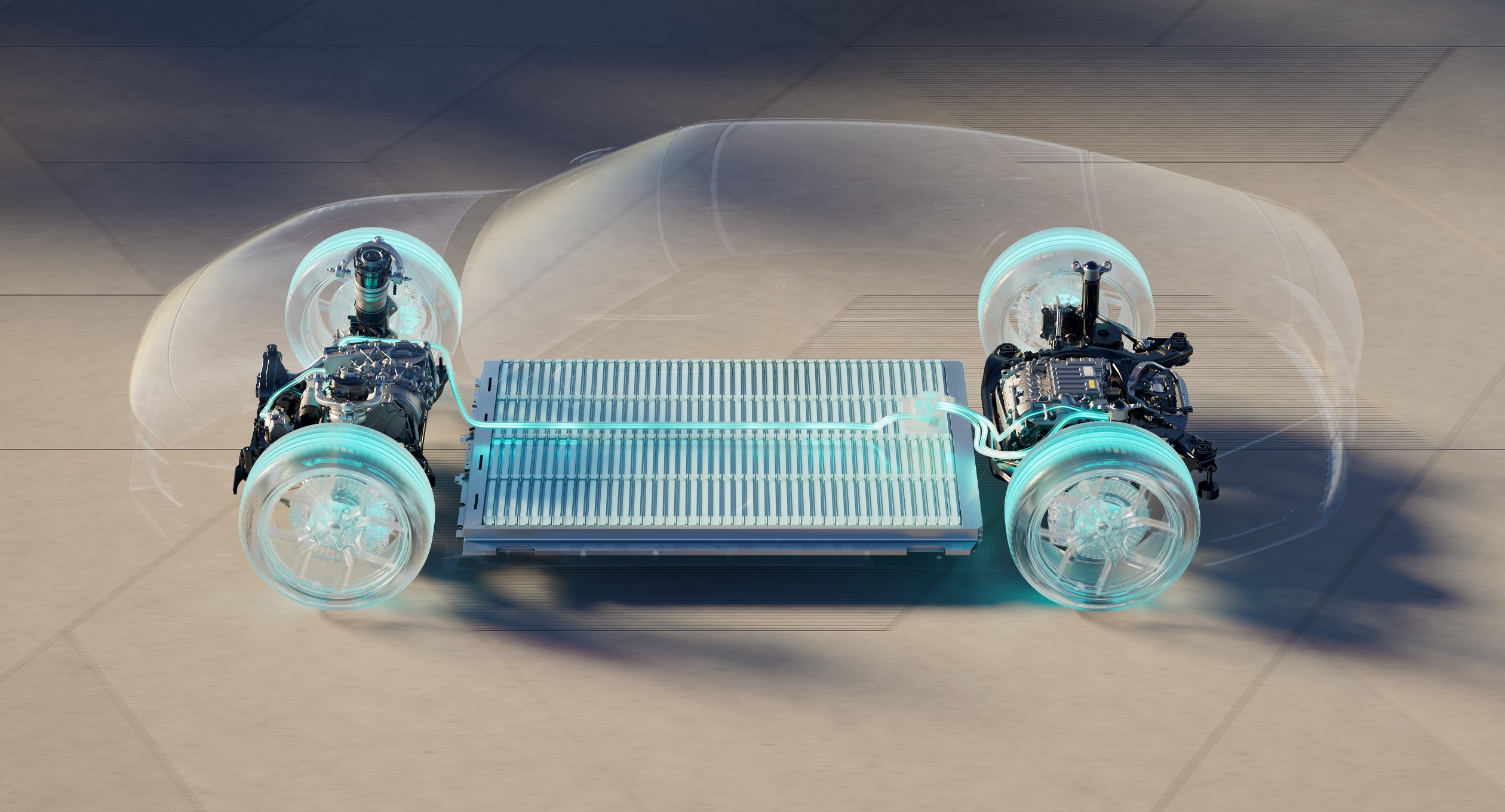
Consumption from 12.0 kWh per 100 km (超省; XPENG).
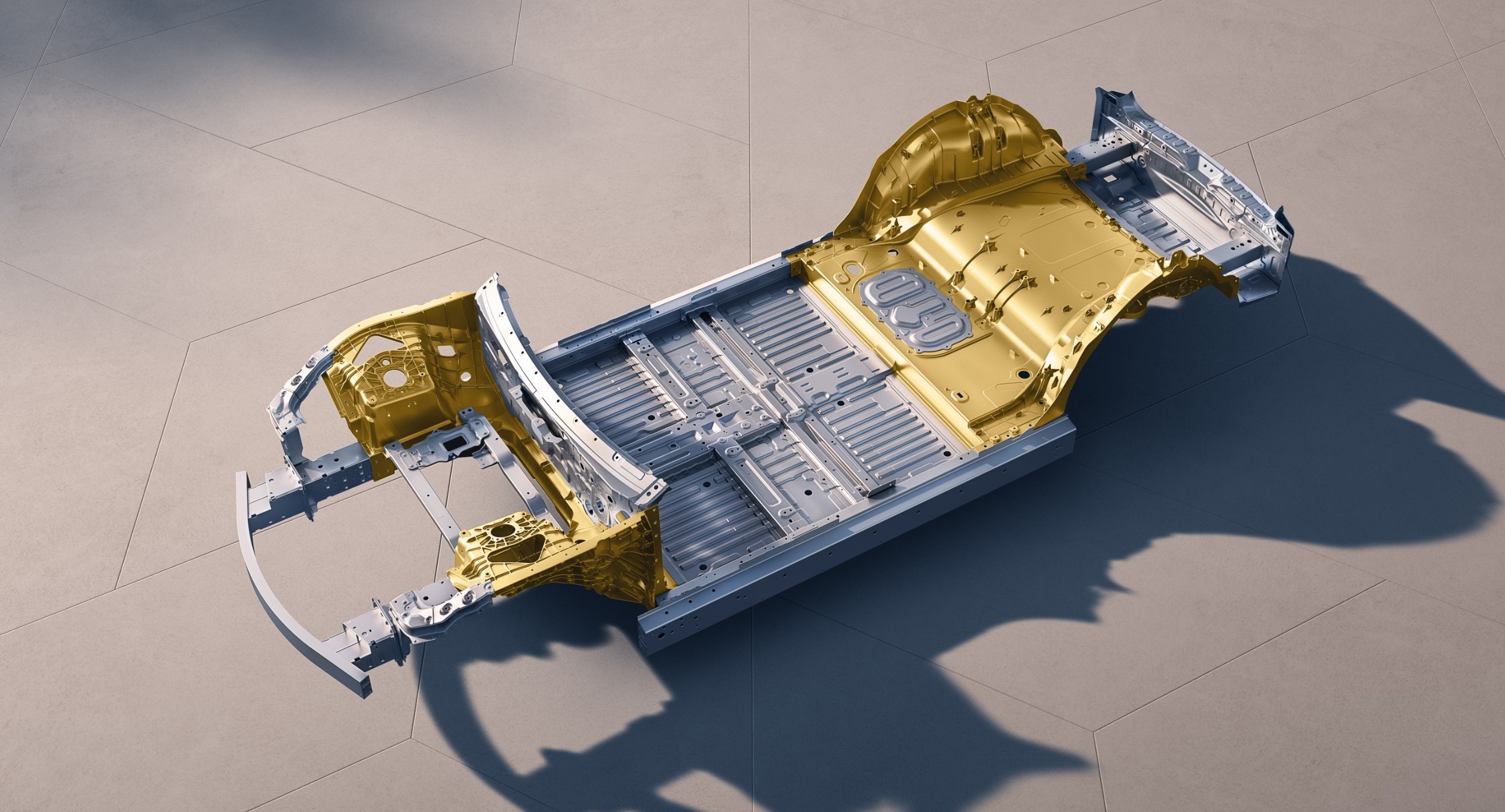
16000T single-piece castings, 43000 N·m/deg torsional rigidity, 2000 MPa hot-formed steel (16000T前后一体式铝压铸车身; XPENG).
Closed-course running - XPENG puts the 24-hour distance at 3961 km.
Sources
- XPENG New P7 official page (China)
- XPENG New P7 store configurator - trims, prices, colours, wheels and interiors
- Rafik Ferrag - P7 teaser reel (13 May 2025)
- XPENG at IAA Mobility 2025 - XPENG’s own release on the European premiere in Munich, 8 September 2025
- iF Design Award 2026 - XPENG NEW P7 - the award entry, its design credits and XPENG’s own description of the shape
Chinese names are XPENG’s own labels; the English and Danish names are xpeng.guru translations. Euro amounts are approximate, converted at the rate recorded in the compare data.
Related: XPENG P7+ · XPENG P7 · Lineup hub · Lineup history