



XPENG sold RMB 17.05 billion (about €2.2bn) worth of cars in the second quarter of 2026 at a gross margin of 12.1 per cent. Over the same three months it booked RMB 2.70 billion (about €350m) under “services and others” at a margin of 75.1 per cent. Run both through: the cars produced RMB 2.06 billion of gross profit, the other line RMB 2.03 billion - about €270m each, on just under a seventh of the revenue.
The vehicle margin was 14.3 per cent a year earlier, so it is falling, while the services line has gone from 53.6 to 75.1 per cent and nearly doubled its revenue. That movement is the thing worth watching, and it comes from XPENG’s own results, filed with the US securities regulator on 25 August.
Two caveats belong with the number, and they are as interesting as it is.
Gross profit is not profit. XPENG spent RMB 2.91 billion (about €380m) on research and development in the same quarter, more than either line produced gross, and those costs are not allocated to business areas. Neither figure is a profit.
And the line covers more than software. XPENG attributes the growth to two things: technical research work performed for a car manufacturer, where certain milestones were reached during the quarter, and sales of parts and accessories. It does not split them. With more than a million XPENGs on the road, spare parts are a real business in their own right, so how much of that line is technology work appears nowhere.
The customer XPENG will not name
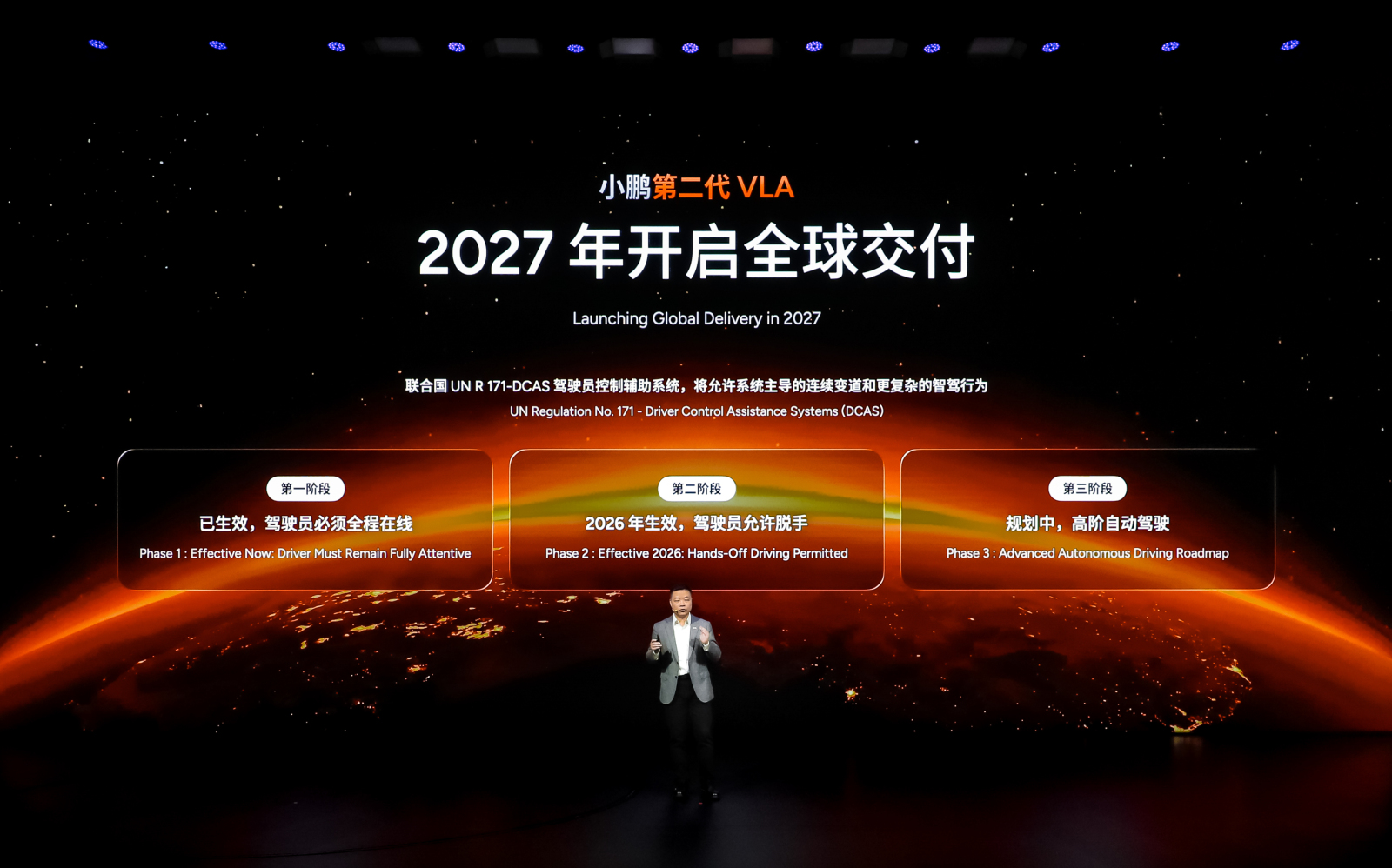
In the filing the buyer is “a car manufacturer”. XPENG has said who it is elsewhere, and earlier: at AI Day in November 2025 Volkswagen was named as the first strategic partner on VLA 2.0, and in an announcement on 2 March 2026 the company wrote plainly that Volkswagen is the first customer for its next-generation assistance system.
The partnership was announced on 26 July 2023. Volkswagen took shares worth just under five per cent of XPENG for around US$700 million (about €610m), and the two were to develop two B-class electric cars together for the Chinese market, sold under the Volkswagen badge, built on XPENG’s G9 platform with XPENG’s connectivity and driver-assistance software. Production was expected to start in 2026, which is this year, and that fits the filing’s talk of milestones reached in the quarter.
The missing name is not necessarily a mystery. Contracts carry confidentiality clauses and a results announcement is not the place to set them aside. It does mean the filing itself does not tie the money to the customer.
What the company says about the road ahead
Brian Gu, XPENG’s vice chairman and co-president, was clear in the results: “I expect the mass production and commercialization of physical AI technologies to accelerate over the coming year, generating meaningful gross profit growth to support our continued R&D investment in physical AI.”
On 17 September Reuters reported that XPENG wants to license technology to foreign carmakers beyond Volkswagen, and that a team was put on the job six months ago. On Reuters’ account it covers the electrical and electronic architecture, the cabin systems, the Turing chips and the assistance software, with robotaxis and humanoid robots to follow. XPENG shares rose around three per cent.
That part comes from two unnamed sources. XPENG has confirmed none of it, and no official statement says the same thing. The direction matches what Brian Gu said in August; the detail does not.
For a European buyer none of it changes anything today. It does explain why XPENG talks so much about chips and models rather than kilometres and cabin measurements: that part of the business is now central to how XPENG makes money.
Images: XPENG
Sources
XPENG: second-quarter 2026 results (SEC, 25 August 2026)
XPENG: announcement of the Volkswagen collaboration (SEC, 26 July 2023)
CnEVPost on the Reuters report about technology for more carmakers · 17 September 2026