


IRON: XPENG’s humanoid robot
Inside IRON's body, Turing chips and research - from a Guangzhou encounter to XPENG's plans for retail and service.
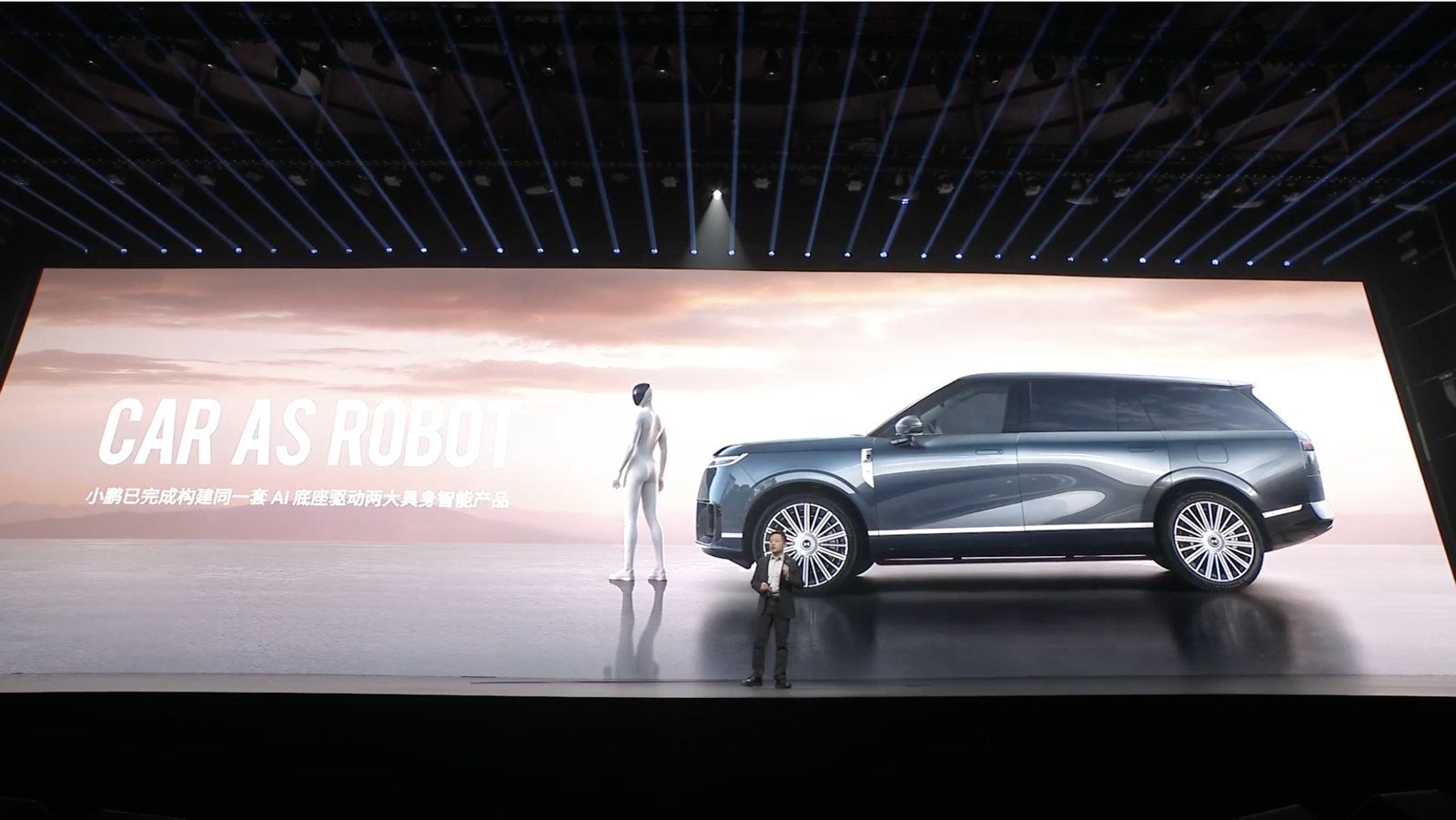
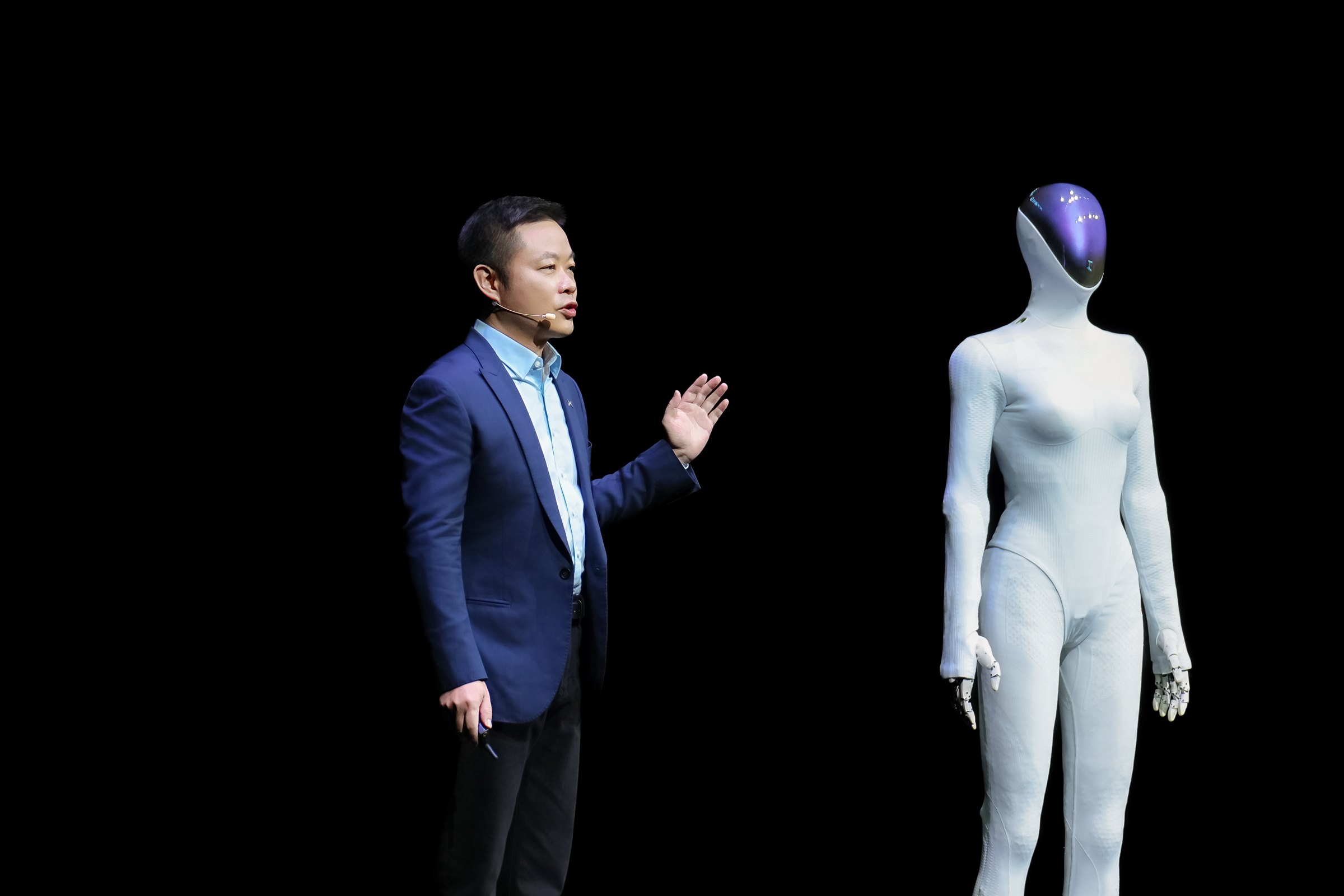
At XPENG’s Beijing presentation on 17 September 2026, IRON and the GX appeared on the screen under the heading “Car as Robot”. The image illustrates the company’s shared AI foundation for cars and humanoid robots. For the car, that technology helps interpret traffic. IRON uses it to coordinate physical movement and conversations with people.
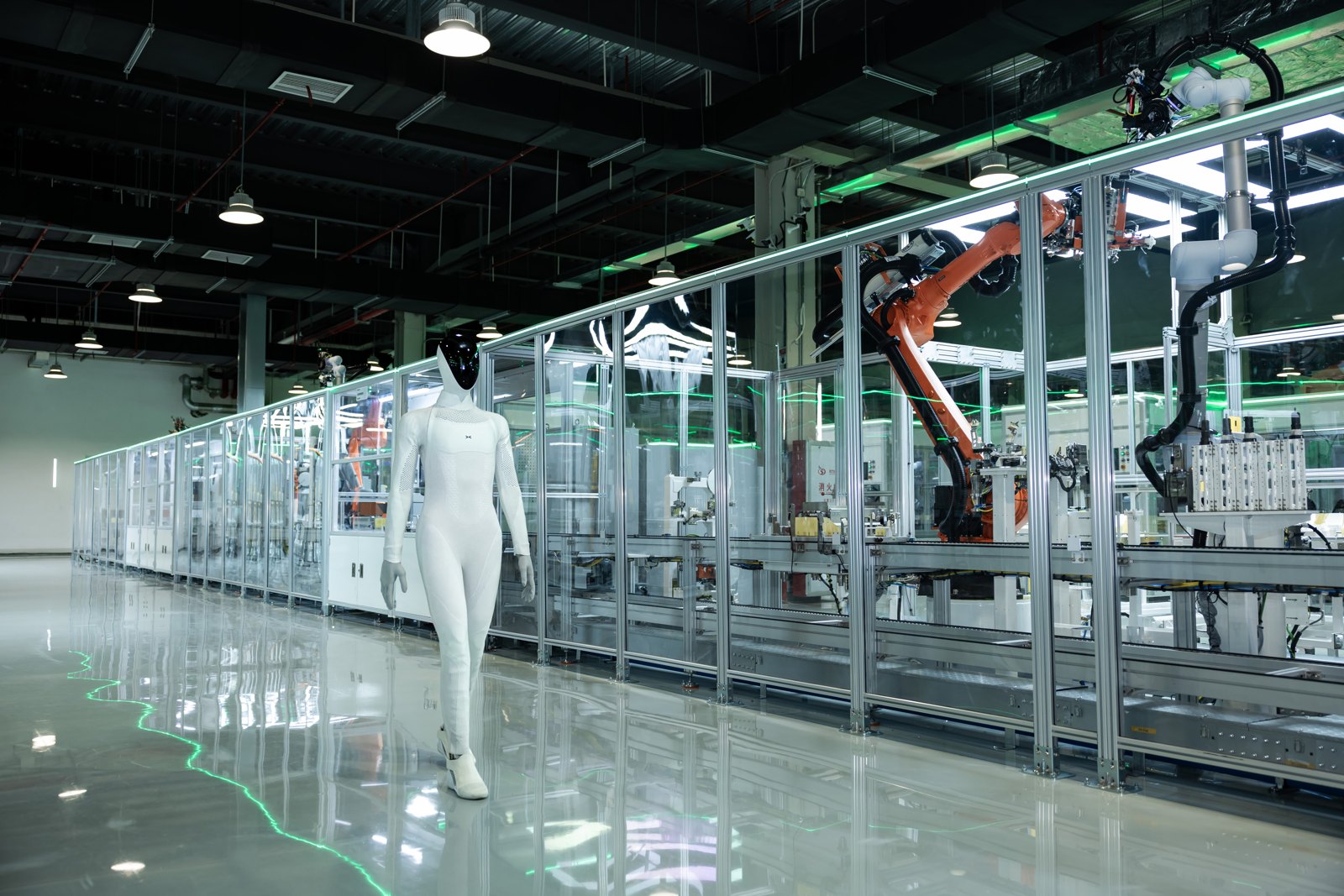
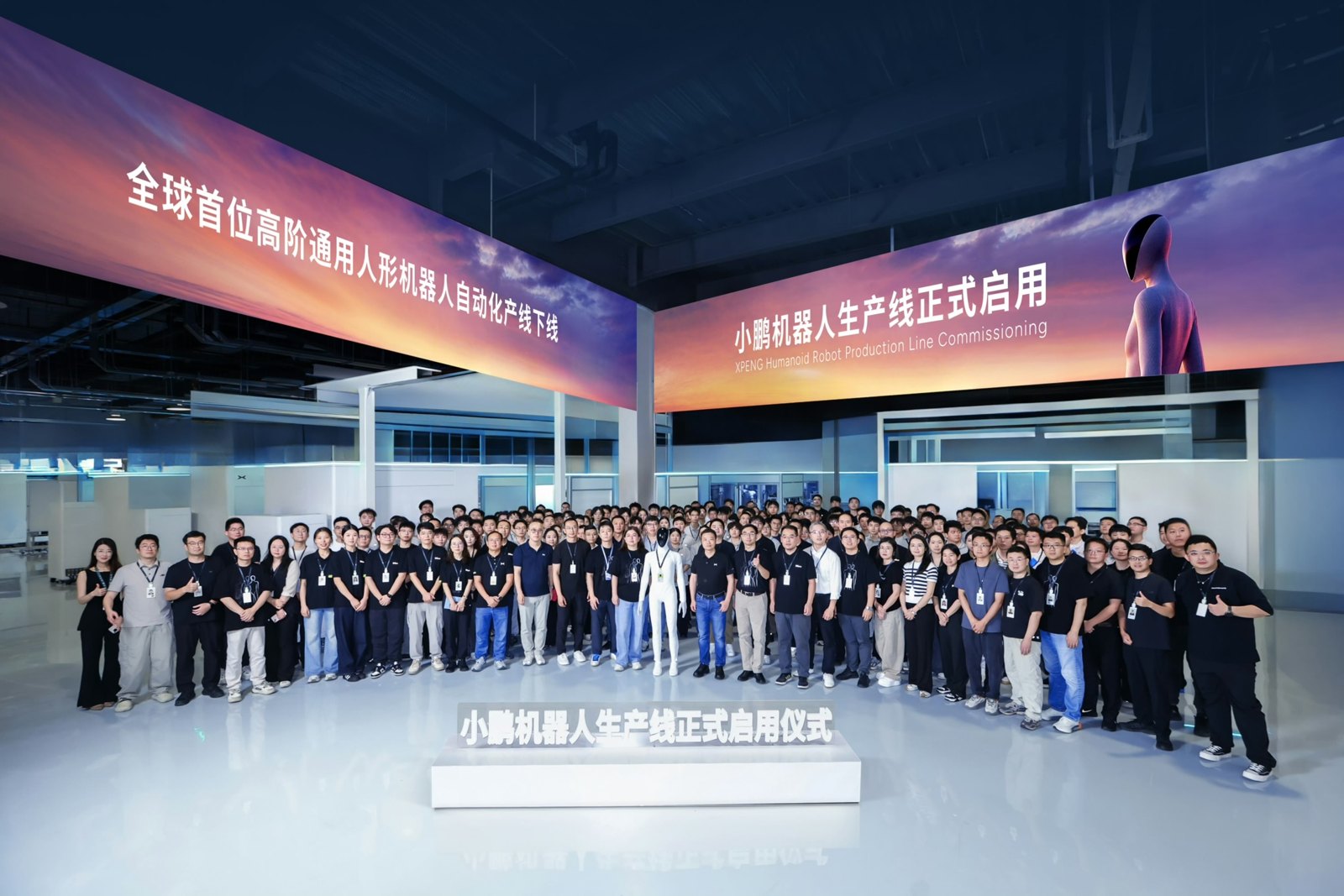
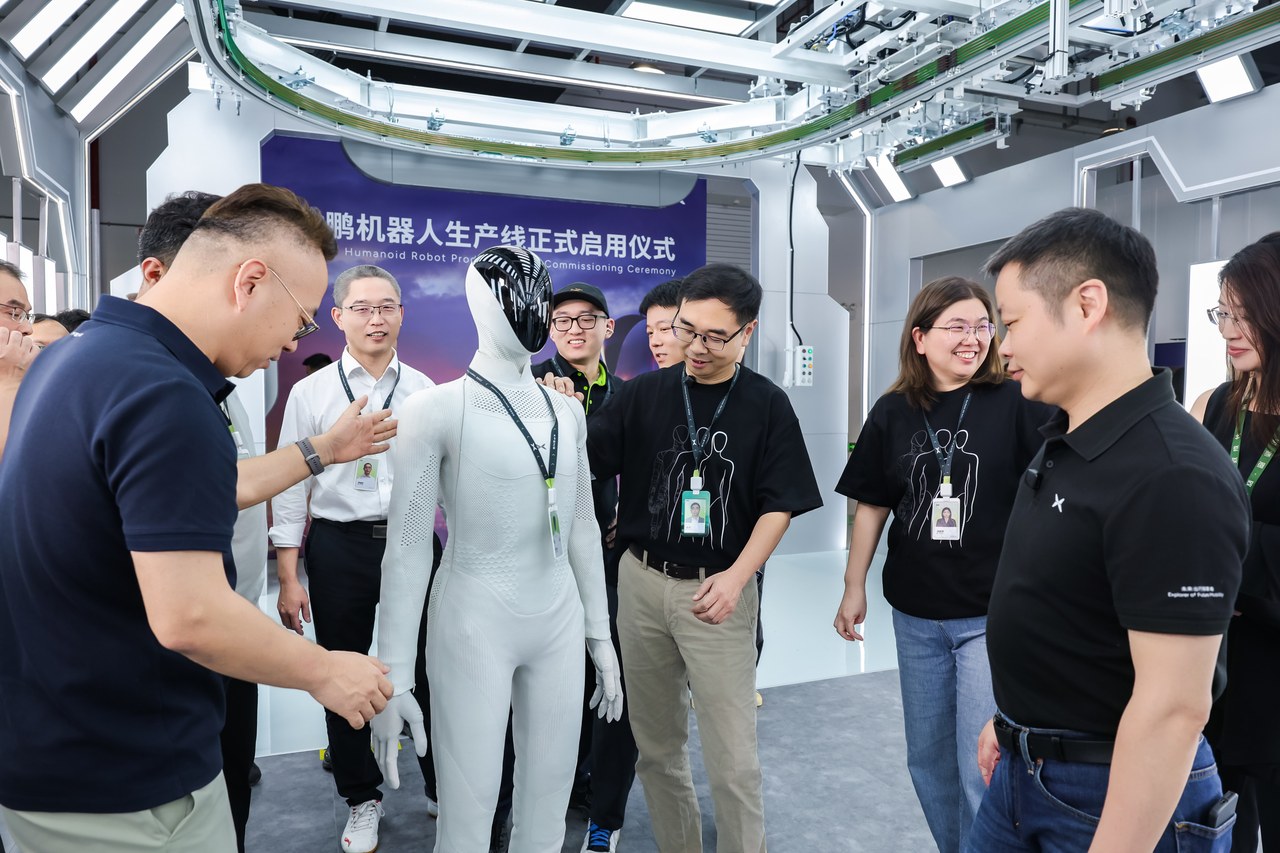
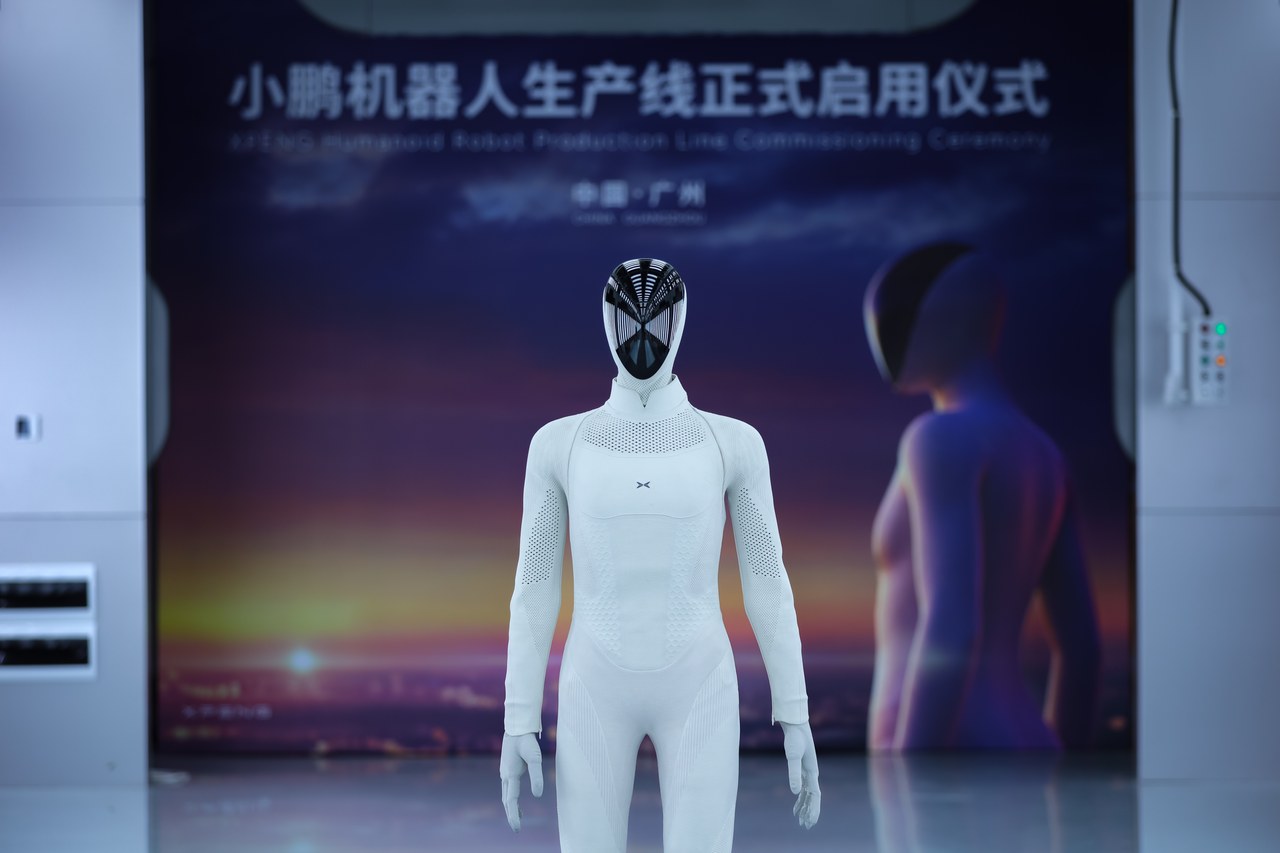
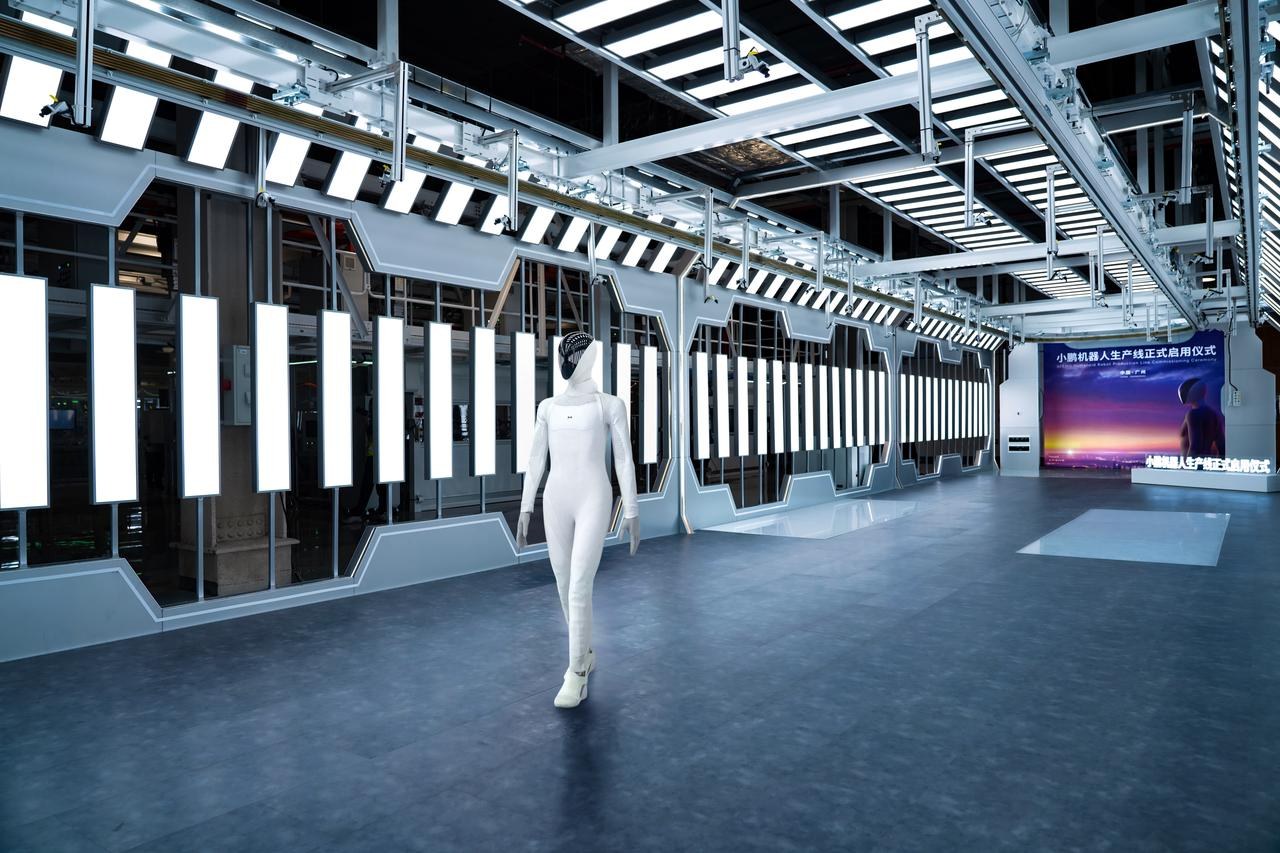
XPENG commissioned an IRON production line in Guangzhou on 8 September 2026. The company is targeting mass production by the end of the year, followed by deliveries to retail and service businesses in China and overseas in 2027. It has not announced a Danish sales date or price.
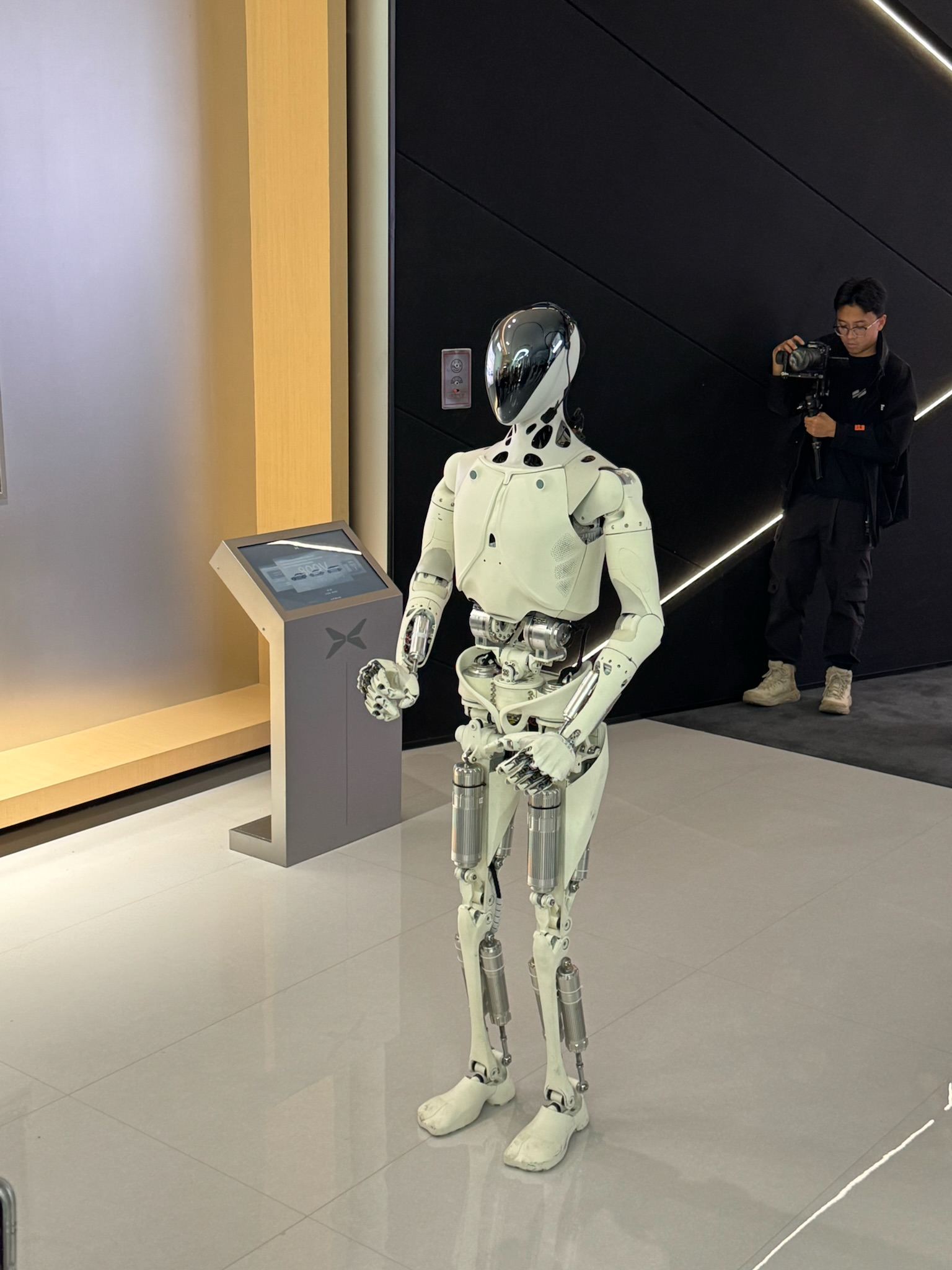
Images: XPENG. Close-up of IRON during the tour in the gallery: xpeng.guru.
Jump to: What IRON shares with the cars · The exposed leg in Guangzhou · Beneath the surface · Following the speaker · XPACE: the laboratory experiments · From the production line to stores · Q&A · Gallery · Videos · Sources
What IRON shares with the cars
XPENG specifies three Turing chips and up to 2,250 effective TOPS for IRON. The L03 AWD Performance Ultra has the same chip count and quoted computing capacity. Among the Danish L03 variants, this applies specifically to Ultra: the other versions use Bosch driver-assistance hardware. In the L03 Ultra, two Turing chips serve driver assistance and one serves the cabin.
TOPS measures trillions of arithmetic operations per second. It describes computing throughput. The robot’s skills also depend on how its software is trained. XPENG describes the Turing chip itself as containing 40 processing cores, two neural processing units and two image processors.
There are several models in the software, too. At AI Day on 5 November 2025, XPENG described VLT as IRON’s decision-making model, alongside VLA and VLM. VLA connects visual input with actions; VLM works with visual and language information. The company has not published a detailed allocation of those computations across IRON’s three chips.
XPENG uses Physical AI as the umbrella term for this work: AI in machines that perceive and act in their surroundings. At the G9L launch, the company described bringing the cars’ VLA and VLM models into IRON and expected some robot software to find its way back into the cars. No European update timetable accompanied that expectation. The VLA article covers the vehicle models and hardware in more detail.
The exposed leg in Guangzhou
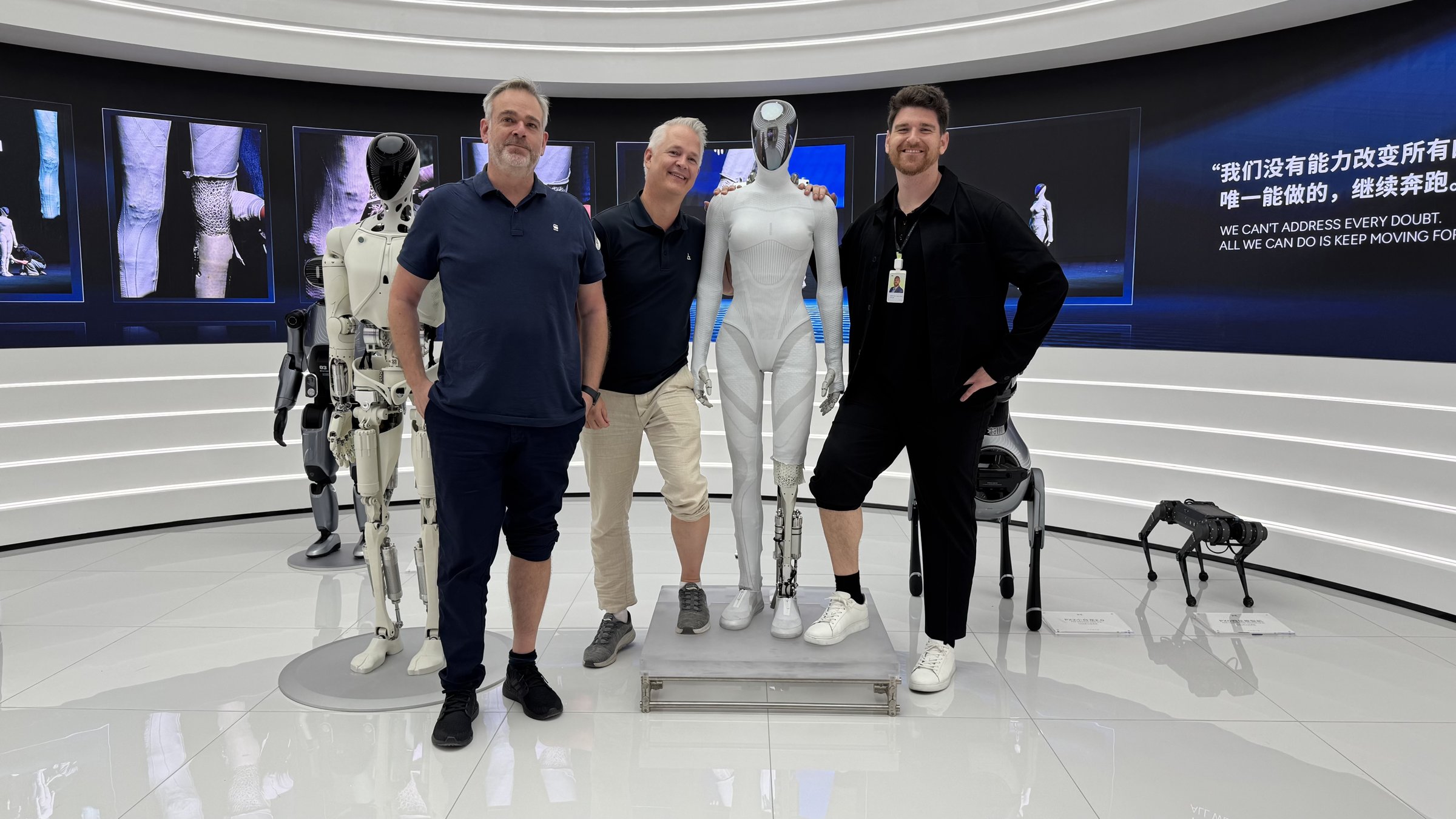
On 10 November 2025, the new IRON was on display at the XPENG AI Mobility Experience Center in Guangzhou. The photograph from the visit to XPENG shows Kristian Wilsky (beta tester and owner of XPENG Guru), Stefan Duvander (a Swedish beta tester) and Joachim Vishart Hummel-Gryholm of XPENG Denmark beside it. The covering on one lower leg is open, exposing the mechanism.
That detail has a history. XPENG says rumours spread after AI Day on 5 November 2025 that there was a person inside the robot. At a demonstration the following day, a staff member cut open the lower-leg covering while He Xiaopeng presented IRON. The robot then walked with the mechanism exposed. XPENG’s recording of the demonstration shows the cutting and the subsequent walk. The open leg remained visible in the photograph taken during the visit.
Beneath the surface
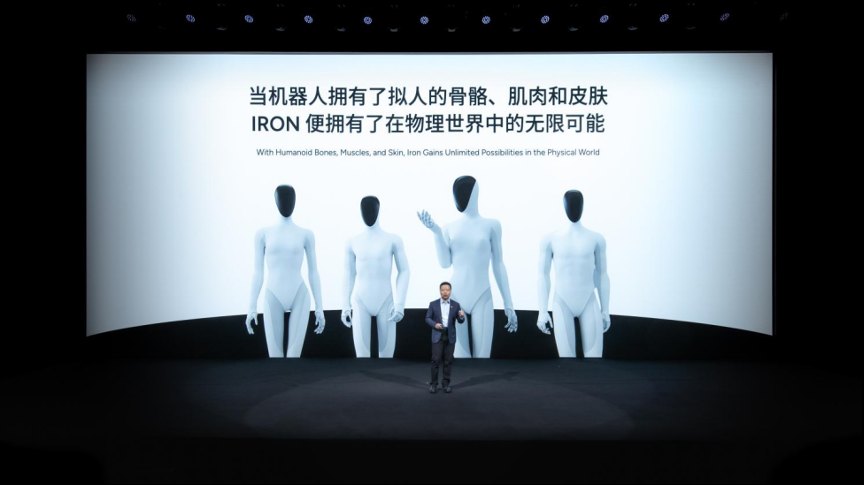
IRON’s human-like gait involves movement beyond the knees and elbows. XPENG highlights the shoulders, waist and a spine-like structure. Compact motion modules have to fit inside the body while leaving room for the joints to move.
XPENG names harmonic gearing in its 2025 description of IRON. It reduces motor speed and increases output torque in a compact mechanism that can fit inside the robot’s body. XPENG’s account does not identify a gear ratio or supplier.
A soft lattice material covers the mechanism, with a knitted outer layer. In XPENG’s February 2026 design film, the team shows how the lattice compresses and stretches. Around the knee, material has to move into a cavity as the leg bends. The soft layers give the body its form; motors and mechanisms drive it.
XPENG also records human movement and remaps it to the robot’s body. That process must account for problems such as slipping feet and collisions between body parts. The company describes using reinforcement learning in simulation to improve motion through repeated attempts. Human motion can provide a starting point, but the resulting movement has to work with IRON’s joints and balance.
Specifications by edition
A degree of freedom is an independently variable movement coordinate. A simple hinge has one: its angle can change. A joint that rotates around several axes can have several. Joint counts and degrees of freedom therefore describe different aspects of a body.
| Edition | Body | Hand |
|---|---|---|
| 2024, first IRON | Over 60 joints; 178 cm and 70 kg | - |
| AI Day, 5 November 2025 | 82 degrees of freedom | 22 degrees of freedom per hand |
| August-September 2026 | 76 degrees of freedom | 21 degrees of freedom per hand |
These are XPENG’s figures for the corresponding editions. The production-line announcements do not explain the change from 82 to 76 degrees of freedom.
XPENG México gives a height of 1.73 m and weight of 65 kg in the description of a September 2026 promotional film. Those figures belong to that regional presentation; the global production-line announcement does not state height or weight.
XPENG announced an all-solid-state battery for IRON at AI Day on 5 November 2025. CnEVPost reported on 3 September 2026, citing Jipian Lab, that the production version would instead use a semi-solid-state battery. We have not found public confirmation of the switch from XPENG. Its production-line announcement of 8 September 2026 specifies neither battery chemistry nor capacity or runtime.
Following the speaker
In an R&D demonstration published on 22 September 2026, XPENG Robotics has several people talk to IRON. The robot turns its head and body towards different speakers. Before giving an answer, part of the task is to establish who is speaking.
The film describes an array of nine microphones for locating sound, with lip movement helping identify the speaker. Later, the team explains how faces and voices contribute to recognising people. These are the company’s explanations of the demonstration system. The conversation is visible, but the film does not quantify recognition accuracy. The microphone and lip-movement explanation begins at 1:31.
XPENG also set out a privacy principle at AI Day 2025: private data should remain on the robot.
In one exchange the robot answers in German and recommends an L03. XPENG says responses can draw on local knowledge or an online search. The German exchange starts at 4:27.
XPACE: the laboratory experiments
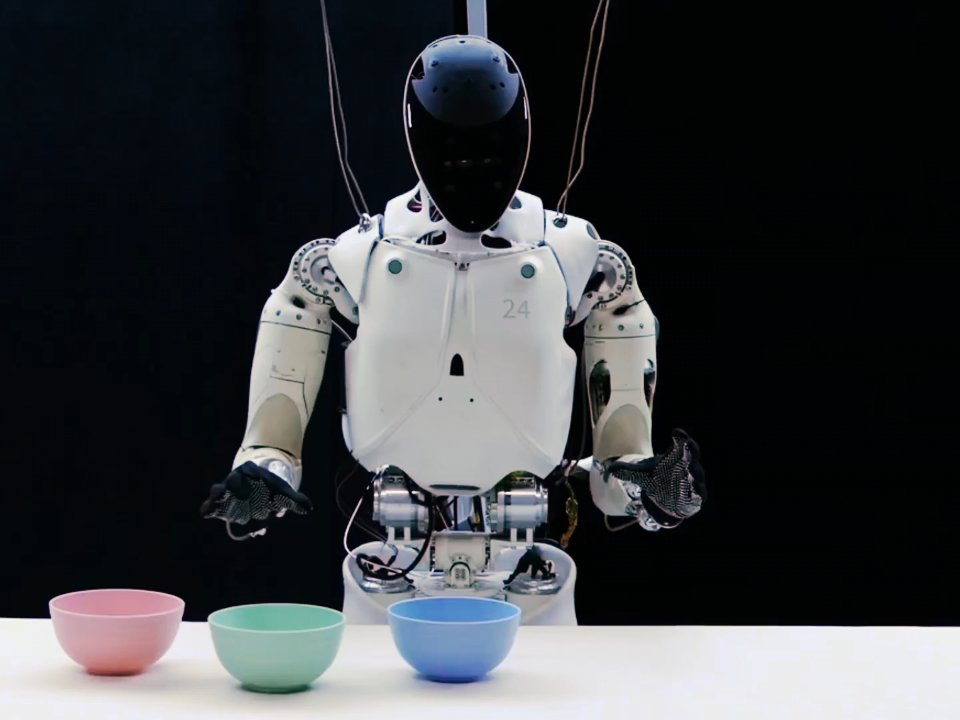
XPENG Robotics’ XPACE research models future images and actions together. Its training corpus contains 5,000 hours of human and robot activity video. Experiments used IRON-R01-1.11; the paper does not establish a production software release.
| Model | Overall task success |
|---|---|
| XPACE | 68.3% |
| DreamZero | 40.0% |
| GR00T | 6.7% |
The comparison covered banana placement, pouring and bowl stacking, with 20 trials per task for each model. XPACE completed 10 of its 20 pouring attempts. Training differed between systems, including additional video adaptation for XPACE, so these results compare the tested systems with their respective training.
A separate experiment reported an improvement from 61.7% to 86.7% after further training with recovery examples generated by the model’s own simulator. These examples showed how a movement could return to its intended course after a deviation. It used banana, pouring and cola tasks, again with 20 trials per task. The experiment does not isolate the effect of the new recovery examples from that of the additional training.
XPACE predicts 16-step action chunks and publishes robot commands at about 10 Hz. A queue handles commands while new observations inform continued control.
From the production line to stores
At the Guangzhou commissioning on 8 September 2026, XPENG showed a completed IRON leaving the line on foot. The company says more than 80% of the line’s core processes are automated. That percentage describes robot manufacturing.
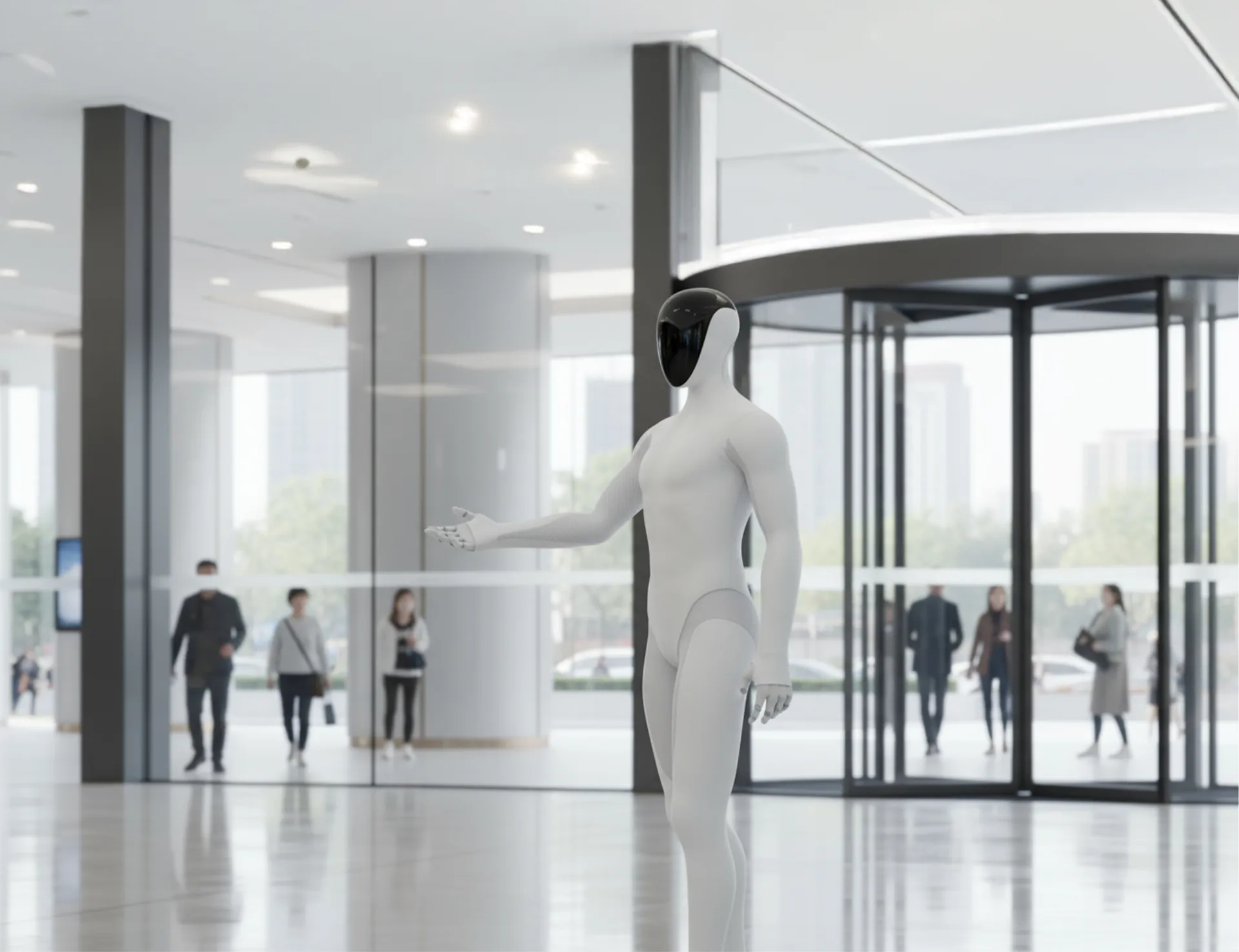
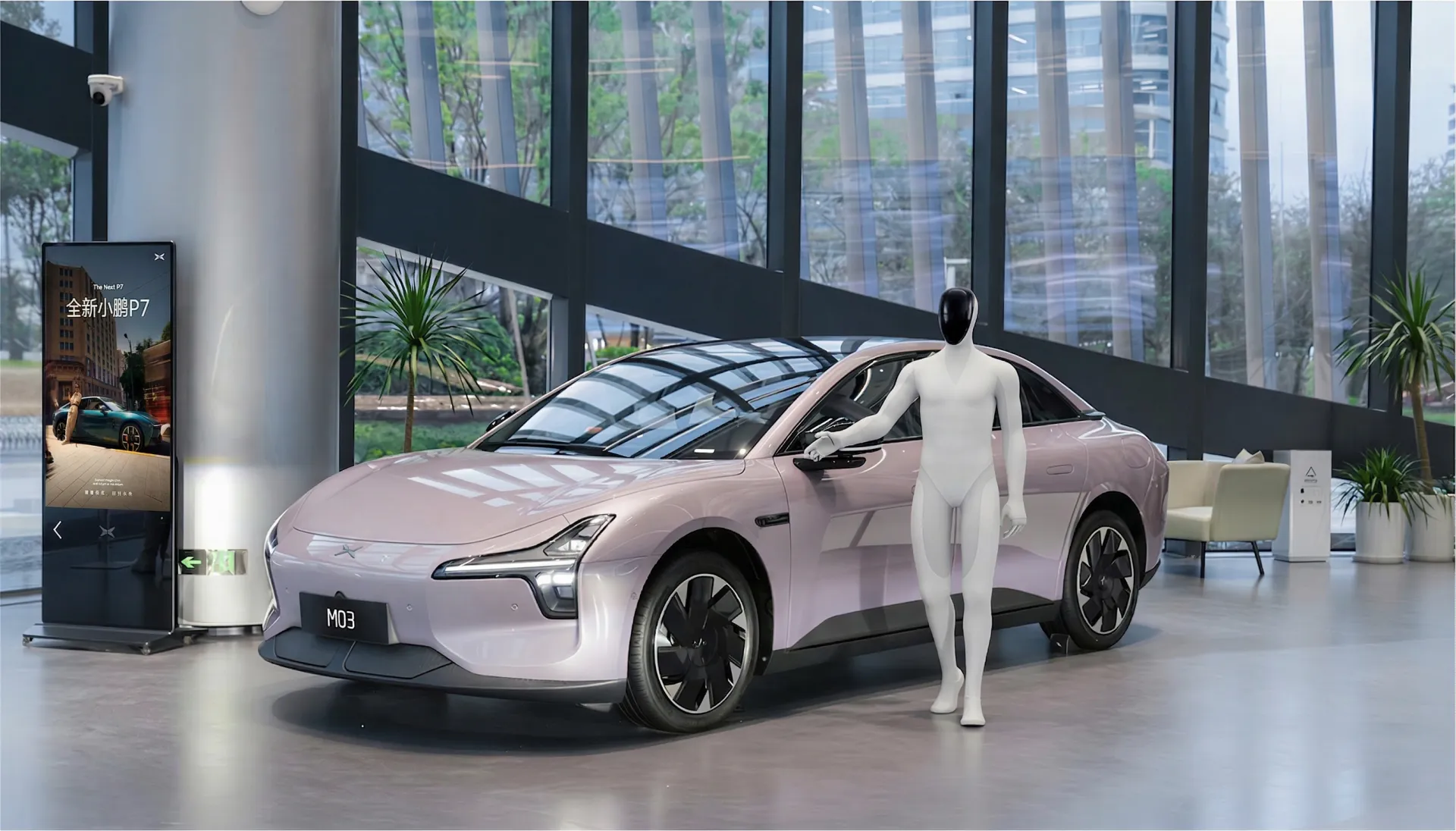
The production line is a step towards XPENG’s end-2026 mass-production target. Initial applications are planned in its own stores and campuses. Reception, tours and customer guidance have featured in the plans since AI Day 2025. XPENG has also described exploring industrial inspection with Baosteel and plans to open an SDK for other developers to create IRON applications.
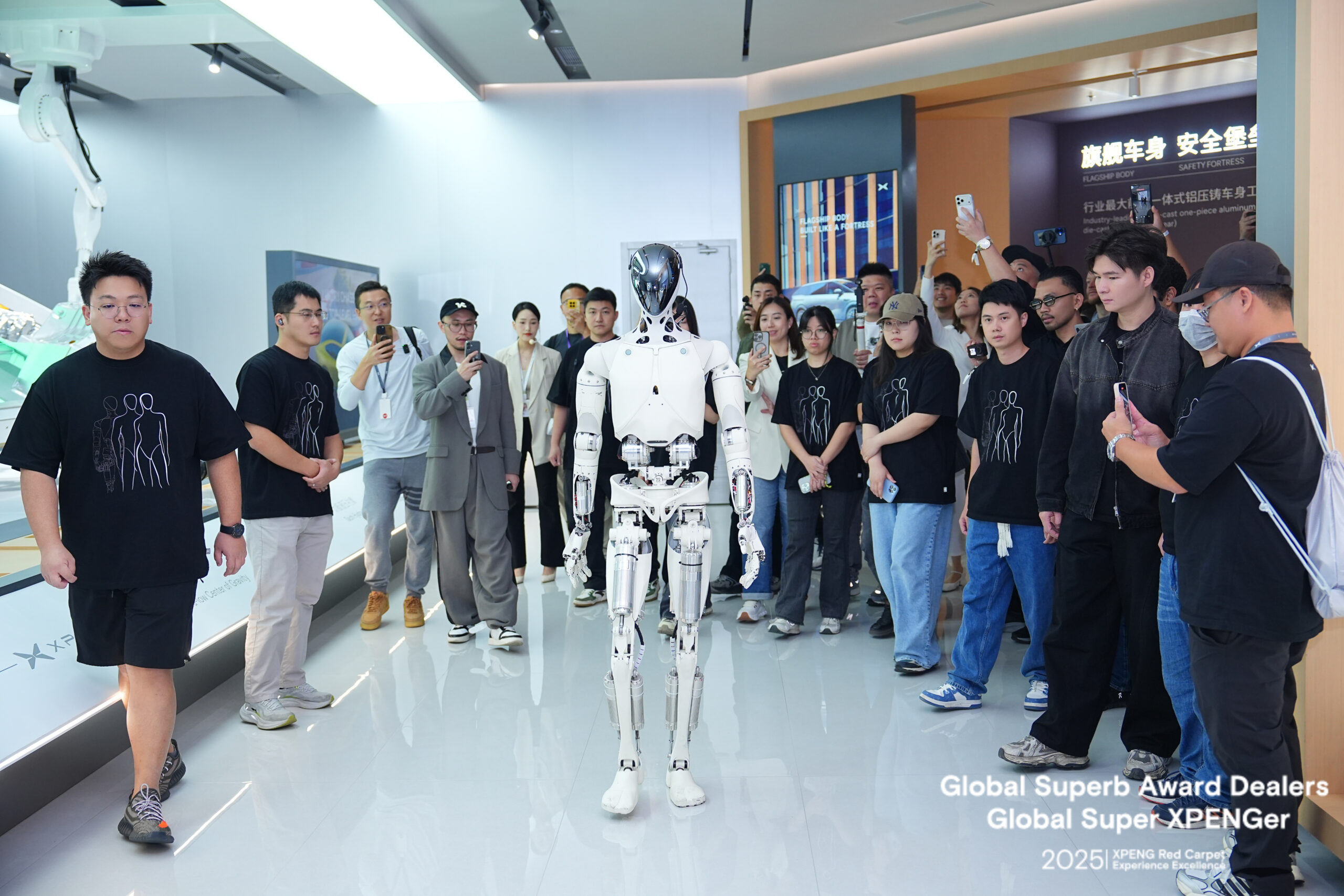
On 5 November 2025, I joined a tour of XPENG’s new exhibition during my visit to the company. An IRON robot guided me and the other visitors through part of it.
In August, the robotics business entered agreements for a funding round exceeding US$900 million, led by IDG Capital with investors including Tencent and Alibaba. XPENG says it will retain control upon closing. In its second-quarter results, the company described the potential to ramp capacity to several thousand robots a month in 2027, depending on demand.
The company plans 2027 launches and deliveries to retail and service businesses in China and overseas. European visitors have already seen IRON at its Milan premiere in April 2025 and at IFA Berlin in September 2026. Its first Norwegian appearance has been announced for Oslo Motor Show on 23-25 October 2026.
Q&A
Gallery
Images from my visit, exhibitions, research and production, alongside XPENG’s design illustrations. Open a group and select an image to enlarge it.
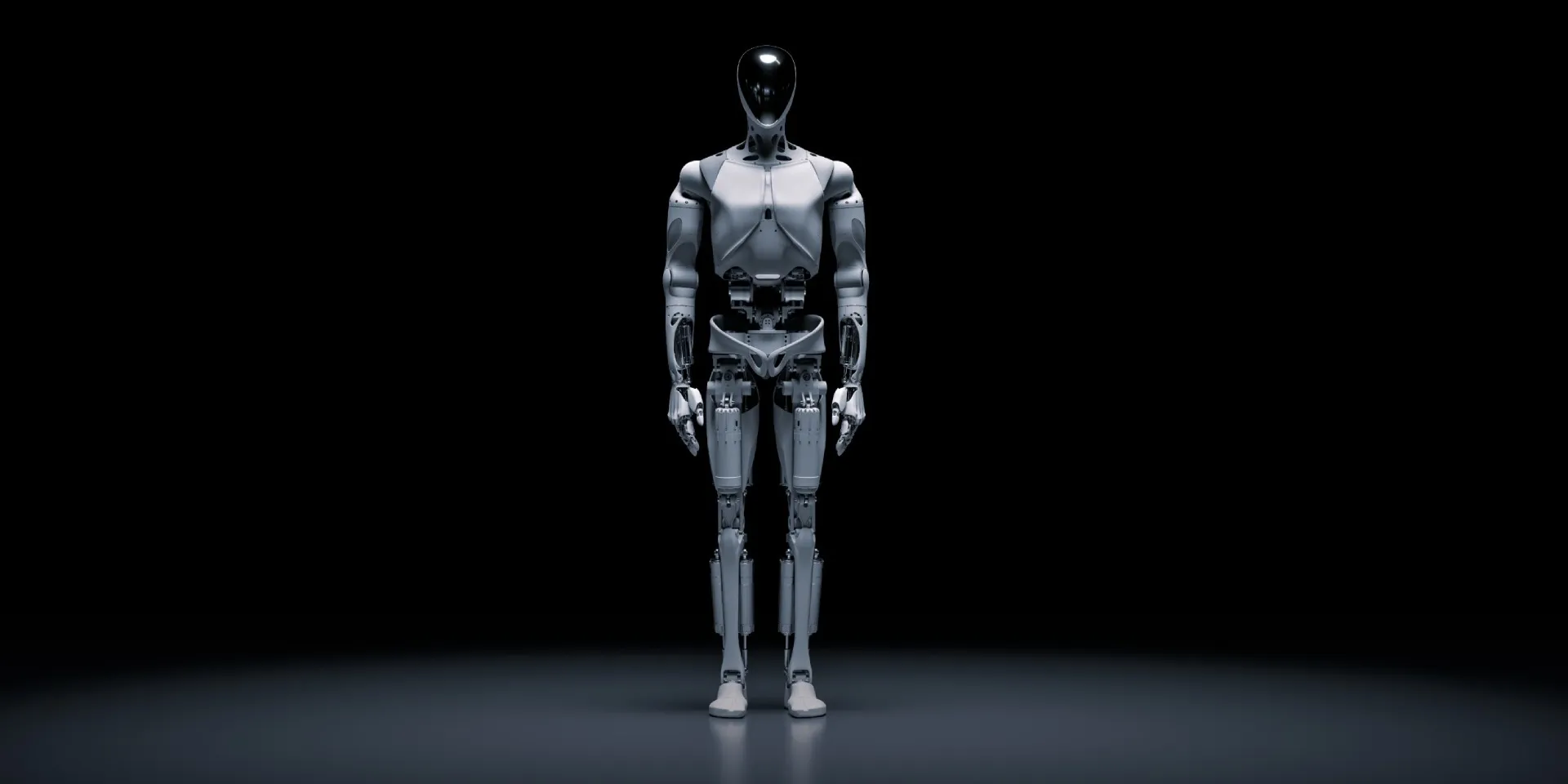
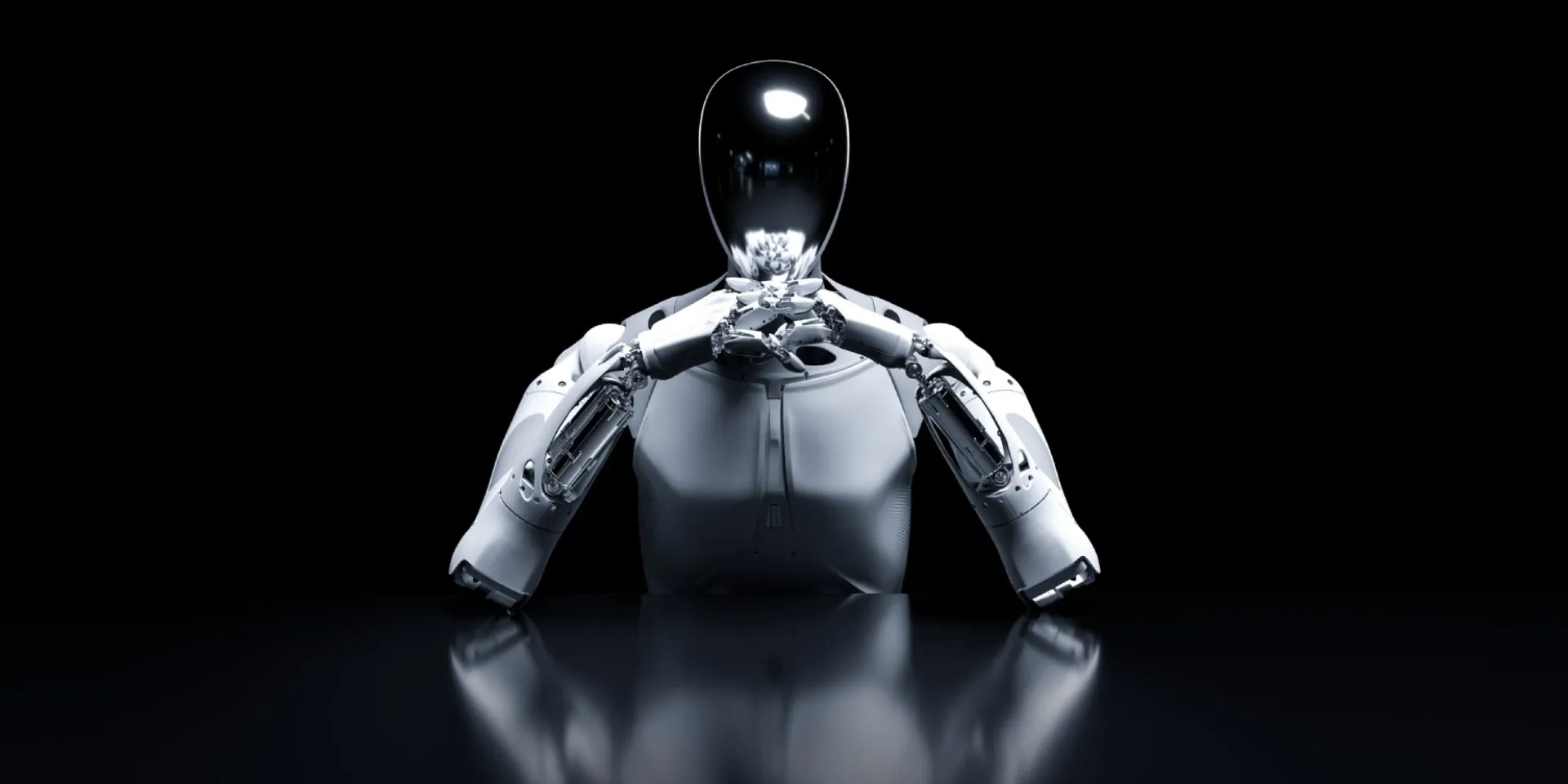
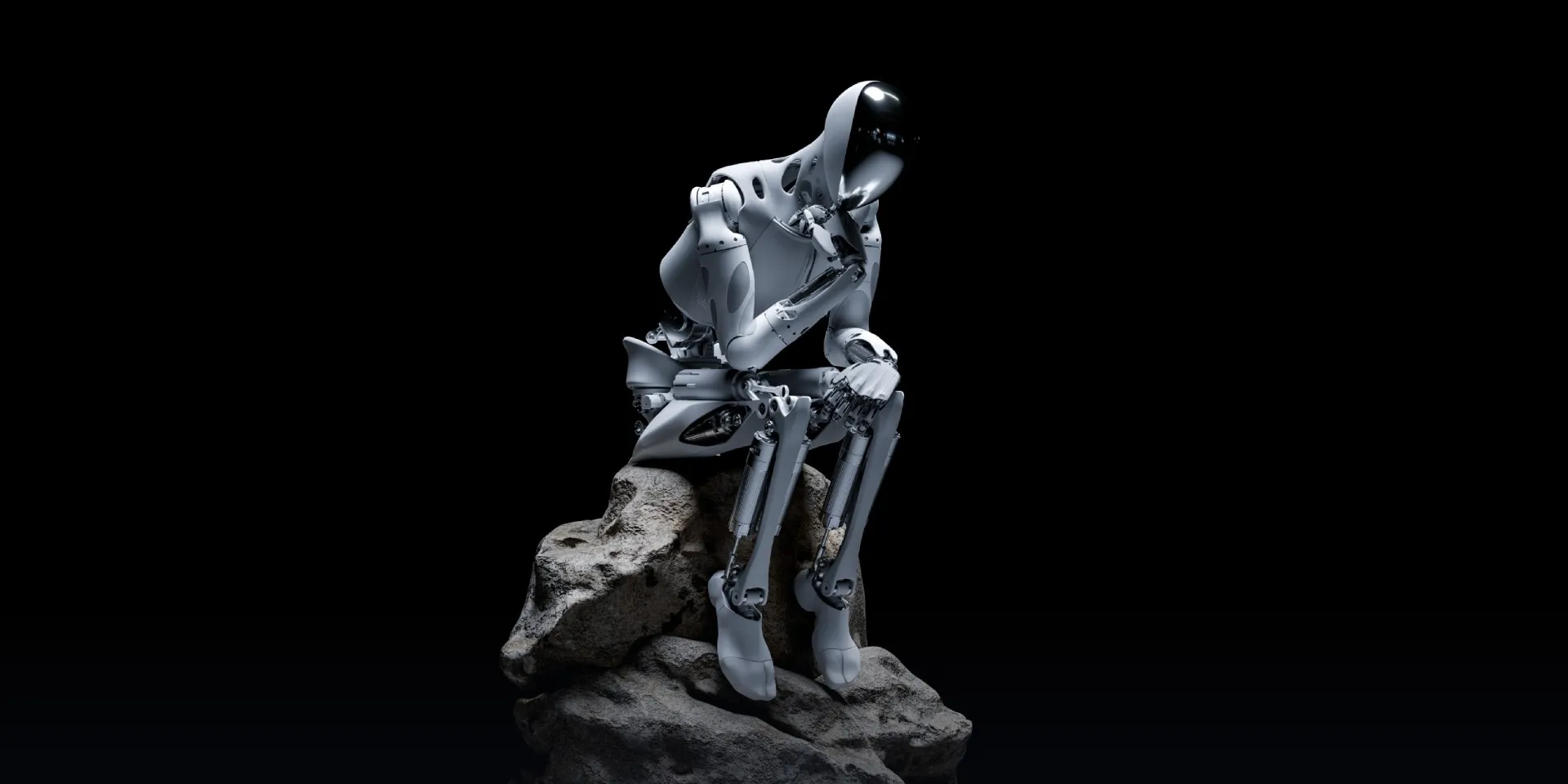
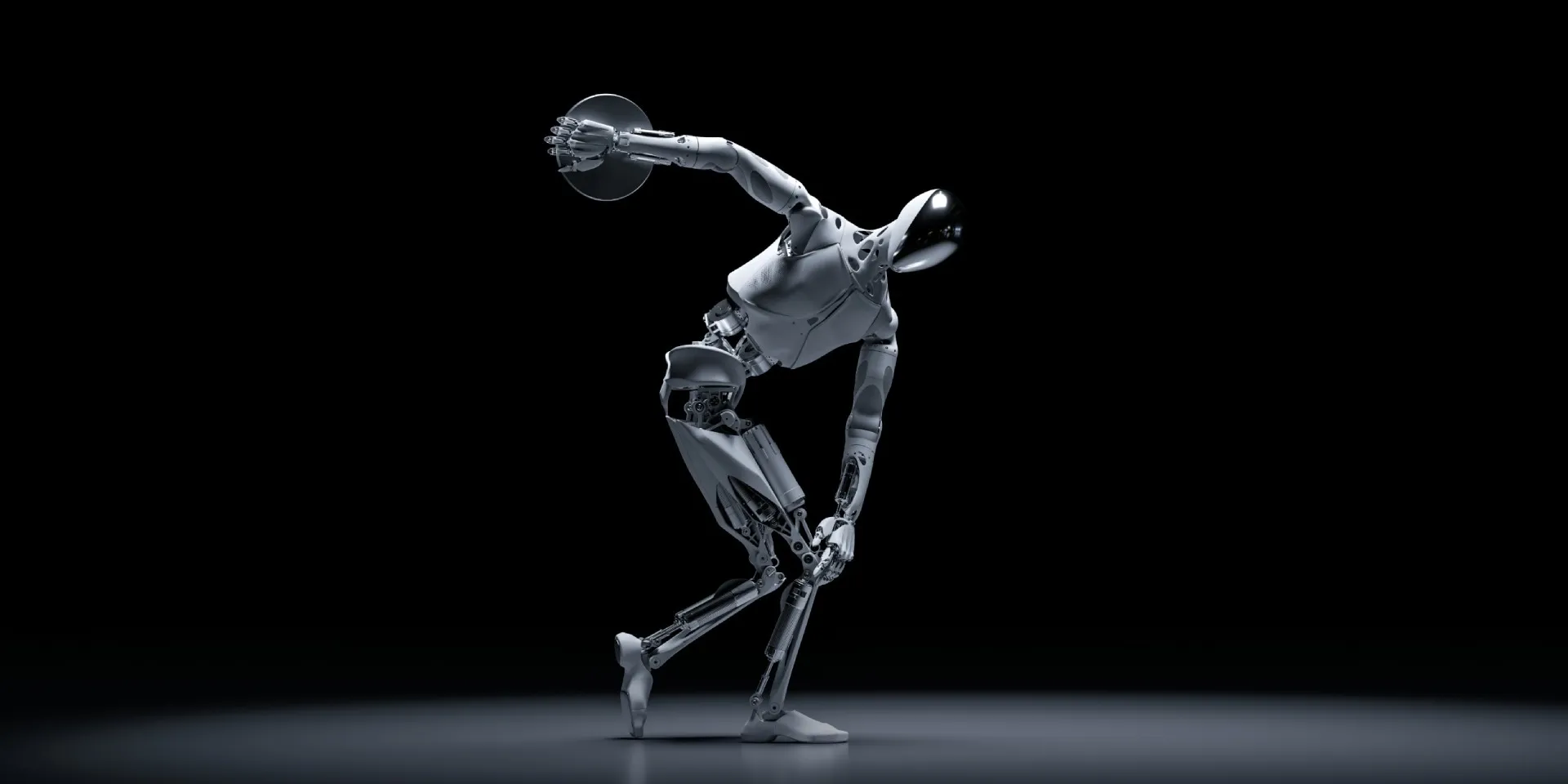
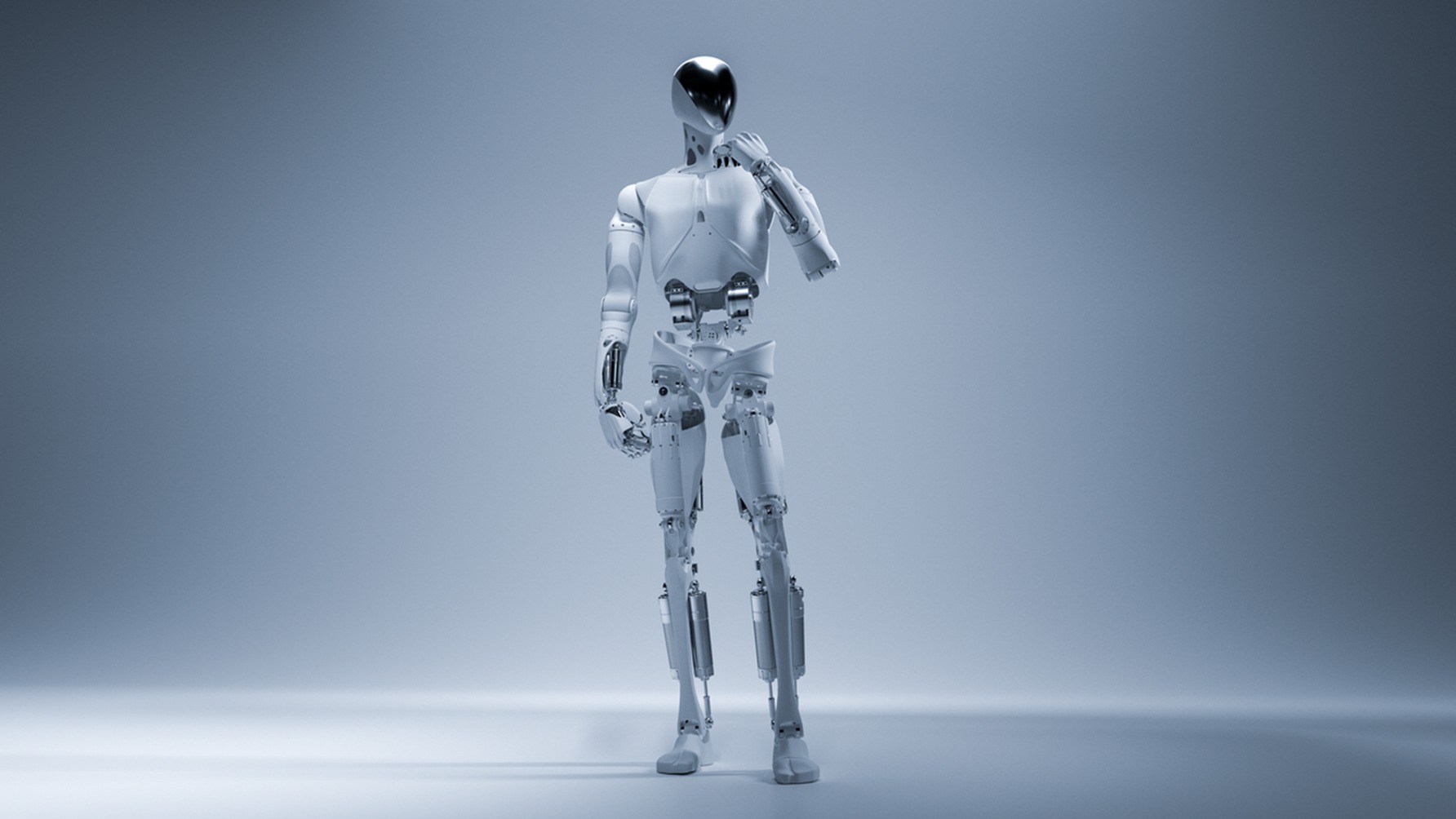
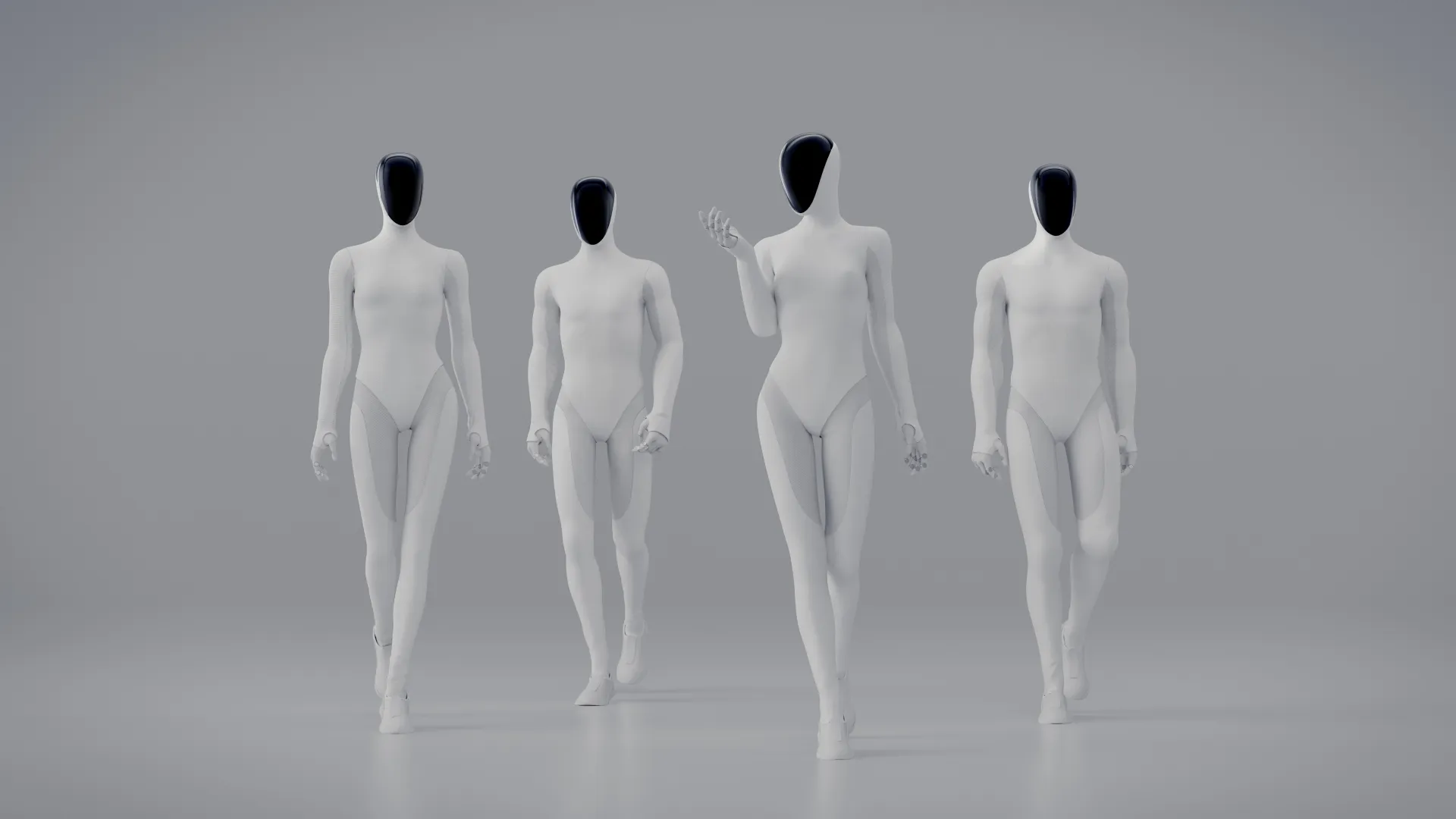
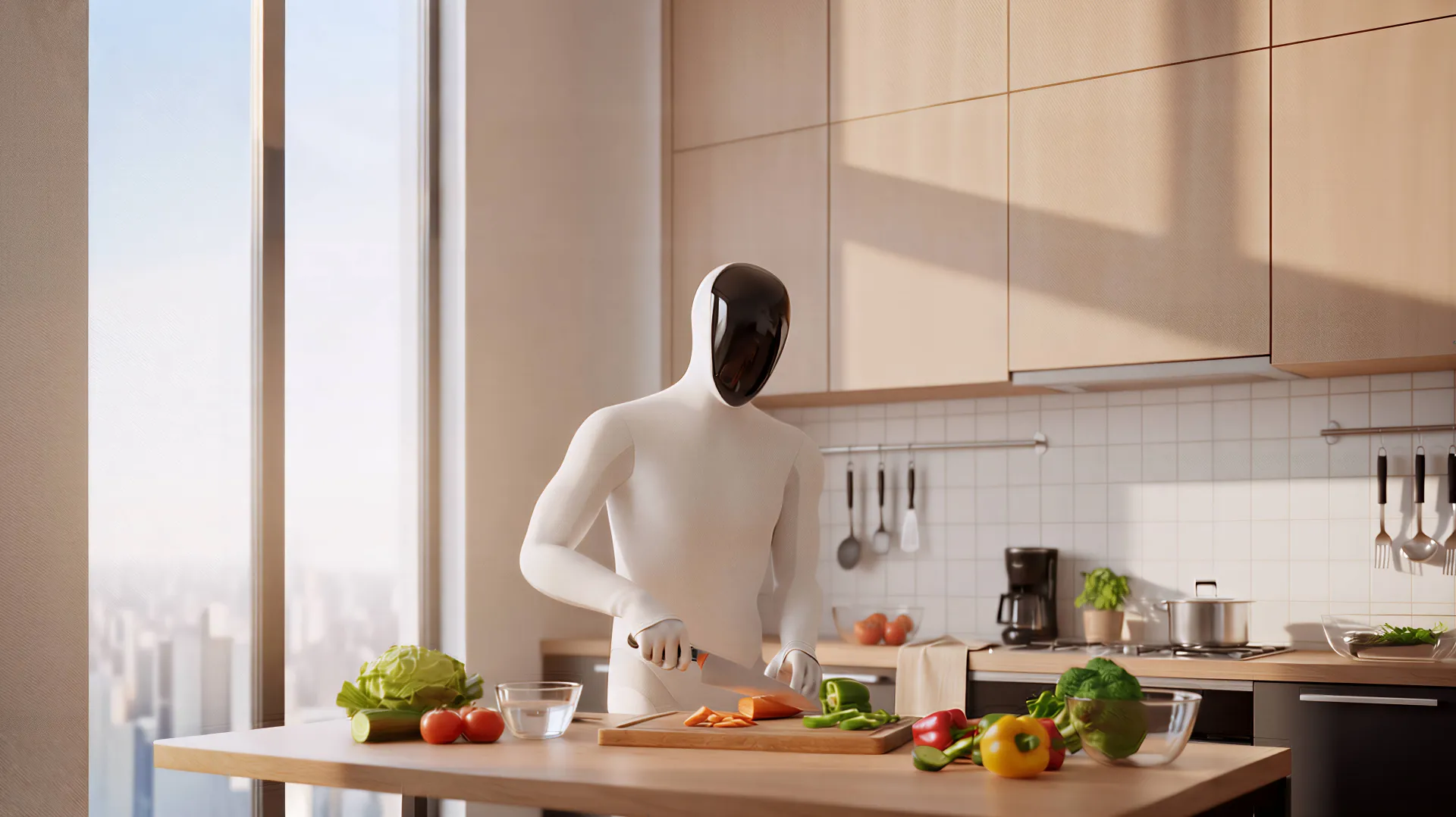
XPENG’s illustrations show the design and possible uses. They do not establish that the robot performs these tasks today.


Videos
XPENG’s films grouped by subject. Dates refer to publication; some films reuse older footage. Select a card to watch on YouTube.
 XPENGWhy does IRON move so naturally?Engineers explain the body structure and how they train the robot to walk.
 XPENGDesigning IRONA closer look at the waist, actuators and soft layers beneath the knitted covering.
 XPENGThe mechanics beneath the surfaceA short montage of the hands and uncovered structure of the 2025 version.
 XPENG MalaysiaIRON in a kung fu performanceXPENG Malaysia presents choreographed movements by the earlier robot design.
 XPENG RoboticsTalking with several peopleAn R&D demonstration with changing speakers, person recognition and responses in German.
 XPENGExploring the exhibition with IRONAn edited presentation follows the earlier IRON design through XPENG’s experience centre.
 XPENGIRON Shows You XPENGA company tour introducing XPENG colleagues and workplaces from a robot’s-eye perspective.
 XPENGCutting open IRON’s coveringThe 6 November demonstration: a staff member cuts open the lower-leg covering, and IRON walks afterwards.
 XPENGIRON Starts Factory TrainingAn early promotional film showing the previous robot design, including coffee preparation.
 XPENGOpening the production lineThe Guangzhou commissioning ceremony and work at the production-line stations.
 XPENGOne Step at a TimeThe development team reflects on the exposed-leg demonstration and progress towards production.
 XPENG MéxicoA short introduction to Physical AIXPENG México combines footage of coffee preparation and walking from earlier robot versions.
 XPENG MéxicoIntroducing IRON in MexicoA regional promotional film reusing 2025 footage. Its description supplies the regional dimensions.
 XPENGIRON at IFAA short fair montage opens with IRON on a plinth, followed by scenes with visitors.
Sources
Updated 26 September 2026. Specifications and plans are XPENG’s statements; the laboratory results come from the XPACE paper. The possible battery switch was reported by CnEVPost, citing Jipian Lab.
Historical figures: XPENG’s 2024 release also mentions 200 degrees of freedom without defining the count; it is not compared with later body totals here. For AI Day 2025, the English release states 3,000 TOPS, the Chinese release 2,250, and the French release contains both. Current announcements give 2,250. That discrepancy does not by itself establish a hardware change.
- G9L launch, 18 September 2026 - shared Turing chip and AI foundation.
- XPENG on Weibo, 17 September 2026 - software shared between cars and IRON.
- Production line, 8 September 2026 - specifications and production plans.
- XPENG at IFA, 27 August 2026 - L03 Ultra’s three Turing chips and 2,250 TOPS.
- XPENG L03 on xpeng.guru - hardware allocation across Danish variants.
- XPENG Denmark, 21 December 2024 - first IRON and Turing chip architecture.
- AI Day 2025, French edition, 6 November 2025 - gearing, battery, software, privacy and applications.
- Cutting Open IRON, 7 November 2025 - the exposed-leg demonstration.
- One Step at a Time, 9 September 2026 - XPENG’s account of the demonstration.
- XPENG Australia, undated - engineering, motion capture and training.
- How was IRON designed?, 3 February 2026 - lattice structure and covering.
- Why is IRON so human-like?, 2 February 2026 - movement and control.
- Harmonic Drive, undated - general principles of harmonic gearing.
- Northwestern University: Modern Robotics, undated - degrees of freedom.
- AI Day, 6 November 2024 - historical joint counts.
- AI Day 2025, English edition - body, hands and historical TOPS figure.
- AI Day 2025, Chinese edition, published 17 November - body and chip figures.
- XPENG México, September 2026 - height and weight in the video description.
- CnEVPost, 3 September 2026 - reported battery switch, citing Jipian Lab.
- Real-World Interaction Test, 22 September 2026 - microphones and conversation demonstration.
- XPACE, version 1, 15 September 2026 - sections 3.1, 3.2, 3.4.2 and 4.3 on training and experiments.
- Investment agreements, 25 August 2026 - funding, investors and planned applications.
- Second-quarter results, 25 August 2026 - capacity and 2027 deliveries.
- Milan premiere, 17 April 2025 - IRON’s European debut.
- XPENG Global, 7 September 2026 - IRON at IFA Berlin.
- XPENG Norway, 16 September 2026 - planned Oslo Motor Show appearance.