


XPENG built the update on feedback from European customers and journalists. From the start of December 2023 a team of five or six people from XPENG’s Autonomous Driving Center was in Denmark with a handful of test cars, driving Danish roads alongside the company’s Danish staff. The team was led by Dr Jun Ma, senior director, from a centre with more than 1,000 engineers in China and 50 in Silicon Valley and Munich.
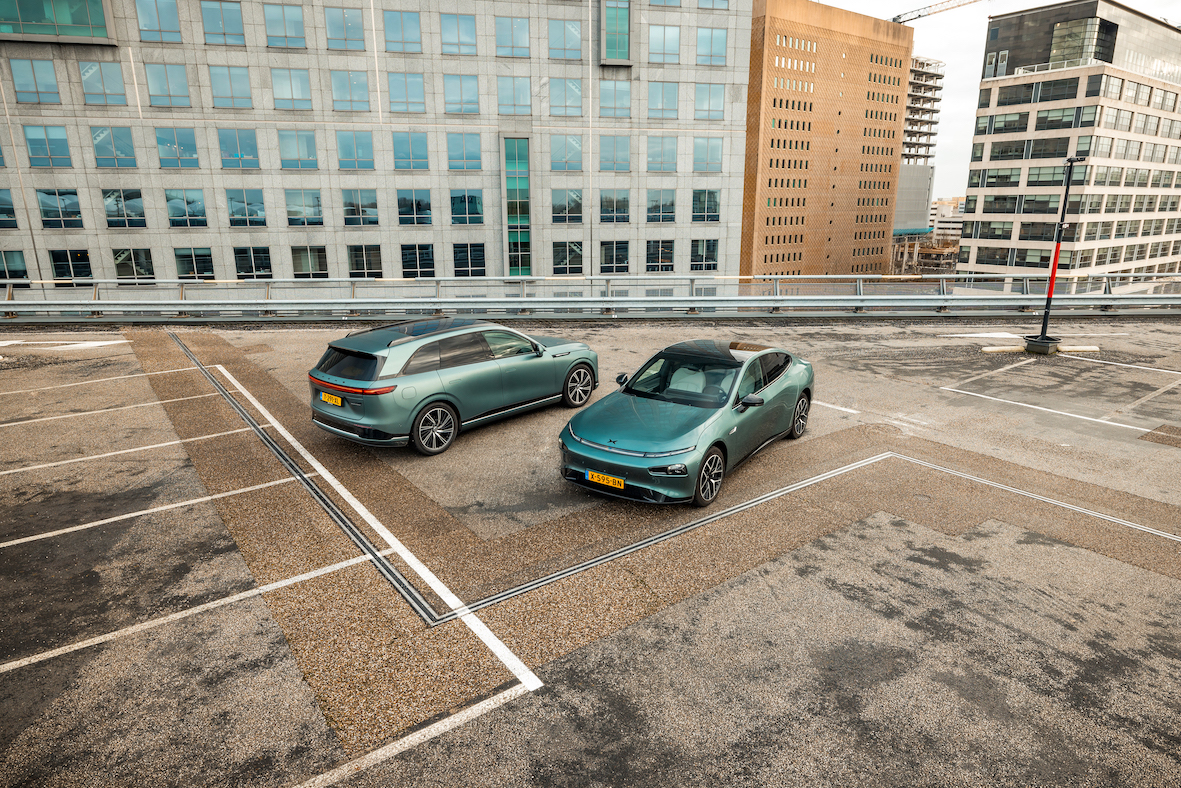
According to a test drive and an interview in the trade title Motormagasinet, which XPENG shared in its newsroom, the journalist found three noticeable improvements. Warning sounds were cut sharply, so the car no longer made a racket when you exceeded the limit or switched the assistance off. The car held the middle of the lane instead of fighting the markings. And it no longer drifted to the side, forcing a correction that disengaged the system.
One thing was still wrong. On a stretch with cars parked at the roadside the car braked once. Jun Ma called that unacceptable and said it would be fixed.
In the same interview Jun Ma said XPENG was negotiating with a global map supplier about map data for the European assistance systems, for instance speed limits. XPENG later introduced Google Maps for navigation outside China.
The beta
In March 2024 XPENG opened a beta test of version 4.4.0 for the P7 and G9. A thousand European owners signed up within a few days. The test software came as an OTA update, and the installation took about a quarter of an hour. Owners who did not take part could wait for the final update. The work had been done in-house in three months on feedback from European customers and journalists.
Fewer needless braking events and three DSM levels
XPENG’s list of updates covered a number of concrete adjustments:
- ACC brakes unnecessarily less often, and XPENG’s own example is cars parked at the roadside. Speed reduction is better judged, the following distance more natural, and switching from LCC to ACC with a steering input now keeps the set speed.
- Driver monitoring, DSM, can be set to three levels, low, normal and high. The default moves to normal, and what used to be the default is now called high.
- The traffic-light state for your own lane appears at the top of the driver display, for sun glare or a blocked view.
- ALC signals more clearly when an automatic lane change is possible, and the acceleration afterwards is better timed.
- LSS warns only where it is necessary and legally required, and the lane-departure intervention is gentler, with weaker vibration through the wheel.
- Acceleration and braking are better timed when the car ahead changes lane or another cuts in. LCC holds speed and line better through curves.
- Sounds and visual notifications during ACC, LCC and ALC are sharply reduced.
- Automatic high beam sees oncoming and preceding traffic better in the dark and switches off and back on by itself.
- Bluetooth call audio is improved.
- A bug had left remaining range showing only in kilometres. You can again choose between distance and battery percentage.
- Charging stations can be filtered by power in the navigation, which ties into preconditioning the battery before a fast stop.
- The 360-degree camera view is improved, and demisting works better in wet and cold conditions.
- Function names and descriptions in the infotainment are rewritten in Dutch, Danish, Swedish and Norwegian.
After the beta
XPENG planned the rollout of the final version 4.4.0 to European P7 and G9 cars later that month.
The test driving in Denmark and the feedback from European customers formed the basis for adapting the assistance systems to European driving conditions.
Image: XPENG
Sources
XPENG Benelux: a thousand European owners in the 4.4.0 beta · 6 March 2024
XPENG Benelux relaying Motormagasinet on the ADAS team in Denmark
XPENG Norway: the same beta, with sign-ups inside a couple of days · 11 March 2024