



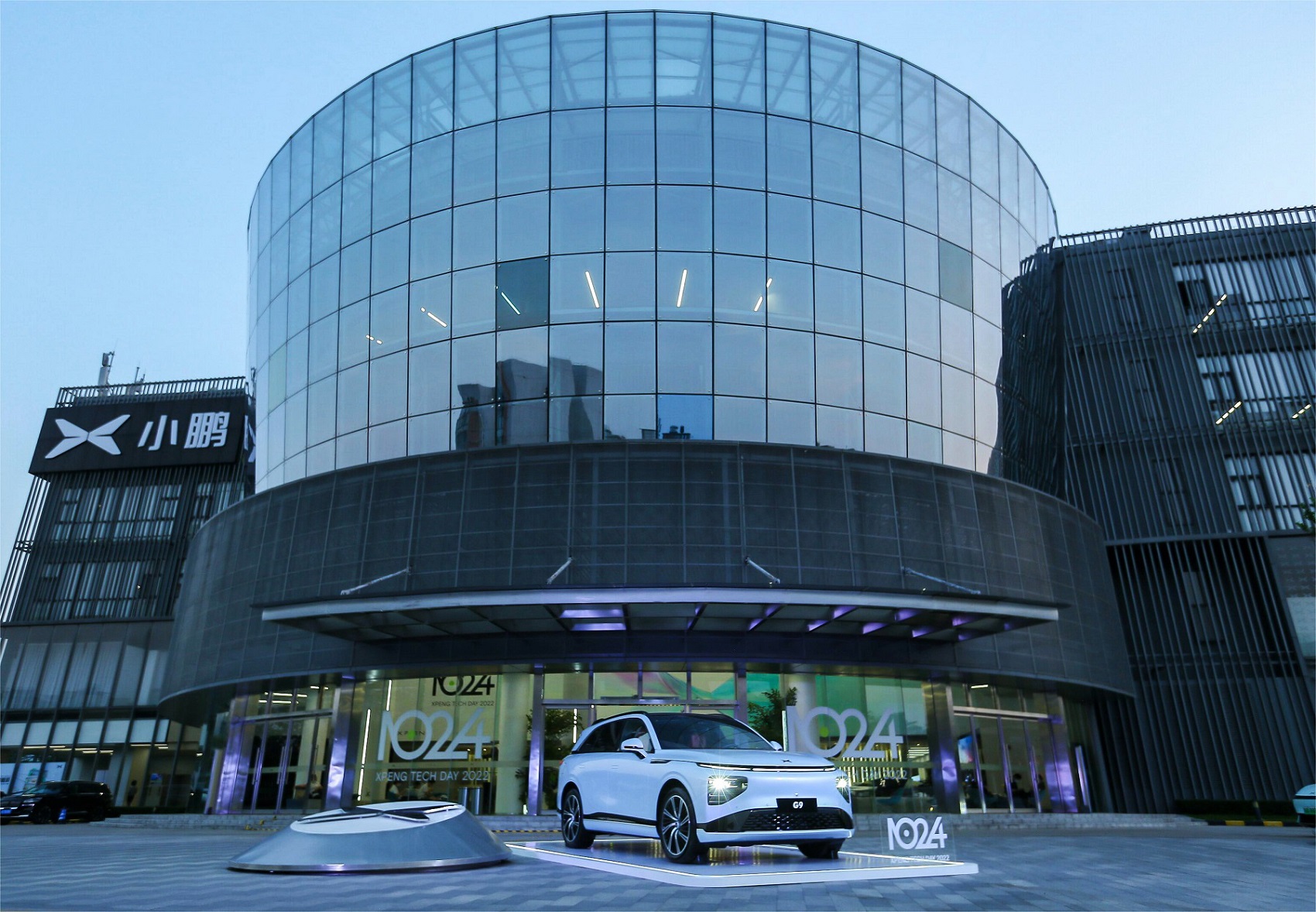
XPENG held its fourth annual 1024 Tech Day at its Guangzhou headquarters on 24 October 2022.
XNGP was the main business. The system had been introduced at the G9 launch in September 2022 and is described here as XPENG’s last step before full autonomy. It was to cover motorways, car parks, complex city streets and urban expressways, and to work in areas with no high-definition map coverage. The hardware was two lidars, 8-megapixel cameras and 508 TOPS of compute.
XNet is the in-house neural network that does the seeing. It fuses the images from several cameras instead of processing each one on its own. Training runs on Fuyao, which XPENG calls China’s largest supercomputing centre for autonomous driving, on Alibaba Cloud at 600 PFLOPS. One training run fell from 276 days to 11 hours, and an auto-labelling system does what XPENG reckons is 2,000 person-years of labelling in 16.7 days.
One figure deserves a second reading. After optimisation XNet uses 9 per cent of an Orin-X chip. Before optimisation it needed 122 per cent. More than a whole chip is not something you can drive with, and the number is XPENG’s own way of saying the network could not run in the car until it was rewritten.
On top of that came more than 1,000 rare corner cases resolved a year and a 95 per cent drop in Highway NGP incidents. The voice system reached version 2.0 with better than 96 per cent accuracy, 245 milliseconds to a response on screen and under 700 in the speakers, with no wake word and no connection needed. The flying car got its paragraph too: the eVTOL was redrawn from two horizontal rotors to distributed rotors, and the test aircraft had made its maiden flight and completed several single-motor-failure trials.
The bullet that ran a week ahead of its own facts
The top of the release says the G9 has obtained a government permit to drive on public roads. The body does not say that. It describes a closed-course test in Guangzhou. The permit itself was issued on 31 October, a week later, and that story stands on its own.
Why the date still matters
The argument behind the whole robotaxi plan was set out here: the cars are to be ordinary series-production cars, and the only thing separating a test car from a customer car is software. Dr Xinzhou Wu, then head of autonomous driving, put it as a cost case.
Four years later XPENG put robotaxis into internal testing, and the word on driver assistance in Europe is 2027. This date is the one those promises should be measured against.
Images: XPENG
Sources
XPENG: mobility technologies revealed at 2022 Tech Day · 24 October 2022