


On 14 January 2025 XPENG Charging and bp pulse signed a memorandum of understanding to open each other’s charging networks in China. The agreement gives customers access to more than 30,000 charging points across 420 Chinese cities. XPENG contributes more than 2,000 stations and 10,000 chargers, bp pulse more than 1,000 stations and 23,000 chargers.
Under the agreement, the companies planned to explore solar power and battery storage alongside energy management. The same applied to joint marketing.
In 2025 XPENG Charging was to expand its network globally through an international charging service for finding a charger, navigating to it and paying at it. The expansion covered Asia, Europe and Australia.
The rollout sequence
On 24 February 2025 XPENG set the order: Southeast Asia first in 2025, with stations in Hong Kong and Thailand in the first half of the year, then Asia, Europe and Australia. The company would work with leading local charging operators.
Neither release names a European city, country or date. What Europe has got is the Plugsurfing deal of May 2025, which is access to other people’s chargers rather than XPENG’s own stations.
The rest of the roadmap
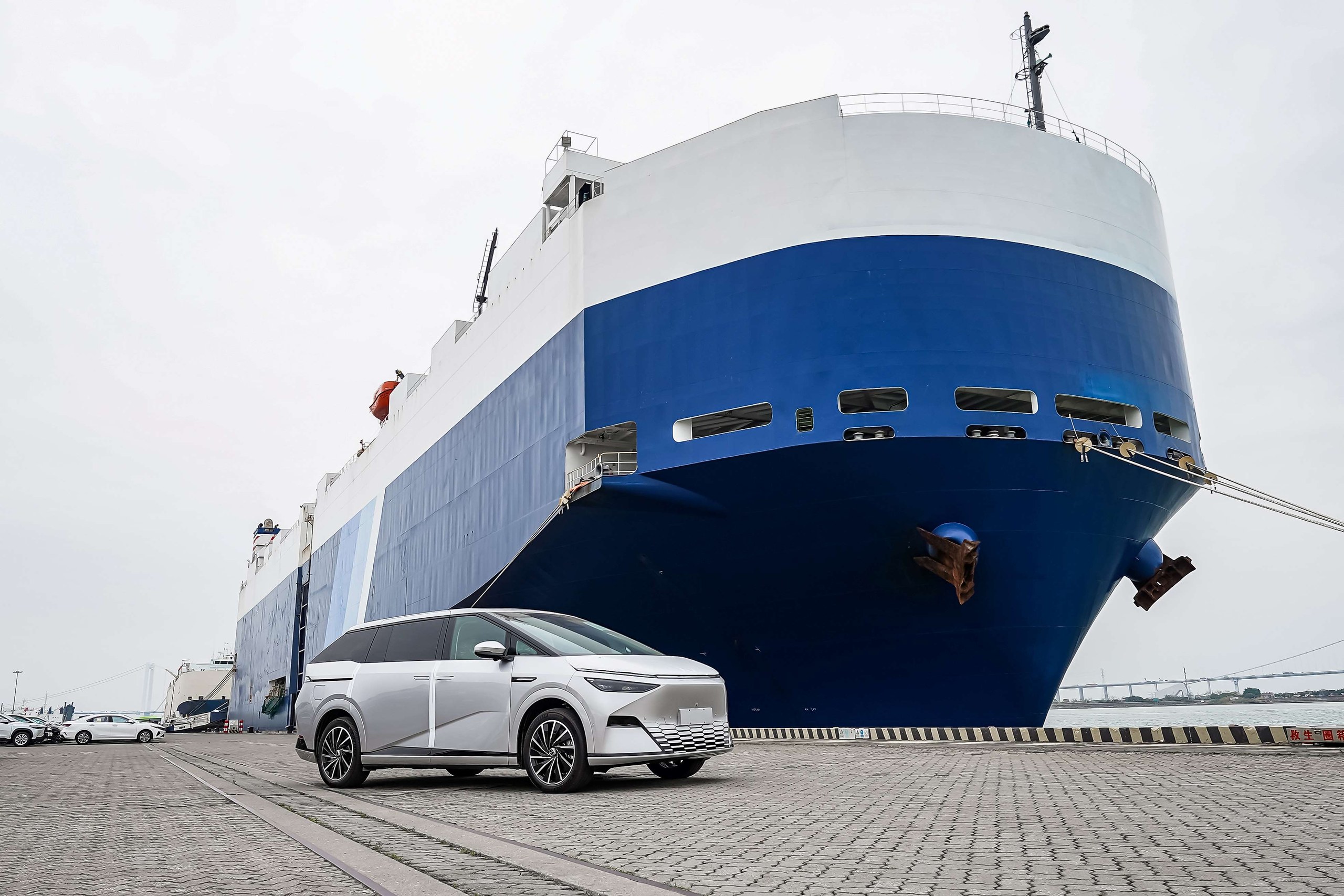
The same day XPENG shipped the first 300 right-hand-drive X9s to Thailand. The X9 is the company’s second model built for both left- and right-hand drive.
The Turing driver assistance system was to enter a global adaptation phase in 2026. The word in July 2026 was 2027.
XPENG was by then active in more than 30 markets and had delivered over 620,000 cars since 2014, with a target of 60 countries and over 300 service centres by the end of 2025. Car number 100,000 outside China came in August 2026.
He Xiaopeng said the company was accelerating its global expansion to strengthen its position in the international EV market. The markets page shows where it sells.
Images: XPENG
Sources
XPENG Charging and bp pulse sign a memorandum of understanding · 14 January 2025
XPENG: 300 X9s shipped to Thailand and the global roadmap · 24 February 2025