


XPENG Robotaxi
XPENG's L4 ride-hailing vehicle on the GX platform, not a trim in the GX configurator. Internal testing began in July 2026.
XPENG Robotaxi is XPENG’s L4 autonomous ride-hailing vehicle - a fleet variant built on the GX platform, not a trim in the retail GX configurator. This page covers the service vehicle and its China rollout. For the consumer SUV, see XPENG GX; for European models, see the Lineup hub.
China roadmap. Robotaxi is a commercial fleet programme in China - not a consumer product in Europe or Denmark, and not a promise of EU type approval for L4 operation here.
Images: XPENG
Jump to: YOYO · Development platforms · GX fleet vehicle · Mass production · Employee testing · Operations and partners · Technology · Timeline · Europe · Brand Day Munich · vs retail GX · Sources
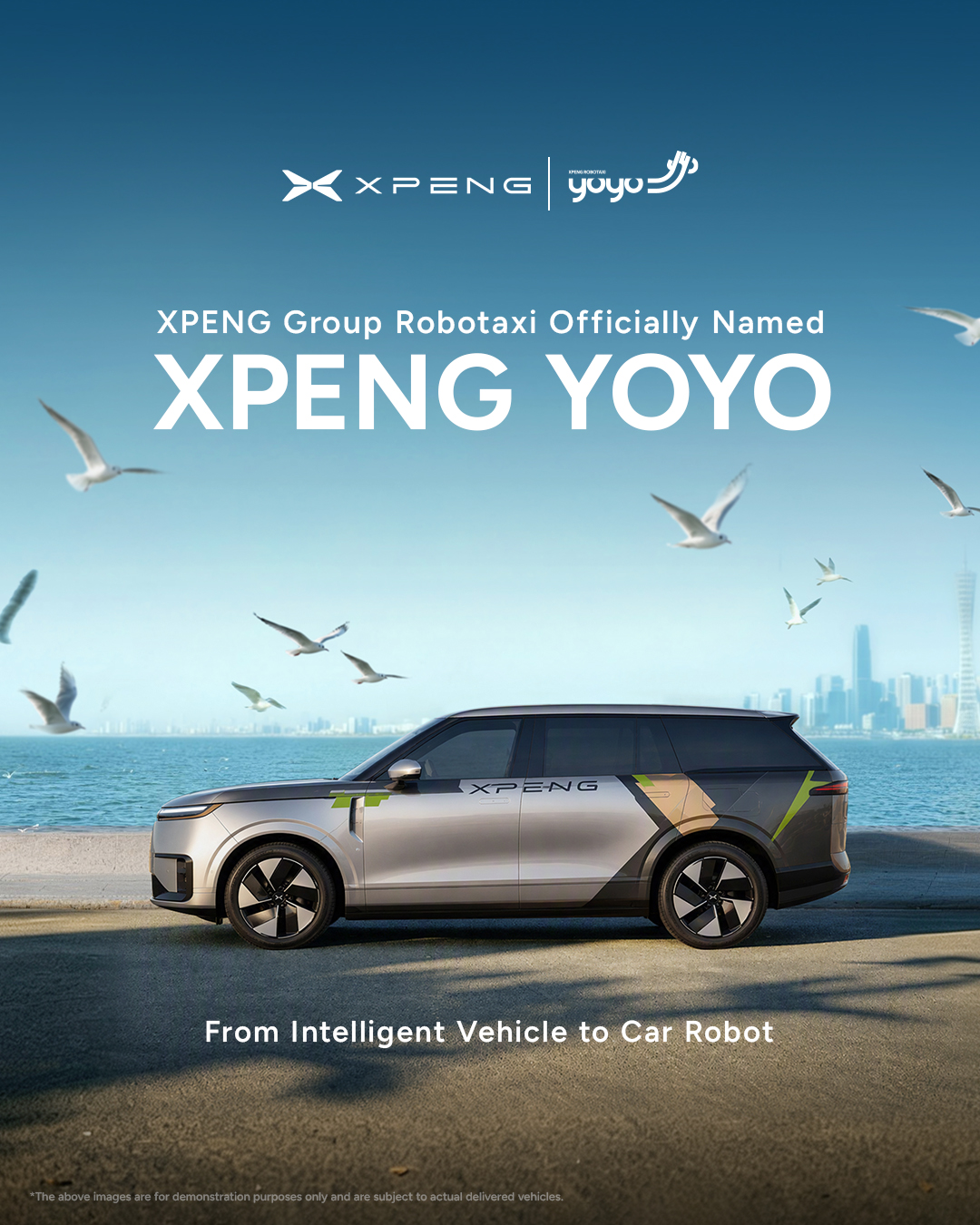
The Robotaxi brand: XPENG YOYO
The company announced the name on 8 October 2026 in a press release and on its official X account, alongside a poster showing the new logo and a fleet-liveried SUV. The same day XPENG opened invitation-only sign-ups in China; until then only employees had ridden, at 1 yuan (about €0.12) a ride.
According to CnEVPost, the Chinese name is intended to evoke relaxed, carefree travel, while the English name YOYO was chosen to be easy to pronounce internationally.
Development over time: multiple platforms
XPENG’s current GX-based mass-production fleet is one chapter in a longer Robotaxi story. Official and semi-official material shows several retail model lines used as test beds, demos or earlier permit programmes - not all of them destined to become the Guangzhou fleet vehicle.
| Platform | Role in Robotaxi work | When |
|---|---|---|
| G9 | First zero-hardware-modification Guangzhou road-test permit; later passenger-carrying Robotaxi permit - retail G9 with software upgrades only | Oct 2022 road test · May 2023 passenger permit |
| X9 | Official “Intent made visible” demo - sun-visor external displays, pedestrian yield cues; camouflaged MPV in XPENG’s own YouTube / Weibo preview before AI Day 2025 | 4 Nov 2025 |
| P7+ | Appeared in XPENG’s pre-AI Day 2025 Robotaxi preview material (press reported a P7+ still labelled Robotaxi alongside the X9 video). No dedicated xpeng.com fleet announcement - distinct from the later Robo consumer trim plan | Nov 2025 preview |
| GX | Mass-production fleet platform - factory-built L4 Robotaxi, employee beta and planned pilot operations | 2025-2026 |
At AI Day 2025, XPENG said it would launch three Robotaxi models in 2026 (typically reported as 5 / 6 / 7-seat layouts) without naming G9, X9 or P7+ as those products. The May 2026 mass-production press release names GX only. Treat G9 / X9 / P7+ entries above as development and demonstration history, not a confirmed “three-model fleet lineup”.
Current fleet vehicle: GX platform
XPENG states that its mass-produced Robotaxi is built on the XPENG GX platform - the same architecture family as the retail flagship SUV (SEPA 3.0, 800 V, Turing compute). The fleet vehicle is engineered to L4 autonomous driving standards with a separate product definition from showroom GX trims.
First mass-produced unit
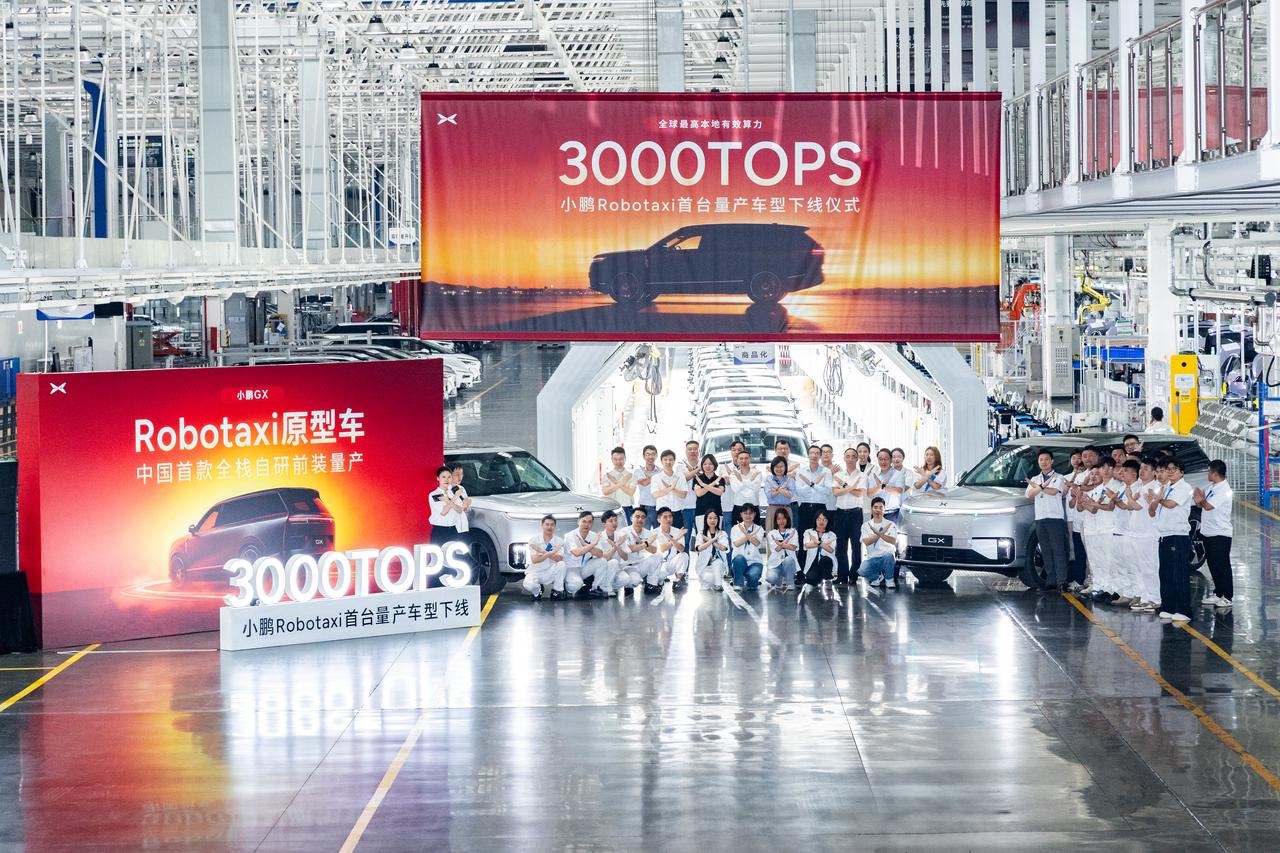
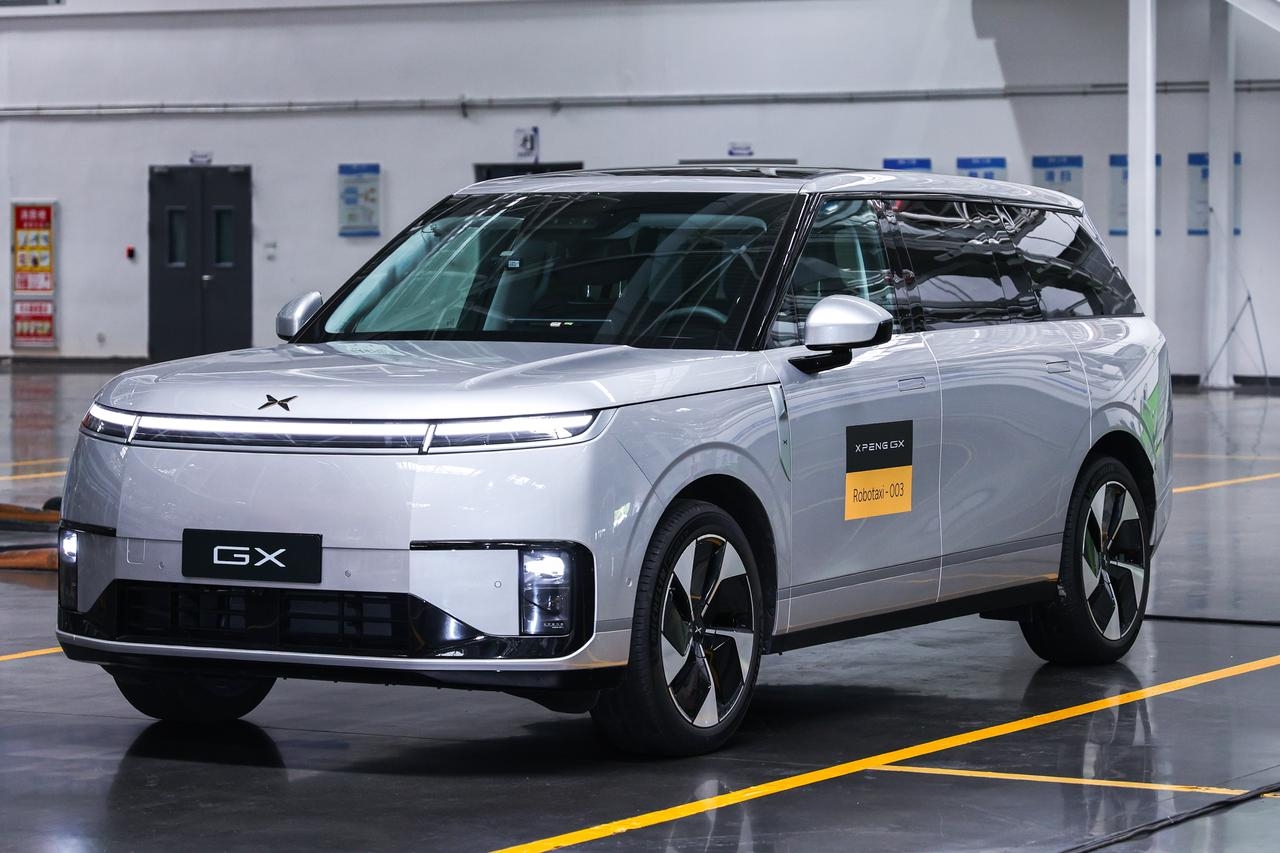
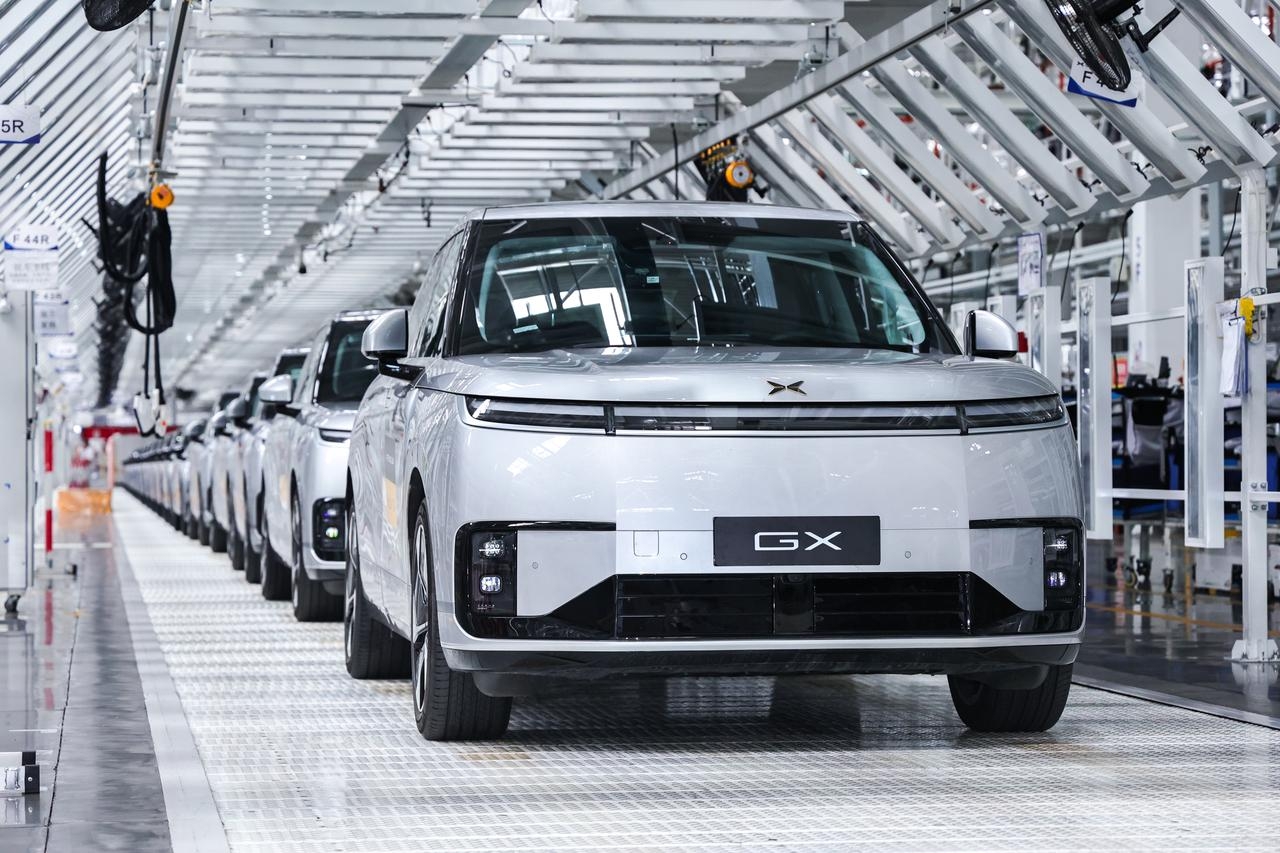
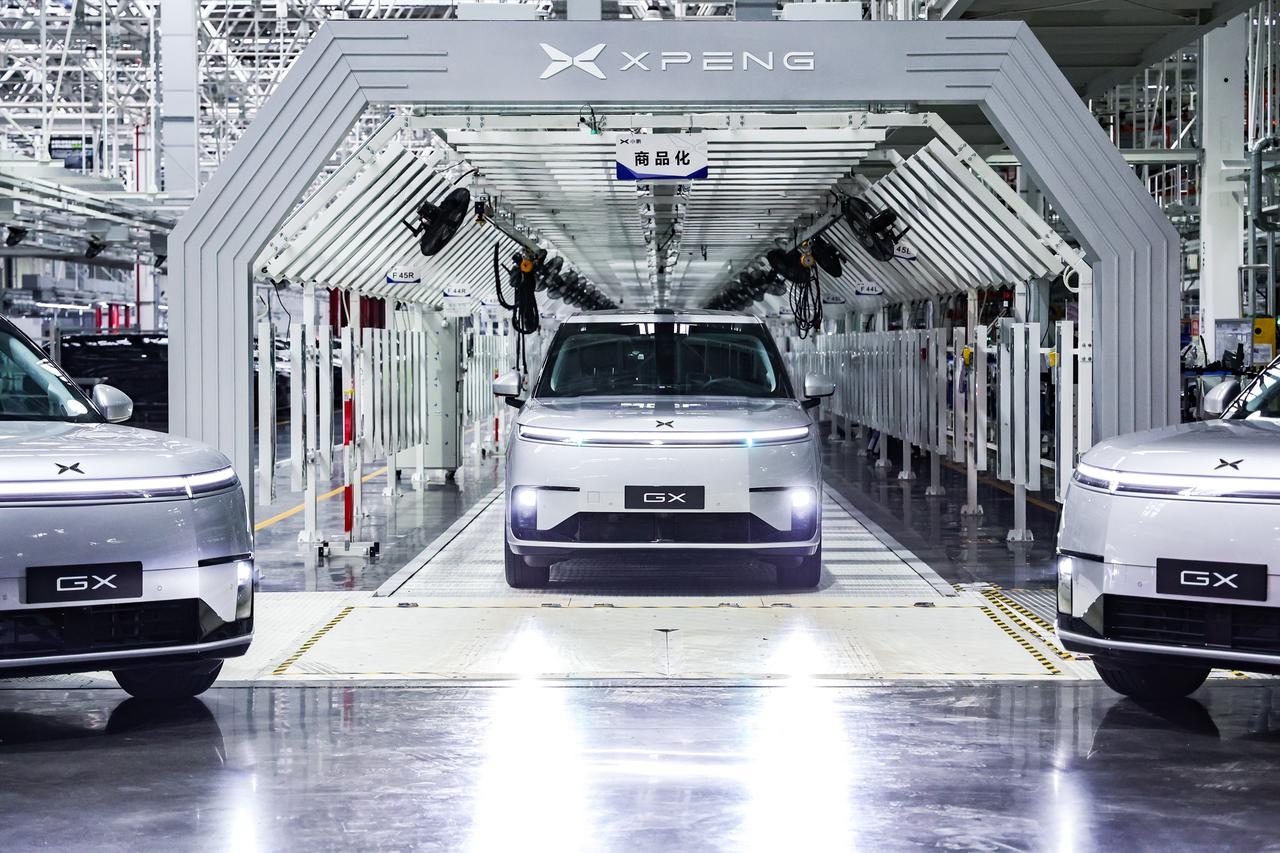
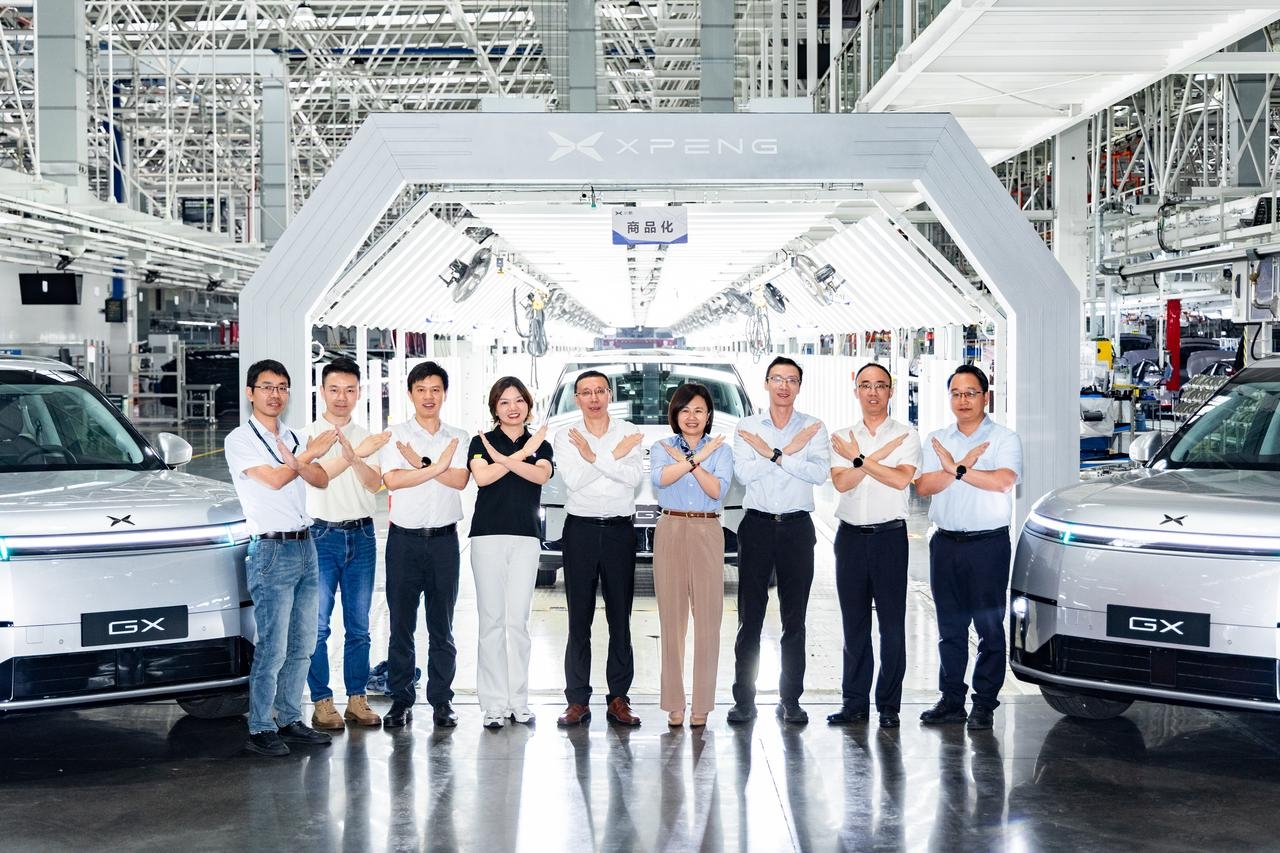
On 18 May 2026 in Guangzhou, XPENG rolled the GX-based fleet vehicle off the line and called it China’s first production-ready Robotaxi built full-stack in-house - pre-assembled at the factory rather than converted from a showroom SUV.
Internal employee testing (July 2026)
On 10 July 2026, about eight months after AI Day 2025, Guangzhou staff began taking closed beta rides. Chairman He Xiaopeng completed the first end-to-end trip (order, pickup, destination) on the Robotaxi platform - XPENG’s proof that ride hailing, dispatch, transport and completion are wired together.
In its August Q2 results, XPENG said the internal programme had received more than 2,000 test orders in Guangzhou and had validated the full end-to-end passenger process. The company’s stated target is passenger operations without a safety driver in 2027; that is a goal, not a service currently available to the public.
XPENG’s fleet livery on the test vehicles matches the large GX-based SUV shown at AI Day 2025 and in May 2026 press photos: wrapped body, rear privacy treatment and a ceiling-mounted screen for passengers showing a bird’s-eye autonomy view. Since 8 October the first outside riders can sign up with an invitation code, and before pickup they can set the cabin temperature and switch on the fragrance system. It is still a limited trial in China, not public ride-hailing in Denmark or the EU.
In August 2026, XPENG obtained a remote-testing permit for road tests in Guangzhou without a safety operator in the driver’s seat, according to its 1 September announcement and the YOYO press release. The permit covers designated category 1, 2 and 3 test roads. These are road categories, not automation levels; the permit does not confirm a public passenger service.
Business model
In July 2026, XPENG said local partners would run the service, with the company supplying the vehicles and technology. XPENG plans to earn revenue from hardware and services and take a share of operating revenue.
Compute, perception and VLA
At AI Day 2025 (5 November), XPENG unveiled Robotaxi as part of its Physical AI roadmap: four Turing chips, up to 3,000 TOPS, pure vision without LiDAR or HD maps, dual-redundancy hardware, and an integrated in-cabin and external interaction system. According to XPENG’s technical presentations and May 2026 production release, the total compute of 3,000 TOPS is delivered across four in-house Turing AI chips (750 TOPS per chip):
Turing chip allocation breakdown
- Chip 1 (750 TOPS) - Primary ADAS / VLA 2.0 perception: Real-time vision perception (high-resolution camera suite without LiDAR or HD maps) and spatial 3D environmental modeling.
- Chip 2 (750 TOPS) - VLA 2.0 End-to-End planning & control: Executes the large VLA 2.0 foundation model (Vision-Language-Action) for trajectory planning, road-user intent prediction, and direct vehicle control with sub-80 ms response latency.
- Chip 3 (750 TOPS) - Smart Cabin & Passenger AI: Powers the in-cabin passenger experience: local language models (LLM/VLM) for voice interactions, passenger climate/comfort controls, and ceiling/rear displays rendering real-time bird’s-eye autonomy views.
- Chip 4 (750 TOPS) - Safety redundancy (Fail-Operational) & External interaction:
- Hardware Dual-Redundancy (L4 safety requirement): To operate fully driverless without an on-board safety driver, functional safety standards (ISO 26262 ASIL-D) require complete compute redundancy. If a primary driving chip or power channel faults, this backup chip immediately executes a Minimal Risk Maneuver / Safe Stop.
- External pedestrian interaction (External Intent Display): Drives exterior communication lighting and screens (including the sun-visor display behind the windshield that signals the vehicle’s driving intent to pedestrians and traffic).
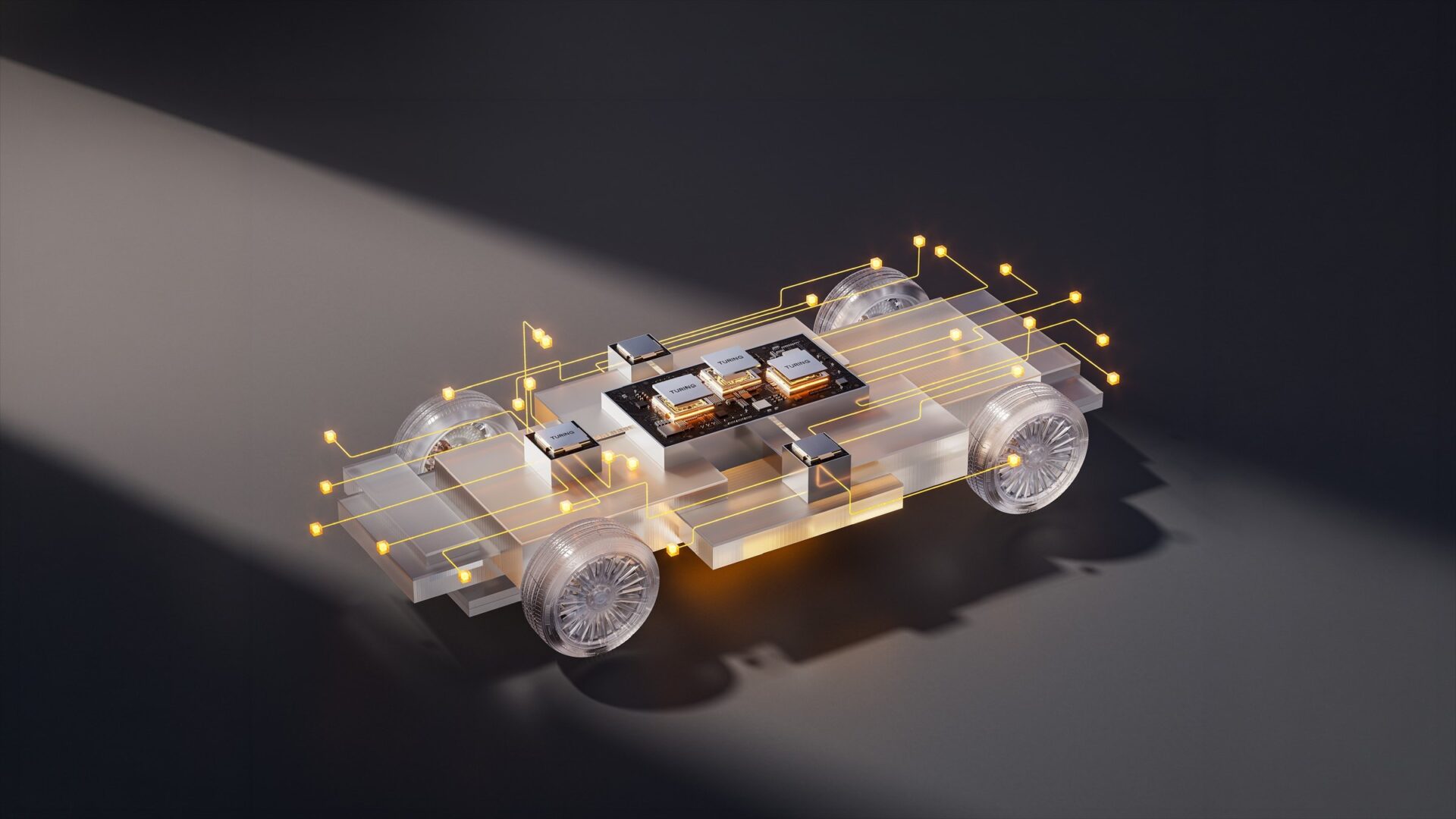
Retail GX marketing render: up to four Turing AI chips / 3,000 TOPS on the Robotaxi variant (Robotaxi最高算力3000TOPS; gx.html).
XPENG says the vehicle operates without LiDAR or high-definition maps, using a pure vision solution with decision-making driven by the VLA 2.0 end-to-end large model. XPENG claims the model removes the language-translation step in traditional three-stage Vision-Language-Action architectures, compressing system response latency to under 80 milliseconds, with improved urban generalization and cross-city deployment.
Fleet cabin equipment highlighted in the release includes privacy glass, comfort gravity seats, rear in-car entertainment screens and voice-assistant control of in-car settings during rides.
Rollout timeline (XPENG statements)
| When | What |
|---|---|
| Oct 2022 | G9 obtains Guangzhou autonomous road-test permit - zero-modification retail vehicle |
| May 2023 | G9 obtains Guangzhou Robotaxi passenger test permit - earlier programme |
| 4 Nov 2025 | Official X9-based Intent made visible demo (YouTube / Weibo) - external sun-visor interaction |
| 5 Nov 2025 | AI Day - dedicated Robotaxi unveiled; three fleet models in 2026 announced; Amap SDK partner named |
| January 2026 | Guangzhou road testing permit - routine L4 public road testing (GX programme) |
| 2 Mar 2026 | VLA 2.0 media day - Robotaxi public road testing; Volkswagen named first VLA 2.0 customer in China |
| March 2026 | Robotaxi business unit established |
| 18 May 2026 | First mass-produced GX-based Robotaxi rolls off the line in Guangzhou |
| 10 Jul 2026 | Internal employee testing begins; He Xiaopeng completes first end-to-end ride |
| 16 Jul 2026 | Brand Day Munich - Robotaxi / VLA 2.0 slides; European partner invite; VLA adapting for Europe |
| August 2026 | Remote-testing permit for road trials without a safety operator in the driver’s seat on designated Guangzhou test roads |
| 8 October 2026 | XPENG YOYO announced as the official Robotaxi brand name; invitation-only sign-ups open in China |
| Second half 2026 | Pilot / trial operations planned - technical viability, user acceptance, business model |
| 2027 | Company target: passenger operations without a safety driver |
XPENG also plans to open its Robotaxi SDK, with Amap named as the first global ecosystem partner.
Europe
There is no announced Robotaxi service timeline for Denmark or the EU - no operating permit, no public hail-to-ride launch date, and no EU type approval for L4 fleet operation as of mid-2026. XPENG Denmark’s May 2026 release repeats the China pilot plan; that is marketing context, not a Danish deployment promise.
Brand Day Munich (16 July 2026)
On the same Munich stage as the European L03 premiere, XPENG put several slides on Robotaxi and VLA 2.0. Archive stream: YouTube.
- XPENG Robotaxi (GX) - stage reveal of the mass-production fleet vehicle on the GX platform, labelled with Dual-Redundancy Design, 3,000 TOPS and Global Deployment.
- Robotaxi in Europe - wrapped GX-based fleet livery on stage; slide text: “We invite European partners to shape the future of mobility with us, here in Europe.”
- Employee beta (July 2026) - slide headline tied to the Guangzhou closed beta that started 10 July; bullet line: Full-Stack In-House Development | Mass-Produced | Vision Only; VLA 2.0 framed as one model bridging L2 and L4.
- VLA 2.0 in Europe - separate slide: One Model Bridges China and Europe · Now Adapting for Mass Production in Europe (stack adaptation for European roads - not the same as launching a Robotaxi service).
Two days earlier, on 14 July 2026, He Xiaopeng posted on X that NGP with VLA 2.0 would reach Europe in early 2027 (after China rollout from March 2026), and that XPENG looked forward to working with European partners on a Robotaxi fleet powered by the same foundation model. That is CEO-level intent - still not an EU Robotaxi operating date.
The 2 March 2026 VLA release names Volkswagen as the first VLA 2.0 customer in China, with global VLA delivery targeted from 2027 - primarily consumer ADAS, not a Danish Robotaxi launch. XPENG has also described exploring Robotaxi partnerships in Europe, the Middle East and Southeast Asia as a technology provider, not necessarily as its own ride-hailing operator.
Fleet product vs retail GX
L03 Ultra and the Chinese G9L Ultra and GX Ultra each have three Turing chips, rated at 2,250 TOPS in total. European L03 Ultra assigns two to driver assistance and one to cabin AI alongside MediaTek MT8676. The GX-based Robotaxi is a separate fleet product with four Turing chips and 3,000 TOPS for its redundant L4 hardware. The L03 allocation does not establish the Robotaxi chip roles or its infotainment processor.
Sources
- CnEVPost: YOYO (8 October 2026) - name explanation
- XPENG: Robotaxi partners (14 July 2026) - business model and local operators
- XPENG Global: XPENG YOYO (8 October 2026) - official Robotaxi brand name
- XPENG: Robotaxi is officially named XPENG YOYO (8 October 2026) - press release on the name, invitation-only sign-ups and the 1-yuan test rides
- XPENG Q2 2026 results (25 Aug 2026) - more than 2,000 internal test orders and the 2027 driverless passenger-operation target
- XPENG press release (1 Nov 2022) - G9 Guangzhou autonomous road-test permit (zero modification)
- XPENG press release (12 May 2023) - G9 Robotaxi passenger test permit (earlier programme)
- XPENG YouTube - ROBOTAXI | Intent made visible (Nov 2025; X9-based demo)
- CnEVPost (4 Nov 2025) - Weibo / X9 MPV Robotaxi preview before AI Day
- CarNewsChina (4 Nov 2025) - pre-AI Day preview notes X9 video and P7+ still
- XPENG AI Day 2025 (5 Nov 2025) - Robotaxi, VLA 2.0, Physical AI roadmap
- XPENG VLA 2.0 release (2 Mar 2026) - public road testing, Volkswagen, 2027 delivery plan
- XPENG press release (18 May 2026) - first mass-produced GX Robotaxi
- XPENG Denmark (MyNewsdesk) (20 May 2026) - Danish summary + press photos
- XPENG via PR Newswire (10 Jul 2026) - internal employee testing, end-to-end ride
- XPENG Brand Day Munich (16 Jul 2026) - archive stream (L03 + Robotaxi / VLA slides)
- He Xiaopeng on X (14 Jul 2026) - NGP VLA 2.0 Europe early 2027; Robotaxi fleet partner intent
- xiaopeng.com/gx.html - Robotaxi 3,000 TOPS marketing
- GX configuration table - retail trim compute (max 2,250 TOPS)
Related: XPENG GX · Compare specs · Lineup hub
Changes to this page (4)
- Added the invitation-only sign-ups of 8 October, with XPENG's press release as a source; the trial is no longer for employees only. The August permit now follows the press release: remote testing without a safety operator in the driver's seat, not with no one on board.
- Added the XPENG YOYO brand name with its naming explanation and poster, the model for operations through local partners, and the August permit for testing without an onboard safety operator in Guangzhou.
- Employee testing: more than 2,000 internal test orders, validation of the full passenger process, and XPENG's 2027 driverless-operation target.
- New section: Turing chip allocation breakdown.