


He Xiaopeng introduced XPENG AI Engineering at the Paris Automotive Summit on 13 October, offering other carmakers access to the company’s in-house technology and engineering resources. XPENG says he was the first head of a Chinese carmaker to give a keynote at the conference, which the French industry body PFA organises during the Paris Motor Show. XPENG’s press release on the speech is dated 14 October, and the photographs from the stage followed on 15 October.
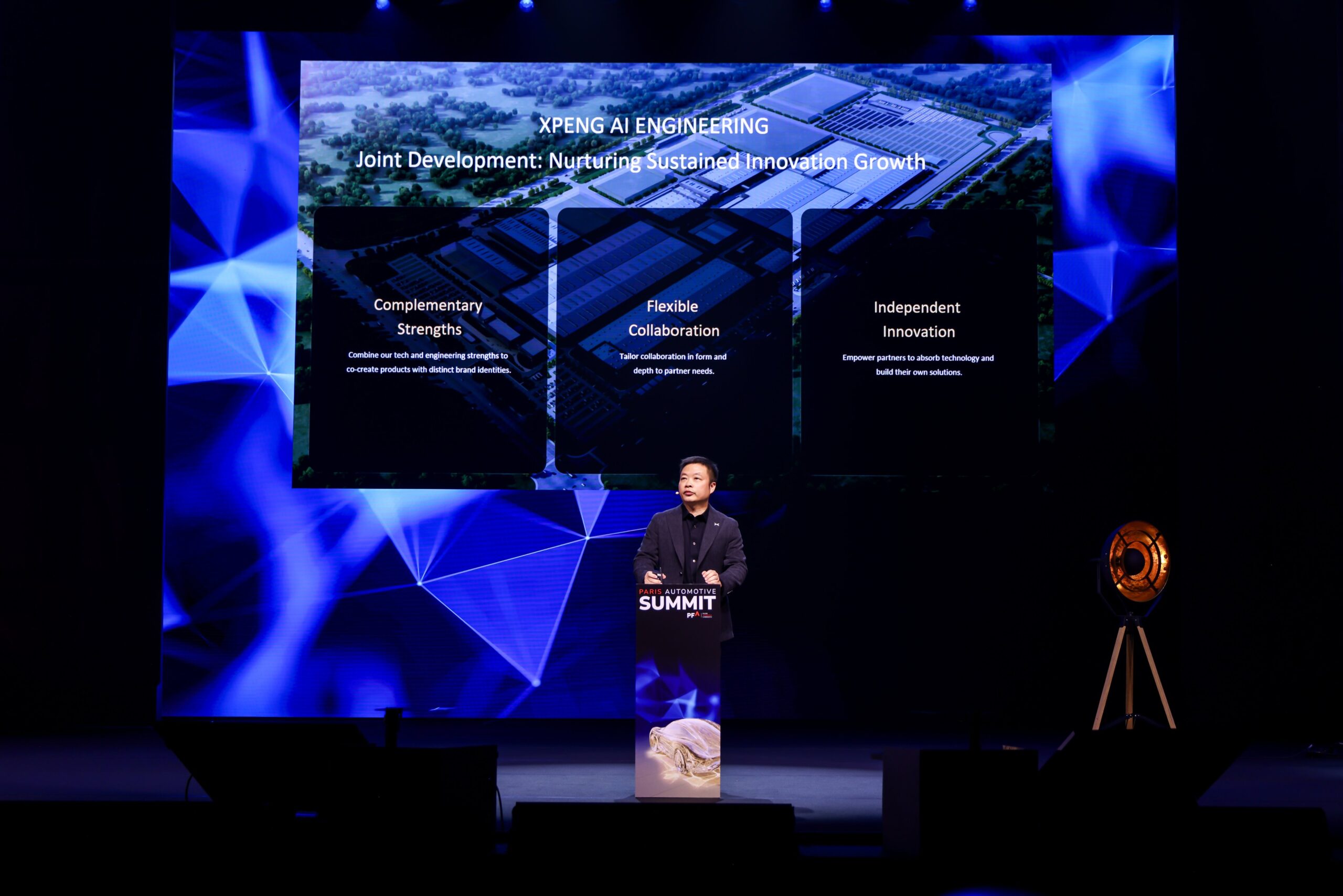
His argument: no single manufacturer holds every advantage the next generation of cars needs.
What is on offer
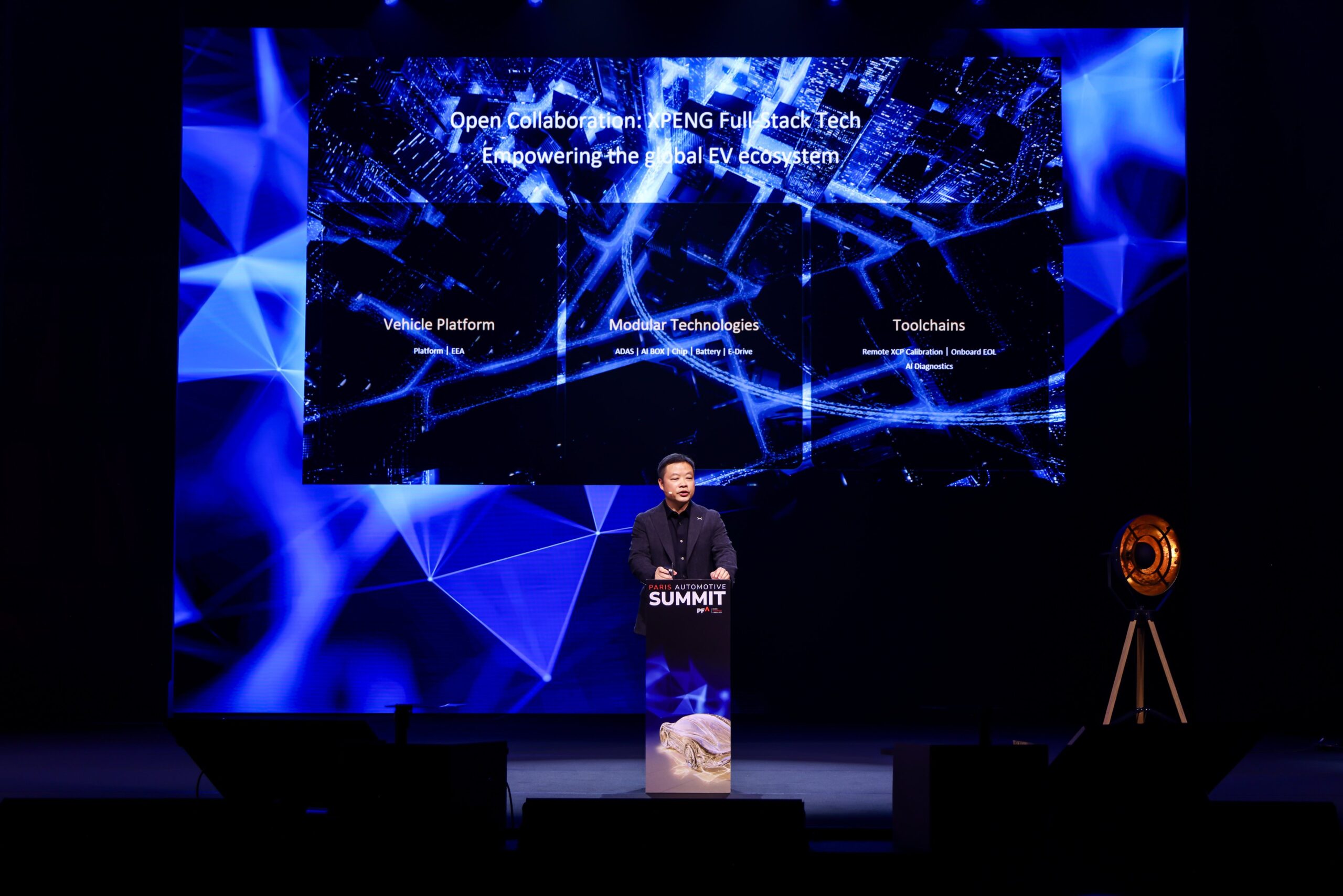
Partners can work with XPENG on the entire vehicle platform and its electrical and electronic systems, or on individual components such as driver assistance, the AI BOX, the Turing chip, batteries and the drive unit. The offer also includes engineering tools for remote calibration, vehicle testing at the end of production and AI-assisted fault diagnosis. XPENG is making its Turing foundation model of the physical world available too.
XPENG sets out three principles for the work: the two sides combine their strengths in products with their own brand identity, the form and depth of the collaboration follow the partner’s needs, and the partner is meant to develop its own solutions over time. Volkswagen Group is the example, with XPENG supplying driver assistance and software and Volkswagen supplying vehicle engineering and testing. In its Weibo post of 12 October, XPENG described work covering both the electrical architecture and joint development of whole cars, and named Bosch and Dassault among its European suppliers.
Research and development cost XPENG about €770 million in the first half of 2026, according to the release. He Xiaopeng said that partnership starts with trust, and that openness follows trust.
The plans for NGP and IRON
XPENG aims to develop NGP with VLA 2.0 from level 2 driver assistance to level 4 automated driving, with the same core capabilities in China and Europe. It plans a global NGP rollout in 2027, but the announcement does not specify which European models could operate at level 4 or when they could receive approval to do so. Plans for individual European models, including the L03 Ultra, are covered in the roadmap article.
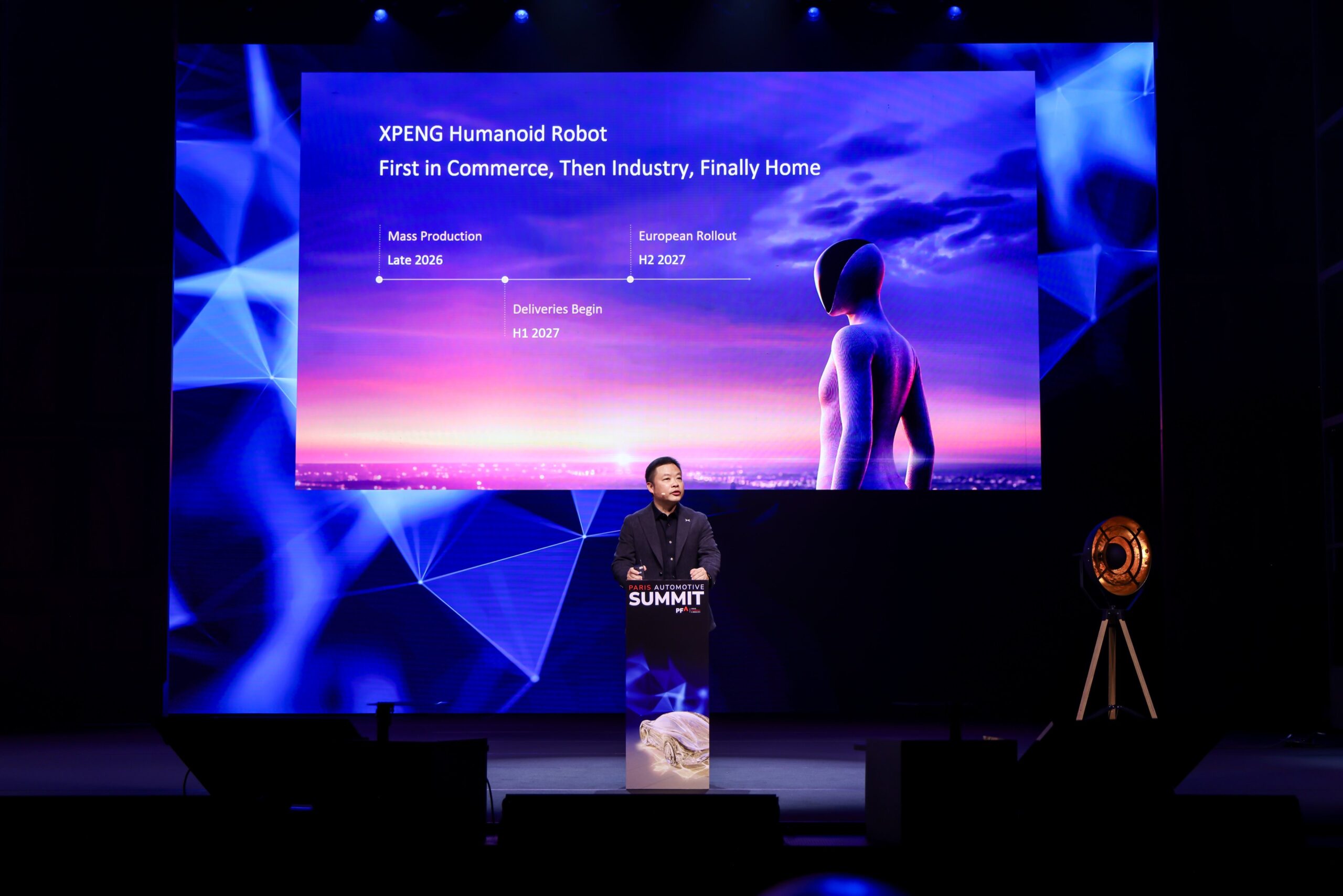
XPENG’s timeline for IRON sets out mass production late in 2026, first deliveries in the first half of 2027 and a European rollout in the second half of 2027. The planned applications start with commerce, followed by industry and then the home. The IRON article covers those uses and what XPENG has shown of the robot so far.
The European R&D centre
A section titled “In Europe, For Europe, With Europe” restated XPENG’s line: production in Europe, cars developed for European users and work with the local industry. The European R&D centre handles EU homologation, language and interaction, validation of the driver-assistance system, chassis and handling tuning and integration with the charging network. What Magna builds in Graz is on the G9L page.
The Weibo post of 12 October added one point the press release does not contain: XPENG is in talks with leading European mobility platforms about putting Robotaxi into service. No partner and no date were named; the European position is set out on the Robotaxi page.
What was not said: no contract terms, no prices and no newly named partners beyond Volkswagen. Whether the Turing chip is sold to others or only used in joint development is not stated.
Images: XPENG
Sources
Paris Automotive Summit 2026, the PFA programme: 13 October, Dôme de Paris, He Xiaopeng at 11:20