


XPENG X9
Seven-seat MPV with rear-axle steering and air suspension as standard. On sale in seven European markets, not in Denmark.
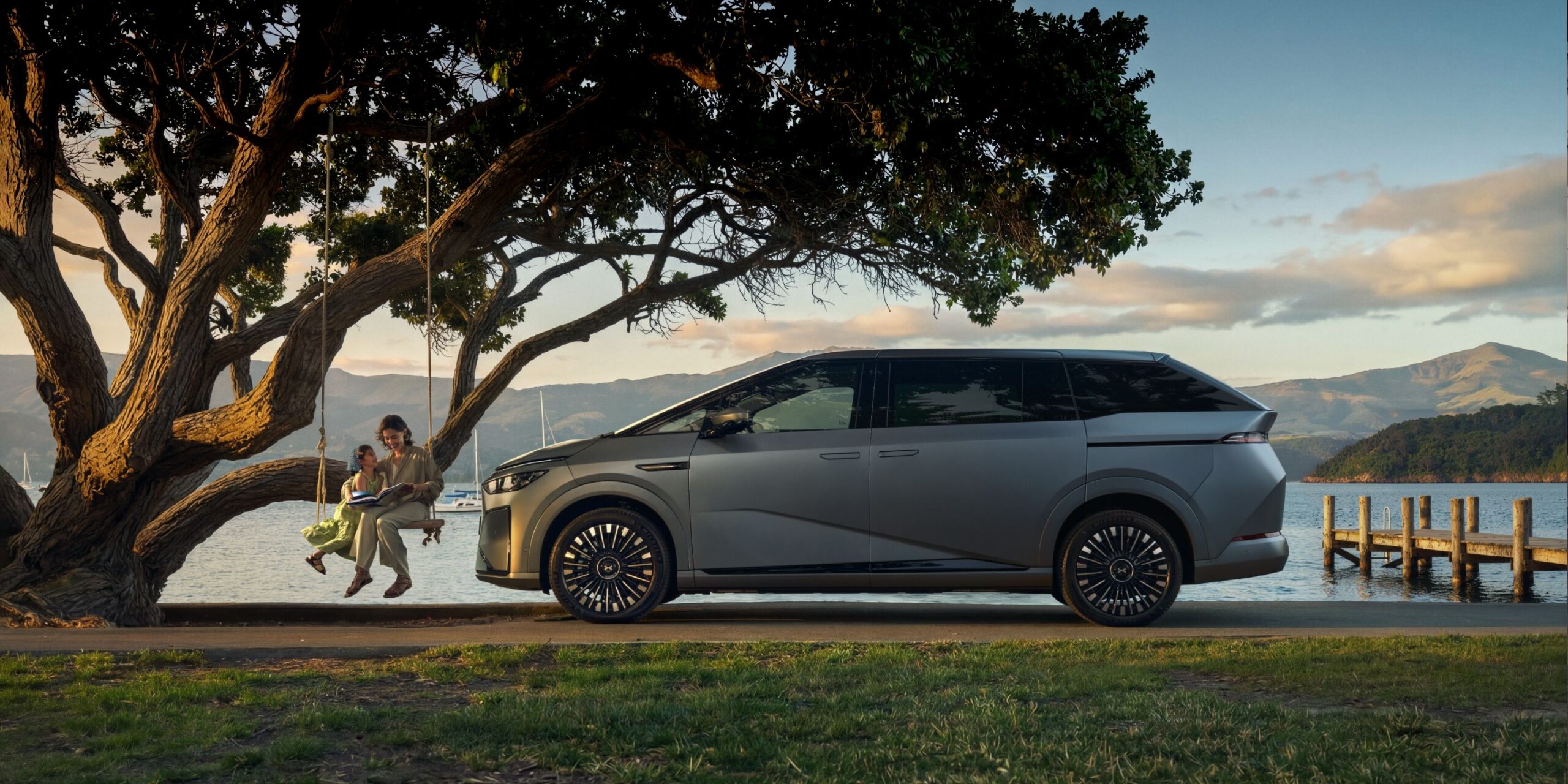
The XPENG X9 is a 5,316 mm seven-seat MPV with rear-axle steering and dual-chamber air suspension as standard. Europe gets the New X9, the third-generation car XPENG launched in China on 2 March 2026. Germany opened orders on 8 May 2026 from €77,600, and by 16 June the X9 was on sale in seven European markets. Denmark is not one of them: XPENG Danmark sells the L03, G6, G9 and P7+, and the X9 is not on that list. From Denmark that makes Germany the market to watch, and the reason the prices here are German: it is the nearest store selling the car, and one bought there stays inside the EU customs union. A Norwegian one does not.
Images: XPENG
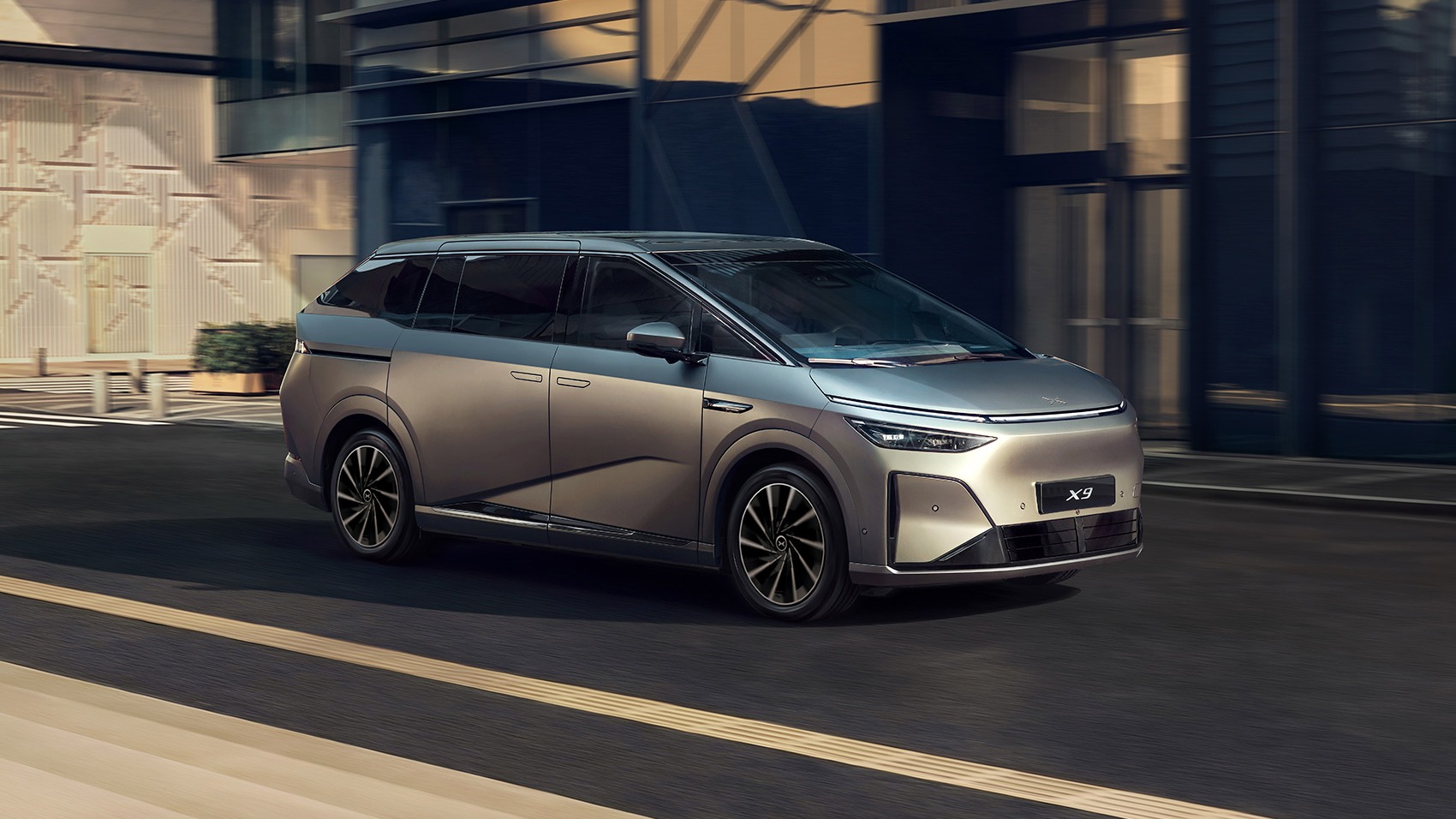
Who this car is for. Seven seats, 721 litres of boot behind them, and a second row that reclines flat with a leg rest. If you move four adults and their luggage regularly, this is the shape that does it. If the third row spends most of the year folded, a G9 costs less and parks in a normal bay.
Jump to: Trims & prices · Dimensions · Platform & charging · Safety · Cabin · Assisted driving · Europe & Denmark · Colours & wheels · Q&A · Gallery · Sources
Trims and prices (Germany)
Europe gets three trims, all with seven seats in a 2-2-3 layout and all on 20″ wheels. The prices below are German list prices including 19% VAT; every market sets its own, and Norway’s are far lower because it sits outside the EU tariff on Chinese-built EVs. Range is WLTP combined, and XPENG marks the figures as subject to final homologation.
| Trim | Battery | Power | Range (WLTP) | 0-100 km/h | Price |
|---|---|---|---|---|---|
| FWD Standard Range | 94.8 kWh LFP | 235 kW (320 hp) | 535 km | 8.2 s | €77,600 |
| FWD Long Range | 110 kWh NMC | 235 kW (320 hp) | 615 km | 7.8 s | €81,600 |
| AWD Performance | 110 kWh NMC | 370 kW (503 hp) | 580 km | 5.9 s | €86,600 |
The two steps up the range cost €4,000 and €5,000. The first swaps the 94.8 kWh LFP pack for the 110 kWh NMC one and adds 80 km of WLTP range. The second adds a rear motor: 2.3 seconds off the 0-100 time, and 35 km back off the range. Equipment is identical across all three, so the trim badge changes the battery and the driven axles and nothing else.
Consumption runs 20.0 to 20.8 kWh/100 km WLTP combined, top speed 200 km/h on every trim. Line the X9 up against any other XPENG on Compare specs.
Dimensions and space
At 5,316 mm the X9 is longer than a standard European parking bay, which is drawn at 5.0 m in both Germany and Denmark. Height is the number that saves it: 1,785 mm clears the 1.90 m barrier on most multi-storey car parks, so it goes where a real van cannot.
- Length × width × height 5,316 × 1,988 × 1,785 mm
- Wheelbase 3,160 mm
- Seats 7 in a 2-2-3 layout, third row heated and electrically folding
- Boot 721 l with all seven seats up · 2,550 l with the third row down
- Turning radius 5.4 m, from the rear-axle steering
- Towing 1,500 kg braked · 75 kg nose weight, with the electric swivel tow hitch
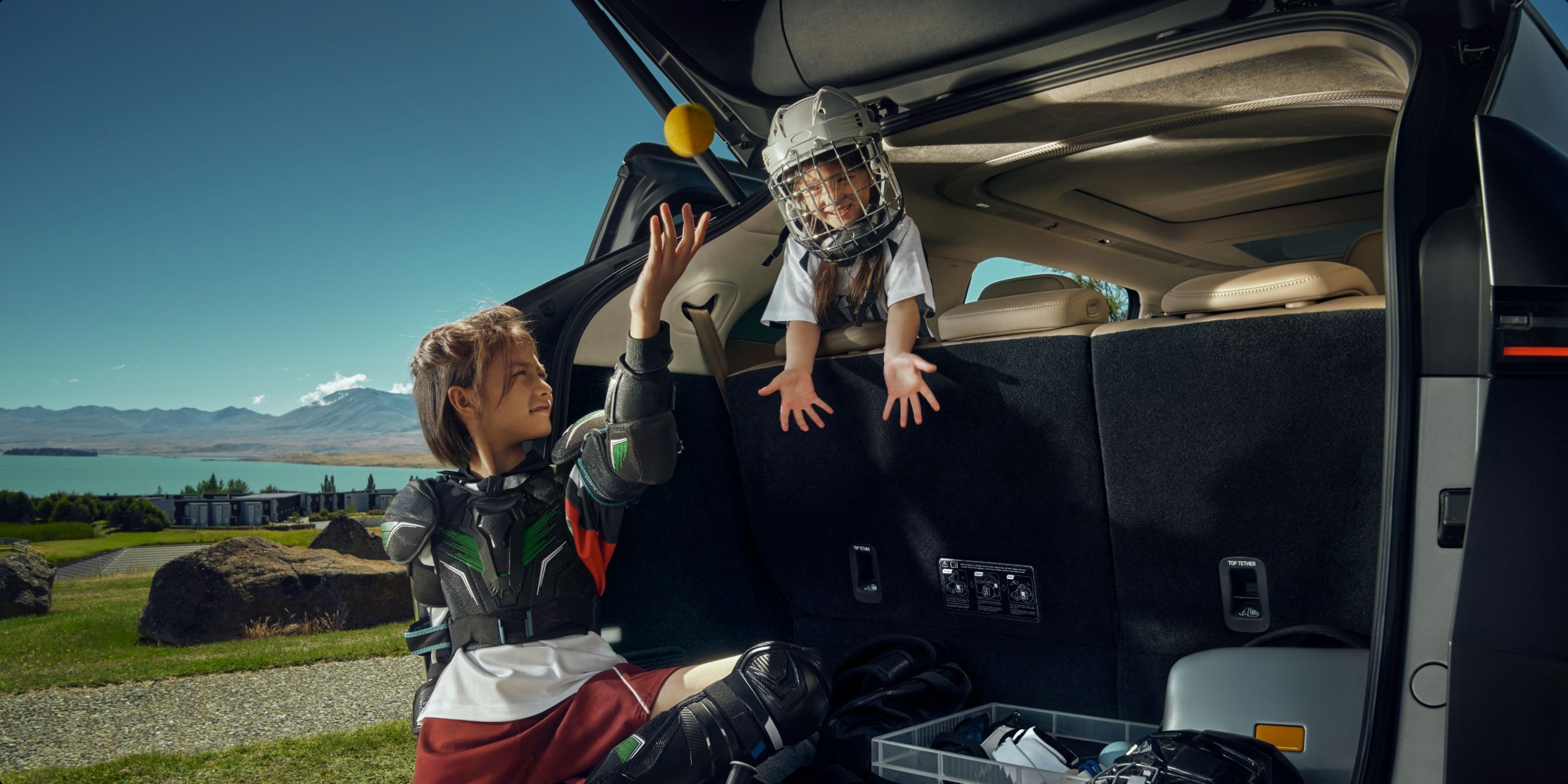
The 721 litres sit in a well below the boot floor, so the third-row backrests stay usable while the space underneath fills up. Fold that row and the floor runs flat to the front seatbacks. The sliding doors are electric on both sides, and so is the tailgate.
Platform and charging
The X9 is built on XPENG’s SEPA 2.0 architecture, with the full 800 V silicon-carbide powertrain and a 5C pack, and it is the first XPENG in Europe to pair dual-chamber air springs with rear-axle steering. Both are standard on the cheapest trim. It will not hold that chassis pairing alone for long: the Chinese G9L carries the same combination and is due in Europe from late 2026, with European equipment lists still unpublished.
In China the X9 is also sold as an EREV - a range extender rated up to 1,602 km combined on the Chinese CLTC cycle. Europe gets the BEV only.
The air spring in cutaway - run over broken tarmac, which is what the second chamber is for: it softens the spring rate without dropping the body.
| 94.8 kWh | 110 kWh | |
|---|---|---|
| Chemistry | LFP | NMC |
| Peak DC (XPENG) | 537 kW | 542 kW |
| 10-80% | 12 min | 12 min |
| AC on-board charger | 11 kW | 11 kW |
| V2L | 6 kW | 6 kW |
| Torque | 450 Nm | 450 Nm FWD · 640 Nm AWD |
The charger sets the pace, not the car. Twelve minutes from 10 to 80% assumes the full 542 kW. A typical European motorway stall runs at 300 to 350 kW today, with 400 kW posts appearing on the busiest corridors, so a real stop takes longer than the headline. The car is ready for more power than the network currently delivers, and that gap closes as higher-output hardware rolls out.
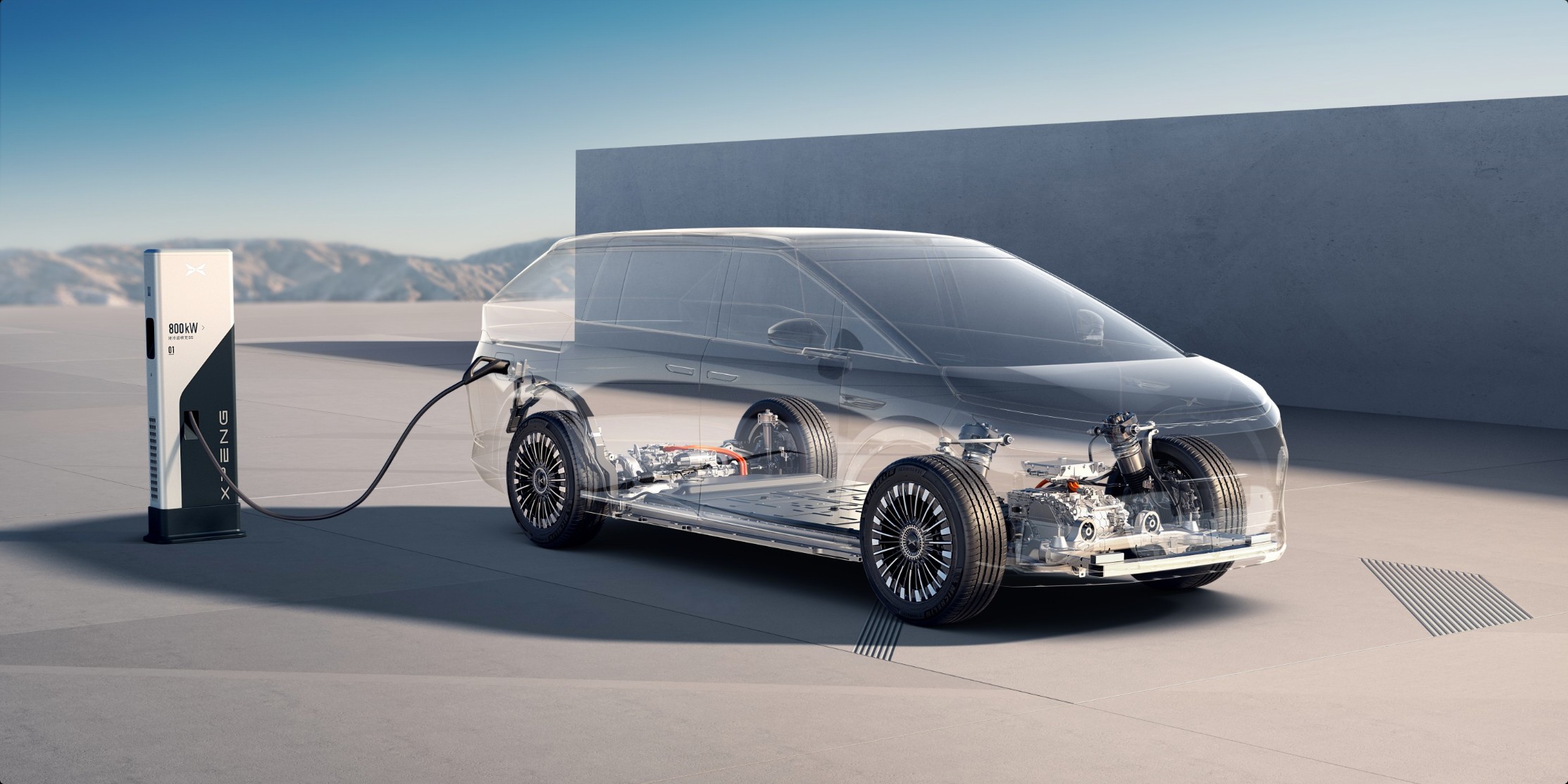
Where the 800 V hardware sits - the pack lies flat between the axles, which is what leaves the third row a floor to sit on.
- X-HP 3.0 heat pump and thermal management, standard on every trim
- V2L delivers 6 kW from a 230 V socket on the charge port; the adapter is sold separately
- AC charging stops at 11 kW, so a three-phase wallbox fills the 110 kWh pack overnight and a public AC post takes most of a working day
- Active grille shutter, rain-sensing wipers and heated folding mirrors with memory across the range
In the El Prix run by NAF and Motor, the Norwegian test of electric range and charging, the X9 covered 646 km in the summer 2026 test. That is 66 km or 11.4 percent more than its approved WLTP range of 580 km, and the largest gain over WLTP among the 24 cars in the test. In the winter test in January it reached 361 km at temperatures down to minus 30 degrees, and in both tests it charged from 10 to 80 percent in 12 to 13 minutes. The El Prix story has the full result.
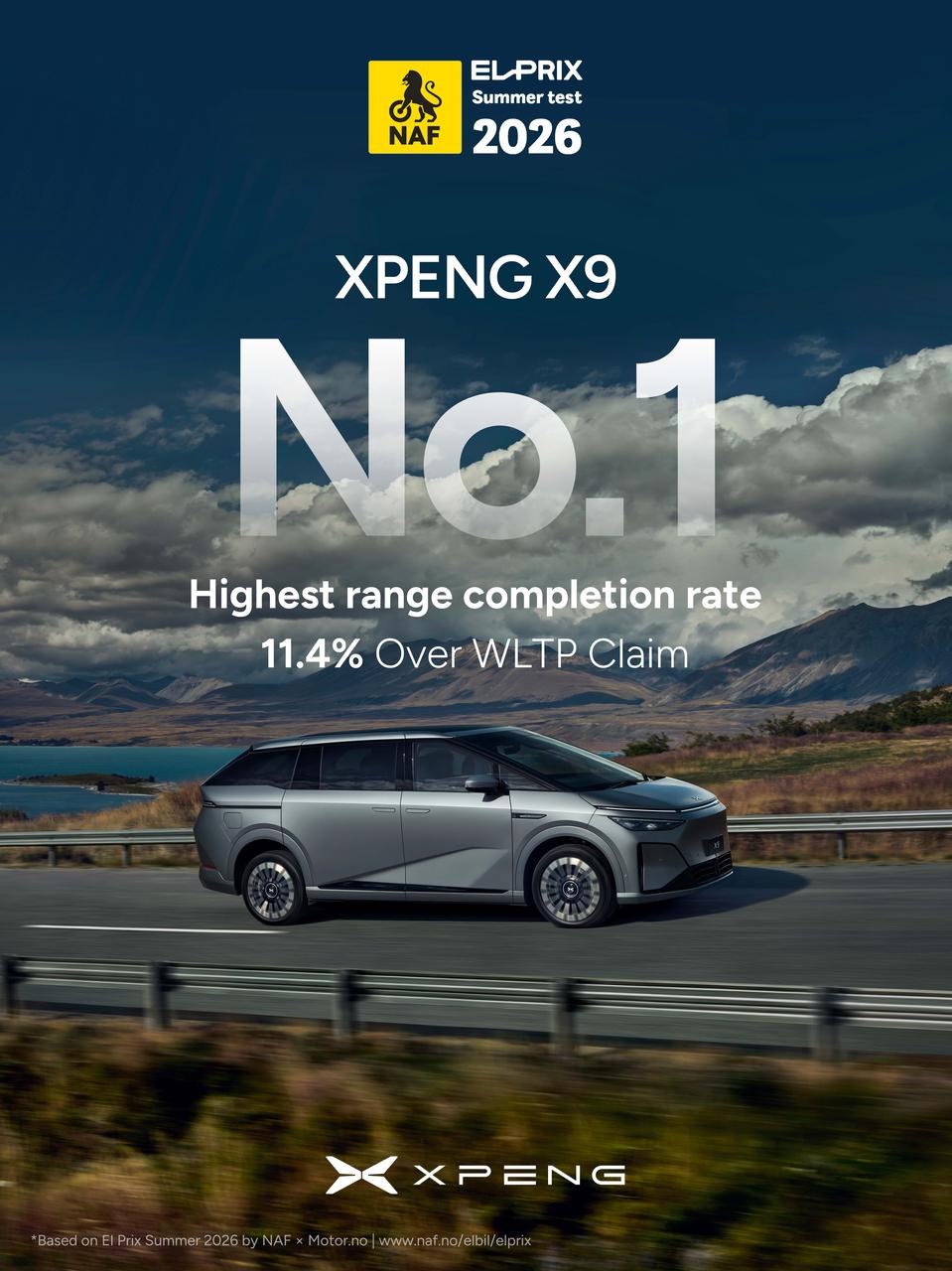
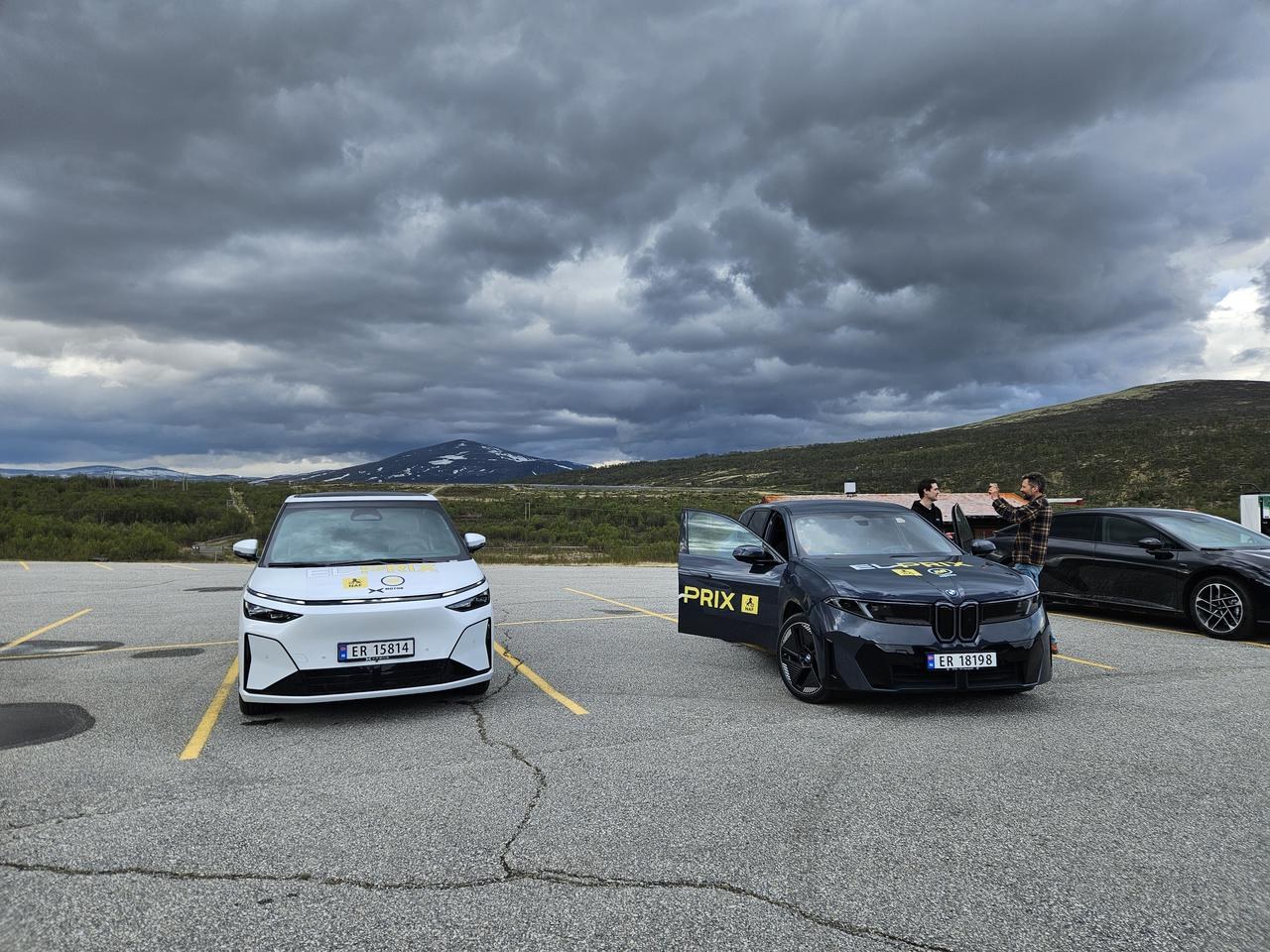
XPENG’s poster for the result, and the test cars at the summer test in the Norwegian mountains.
Safety
XPENG builds the X9 around a safety cage of 2,000 MPa hot-formed steel, and the German and Norwegian model pages describe the body as developed to a five-star Euro NCAP standard. Euro NCAP has published no X9 result as of August 2026; its XPENG entries are the G6 from 2024 and the G9 and P7 from 2023, all five stars. XPENG’s own launch posts shorten “developed to the standard” into “five-star rating”, which are different claims. The X9 does hold a five-star C-NCAP result at 86.6% overall, awarded in September 2024 to the first-generation car in China.
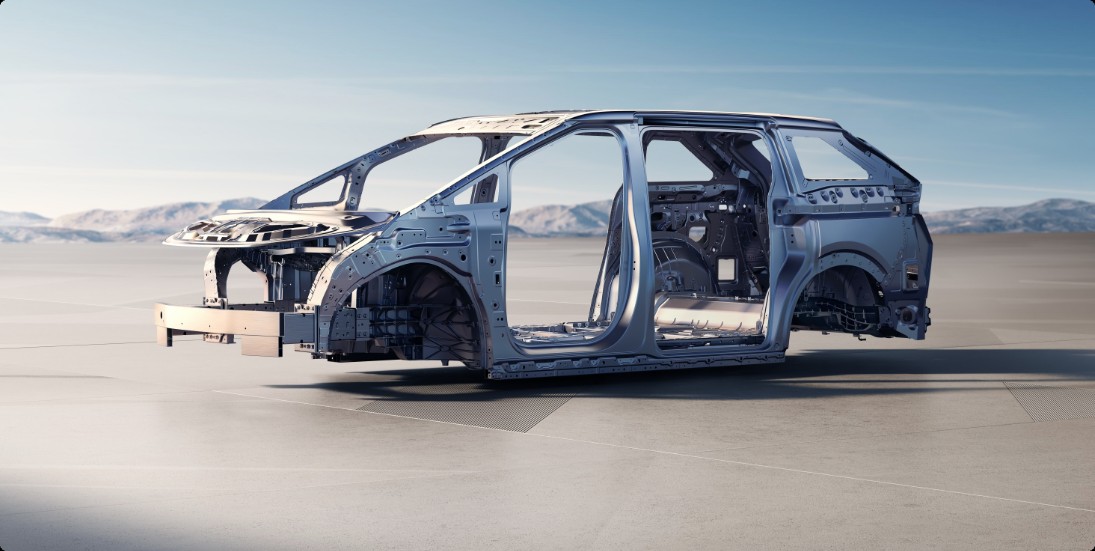
The bare shell - unpainted metal, before assembly. Look at the sliding-door aperture: an opening that long is where an MPV normally gives up torsional stiffness.
- Nine airbags standard, including curtain bags that run the length of the cabin
- Four ISOFIX points in the second and third rows, which is what makes the seven seats usable for a family with young children
- Child presence detection by direct monitoring rather than seat sensors, so it sees a child in the third row
- Thermal and collision protection on the 5C pack, plus emergency brake assist and stability control
Cabin and equipment
A 17.3″ centre screen faces the driver, a 21.4″ screen folds down for the second row, and a 21″ head-up display puts speed and navigation on the windscreen. The interior mirror is a camera feed, which matters in a car where the third row and the load bay block the glass.
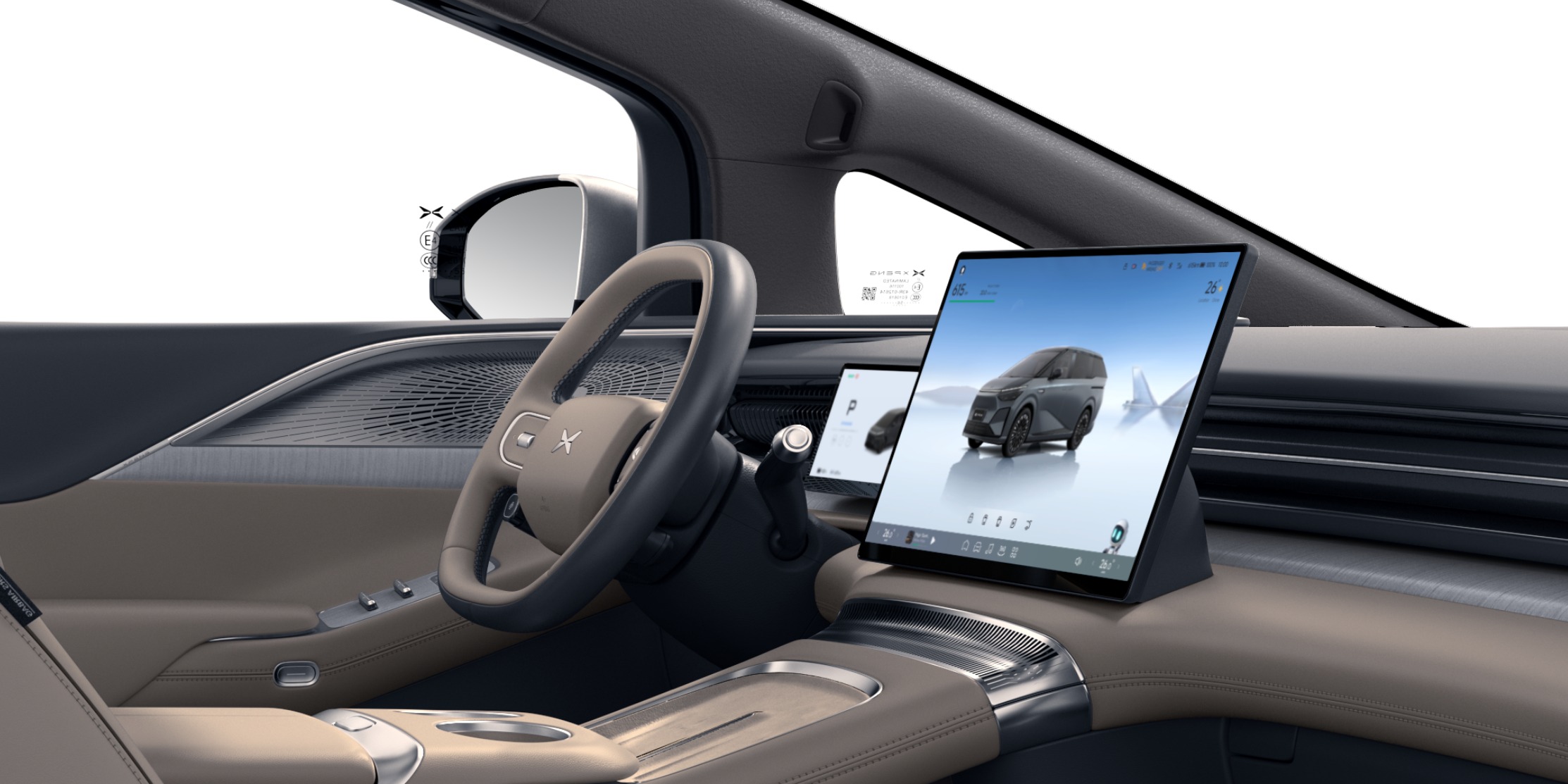
Coffee interior - the 17.3″ screen stands on a pedestal instead of sitting down in the dash, and the driving information goes on the narrow display beside the wheel.
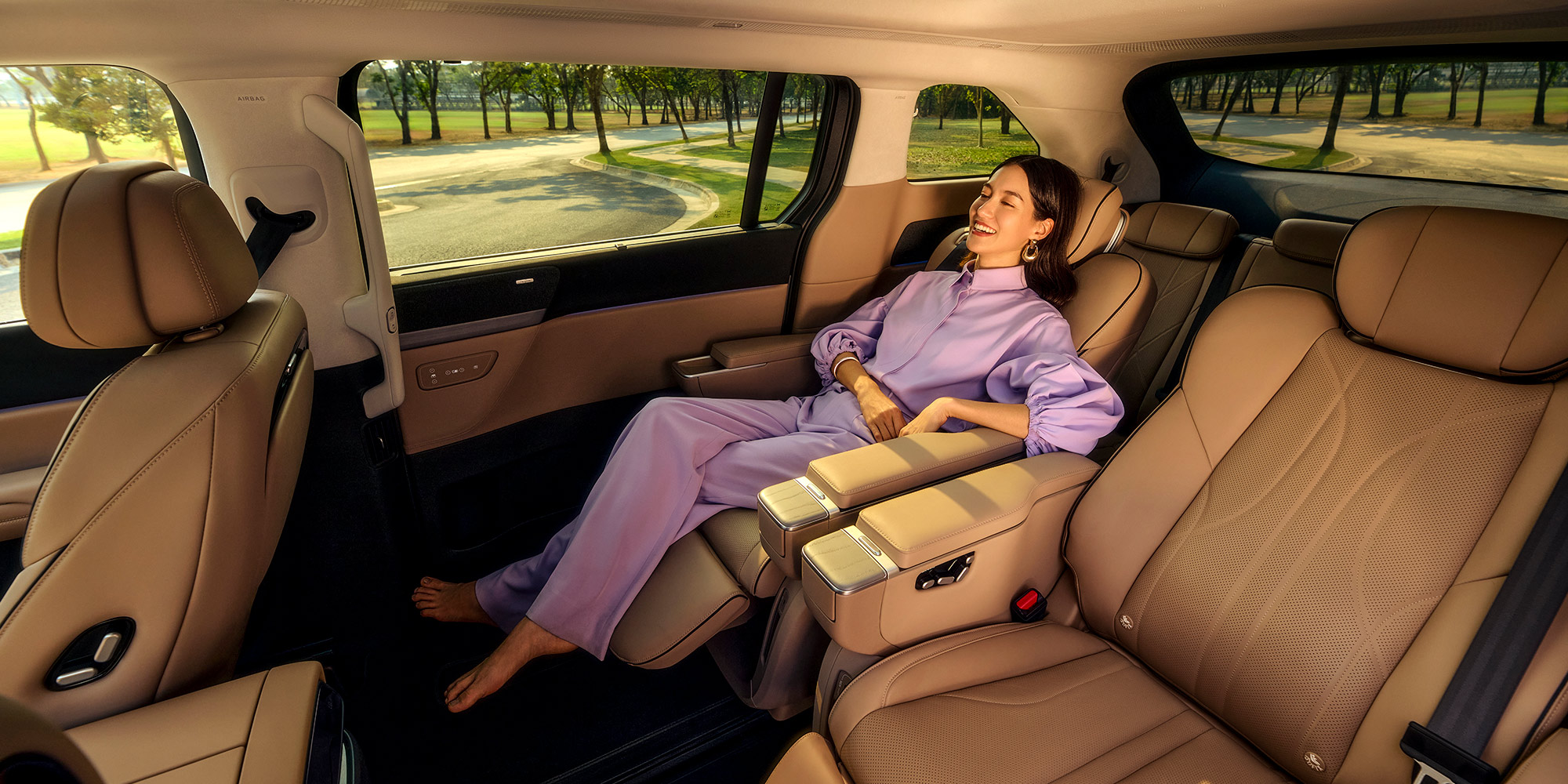
Zero gravity, second row - backrest back, leg rest up, controls in the armrest. The seat in front has to give up some travel for it.
Equipment does not move with price. The €77,600 car already carries Nappa leather, zero-gravity second-row seats, heating and ventilation and massage front and rear, a cooling and heating box with an electric lid, an XOPERA 7.1.6 system with 27 speakers on 1,552 watts, five-zone climate and 256-colour ambient lighting. There is no comfort pack to tick, because there is nothing left in it.
- Panoramic glass roof: Fixed dual-pane glass roof (does not open / no traditional sunroof functionality), rated above 86% heat insulation, with a sunshade that is manual over the front row and electric over the rear
- Frameless doors with soft close, plus electric sliding doors and tailgate
- Five USB-C, one USB-A and two 12 V sockets, and folding tables on the front seatbacks
- Apple CarPlay, Android Auto, DAB+, 5G and Wi-Fi, and “Hey XPENG” voice control, which Germany lists as German-language
- Digital Key 3.0 with a UWB remote and an NFC card, which works the way the Digital Key guide describes
The German configurator lists no blind, but the Norwegian one gives the roof a sunshade, manual over the front row and electric over the rear.
Assisted driving
Twelve cameras, three millimetre-wave radars and twelve ultrasonic sensors feed a single AI XP5 Turing chip. No LiDAR. The German equipment list runs that hardware as XPILOT ASSIST and names five driving functions: adaptive cruise (ACC), lane centring (LCC), curve-speed adaptation (ATC), assisted lane change (ALC) and speed-limit assist (SAS).
- Parking covers automatic park-in and park-out, remote parking from the app, a 360° camera and the transparent-chassis view that shows what is under the nose
- The safety suite runs autonomous emergency braking, blind-spot detection, door-open warning, lane-departure and emergency lane keeping, plus rear collision and cross-traffic warning
- Driver state monitoring stays active whenever the assistance is engaged
That list is everything XPENG has published for the European car. What it leaves open is the software path: the second-generation VLA model runs on the three-chip cars in China. A one-chip distillate, VLA 2.0 Lite, is now named there (G9L Max first); XPENG has not said, as of August 2026, whether it comes to the European X9, or said whether an NGP-style navigation-guided function follows. Later software is recorded in the release notes.
Europe and Denmark
Norway saw the X9 first: European premiere at eCar Expo in Lillestrøm on 7 February 2025, more than a year before anyone could order one. Germany opened the configurator on 7 May 2026 and took orders from the day after. On 16 June 2026 XPENG confirmed the X9 had landed in seven European markets at once and that deliveries had started. Austria was not in that count, but the X9 has been on order in Austria since 8 May, the same day as in Germany.
| Market | Status | From |
|---|---|---|
| Germany | Ordering since 8 May 2026, deliveries from June | €77,600 |
| Austria | Ordering since 8 May 2026, deliveries from June | €78,600 |
| Norway | Deliveries from June 2026 | NOK 581,688 |
| Finland | Launched 16 June 2026 | - |
| Iceland | Launched 16 June 2026 | - |
| Croatia | Launched 16 June 2026 | - |
| Slovenia | Launched 16 June 2026 | - |
| Hungary | Launched 16 June 2026 | - |
| United Kingdom | Announced for summer 2026 | - |
| Denmark | Not offered | - |
The electric tow hitch is a paid extra in Germany and Norway alike, at NOK 12,900 and €1,260. Warranty is the same either way: seven years or 160,000 km on the car, eight years or 160,000 km on the high-voltage battery.
For a Danish reader the X9 is a car you can drive, not a car you can order. There is no Danish list price and no demo fleet, so the route to one runs through a German or Norwegian dealer and then Danish registration tax on the import, which you work out and pay yourself. XPENG Danmark has not said whether the X9 joins the price list later. Monthly Danish registrations by model sit on the registrations page.
Settle the servicing question before you sign anything. The written warranty comes from XPENG European Holding B.V. and covers cars delivered or registered inside the EEA or Switzerland, so registering the car in Denmark keeps the warranty intact. The question is where a claim can then be handled. Service is every 12 months or 20,000 km at an authorised XPENG partner, and warranty repairs have to happen at one. XPENG Danmark has said they only cover cars in their official programme. An imported X9 therefore goes to a German workshop for service and warranty work until XPENG says otherwise. Get that in writing before you buy, and price in the drive.
Choosing colours and wheels
The German configurator has one option box on it. Everything else is paint and trim.
Paint colours
 Arctic White
 Silver Frost
 Midnight Black
 Matte Gray
XPENG’s launch release also priced Lambent Cyan and Polar Violet at €1,000. Neither can be ordered. Matte Gray needs hand washing and soft cloths; a brush wash will mark it and the paint warranty will not cover the result.
Interior colours
 Meteorite Black
 Coffee
Both are Nappa leather. Rose Brown, the third colour on XPENG’s global page, is a Chinese-market interior.
Cabin 360°
Drag to look around.
Drag to look around
Wheels and options
One wheel, standard on every trim and free.
 20″ aero-blade alloy
The one option is the electrically swivelling tow hitch at €1,260, which brings the 1,500 kg braked rating and a 75 kg nose weight. Order it with the car.
360° view
Drag left or right to rotate.

Drag to rotate
Q&A
Can I order an X9 in Denmark?
No. XPENG Danmark’s configurator covers the L03, G6, G9 and P7+. The nearest stores selling it are German and Norwegian, and a car bought there is an import when it reaches a Danish number plate.
Does it fit in a normal parking space?
Not lengthways. A standard bay is 5.0 m and the X9 is 5,316 mm, so roughly 30 cm hangs out. It clears the height barrier on most multi-storey car parks at 1,785 mm, and the rear-axle steering brings the turning radius down to 5.4 m, so the ramps are manageable. Length is the only dimension that gets in the way.
Is 10 to 80% in twelve minutes realistic here?
Not on today’s chargers. XPENG quotes the figure against 542 kW, and the fastest public posts in Europe reach 400 kW. The 800 V pack still holds a flatter curve than a 400 V car on the same 350 kW stall, so the useful number is the one your regular stop produces rather than the headline.
Should I charge the LFP pack to 100%?
Periodically, yes - on Standard Range, which is LFP. Long Range and Performance are NMC. A full charge calibrates the state of charge. XPENG stated the reminder trigger in XOS 5.2.5: 14 days or 1,000 km without a full charge.
Where can I see the charging curve?
XPENG publishes the peak power and the 10-80% time, not the curve, so that comes from third parties. EV Database lists the 10-80% time per charger type, and EVKX plots the curve itself. Both are other people’s measurements and models, not XPENG figures, and the numbers move with temperature and the charger. EVKX has no Standard Range page. EV Database: Standard Range · Long Range · AWD Performance. EVKX charging curve: Long Range · AWD Performance.
How much can it tow?
1,500 kg braked with the €1,260 electric hitch, at 75 kg nose weight. That covers a single-axle caravan or a small boat, and stops short of a large twin-axle van.
Will it get VLA 2.0?
Outside China, VLA 2.0 needs at least two Turing chips. X9 has one Turing XP5. China named that distillate VLA 2.0 Lite in August 2026 (G9L Max first); it has not been named for other markets.
Will it get Google Maps in the navigation?
As of August 2026 XPENG has named L03, G9L and every later model. X9 launched before the L03, so it is not in that group. When that is settled for the rest of the lineup, XPENG will say so officially. Background: XPENG and Google Maps.
Does the X9 have a sunroof, or can the glass roof open?
No. All XPENG models (including the X9) come standard with a fixed panoramic glass roof with no opening functionality. The X9 features a dual-pane glass roof over front and rear rows with a sunshade, manual at the front and electric at the rear.
Where can I find the X9 manual?
XPENG publishes its manuals at xpeng.com/user-manual, with the Danish editions at xpeng.com/dk/user-manual. In the XPENG app the manual is under the Service tab as the User Manual shortcut, and in the car it is the User Manual app in the App Center on the centre screen, where it updates with the software. The manual archive on xpeng.guru has the X9 manuals as PDFs, each with the date it was fetched from XPENG.
Gallery
Exterior
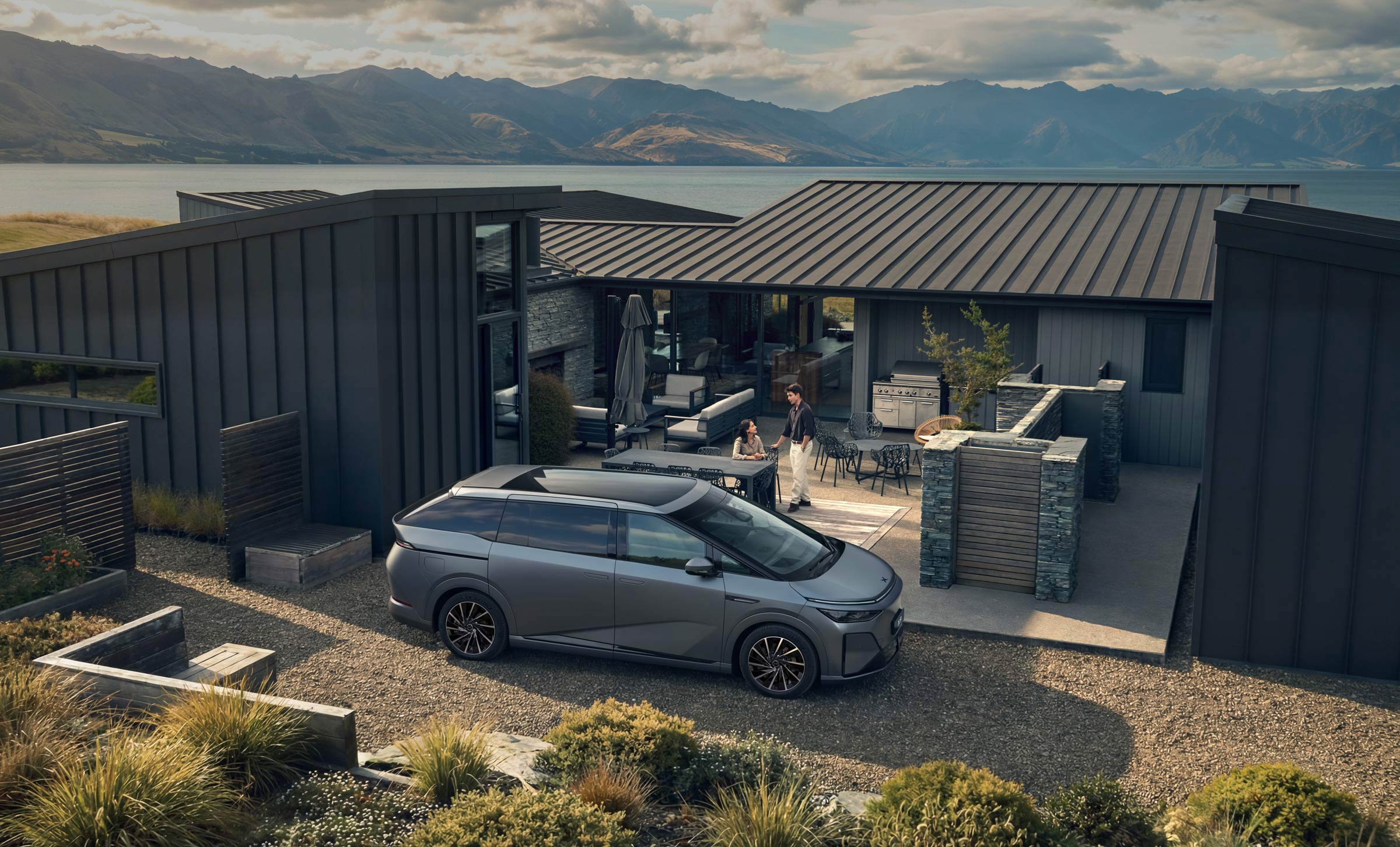
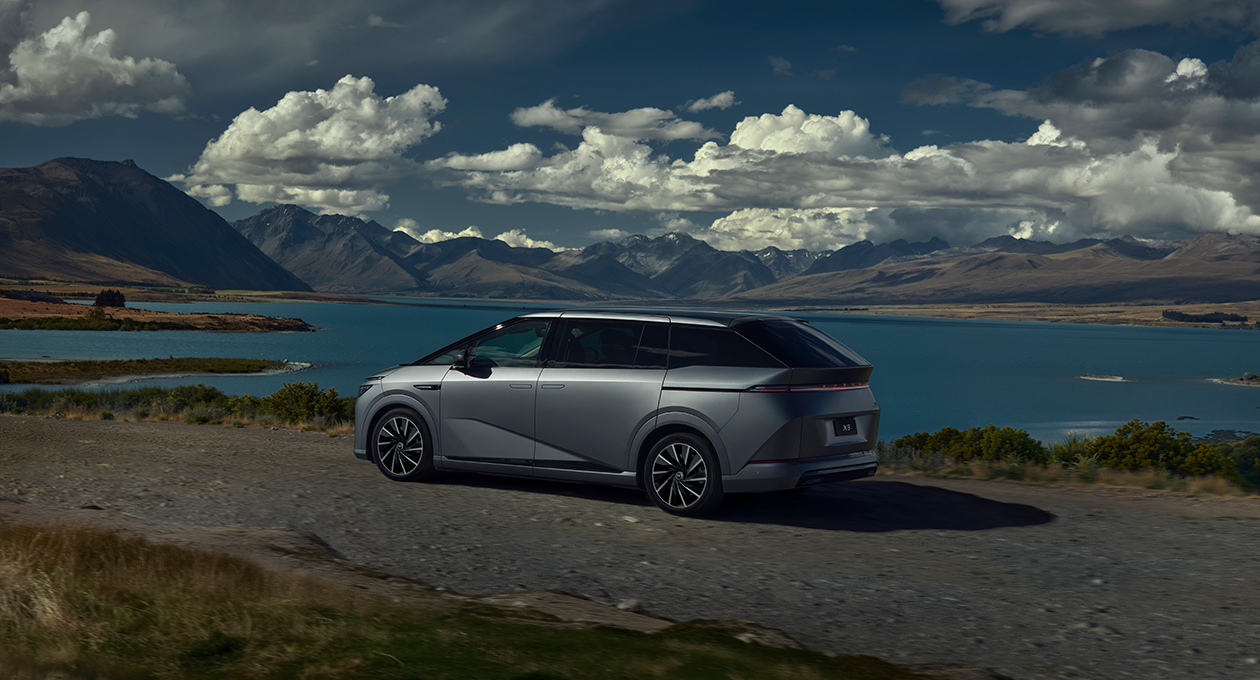
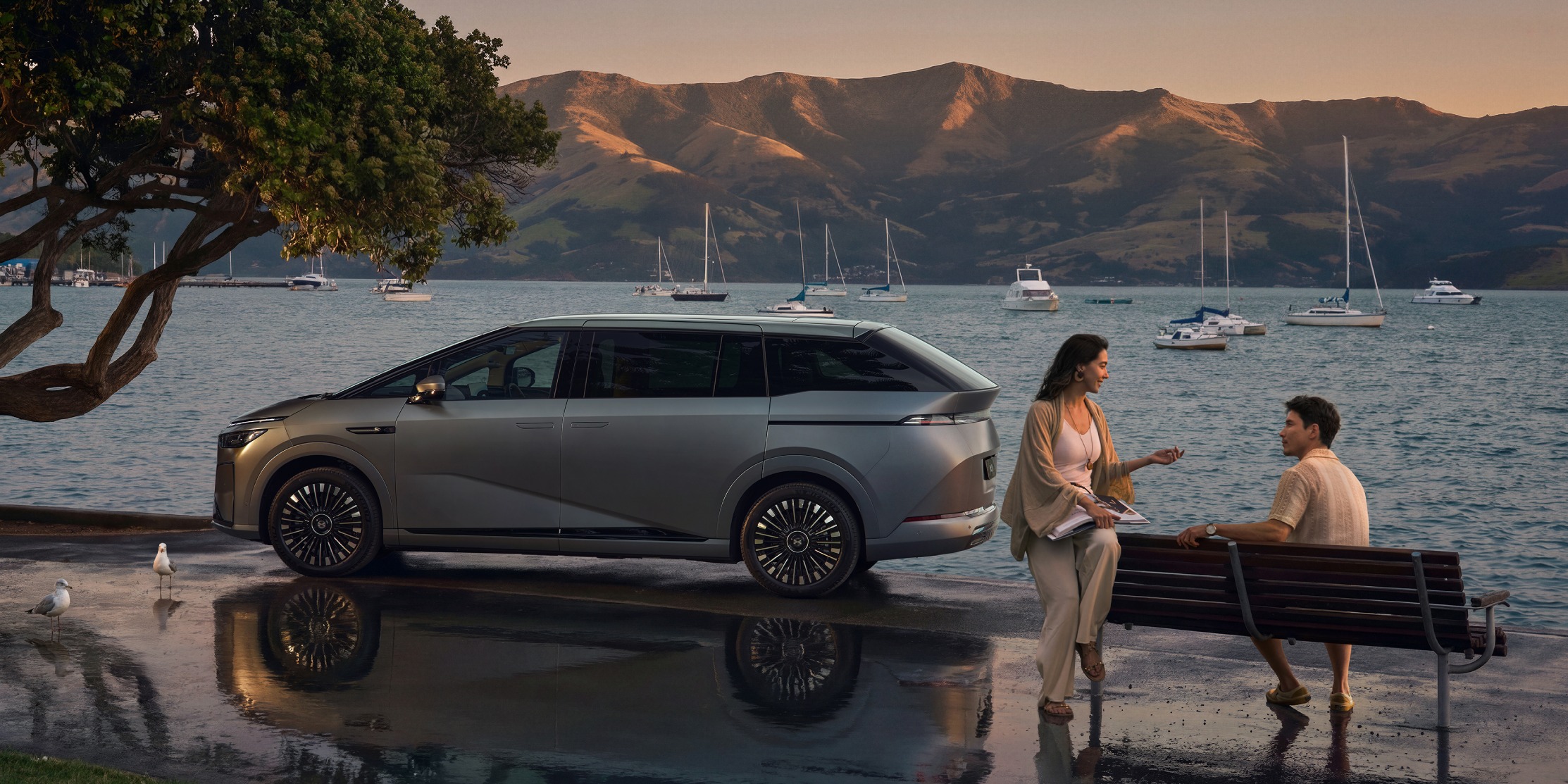
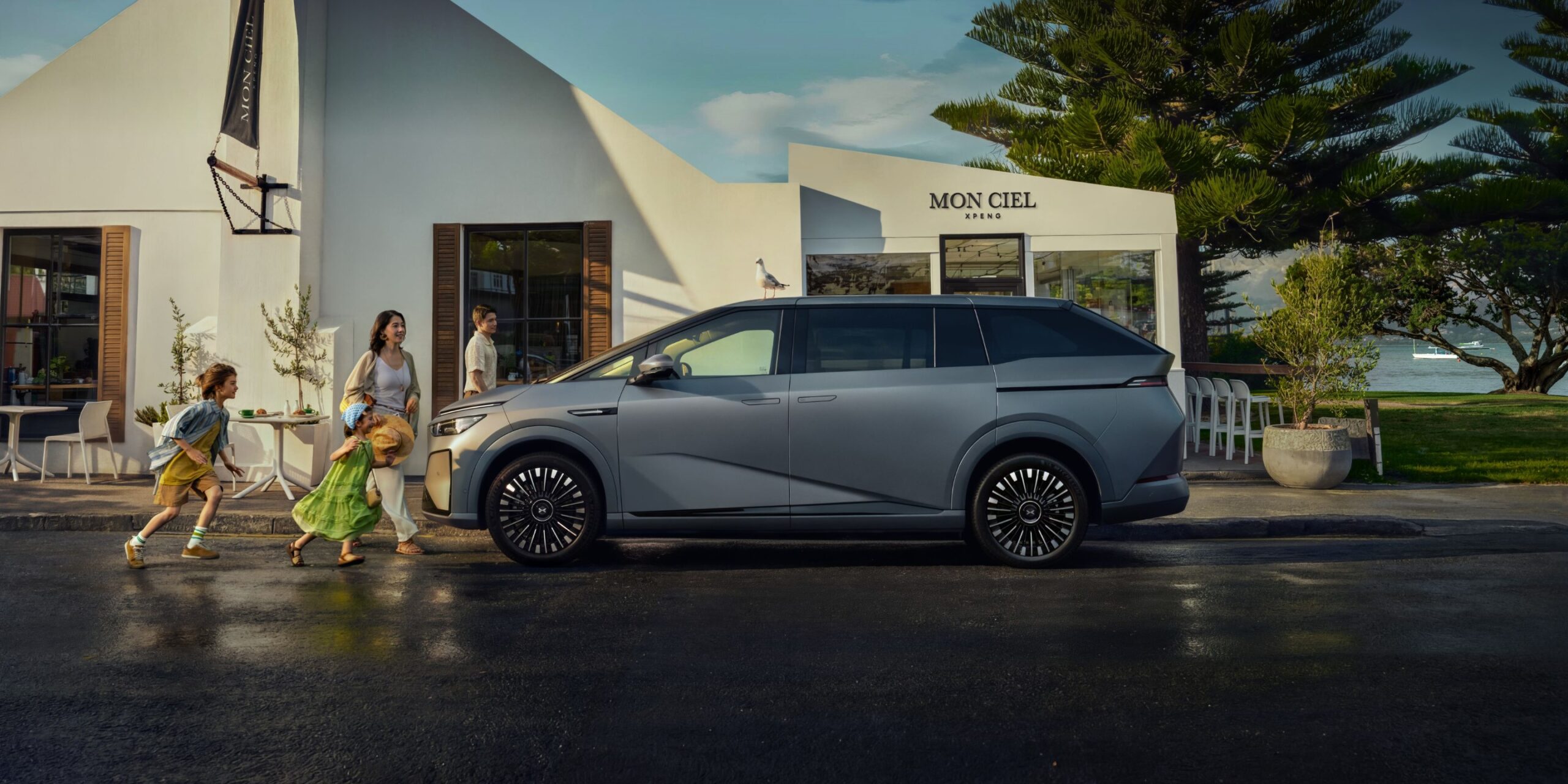
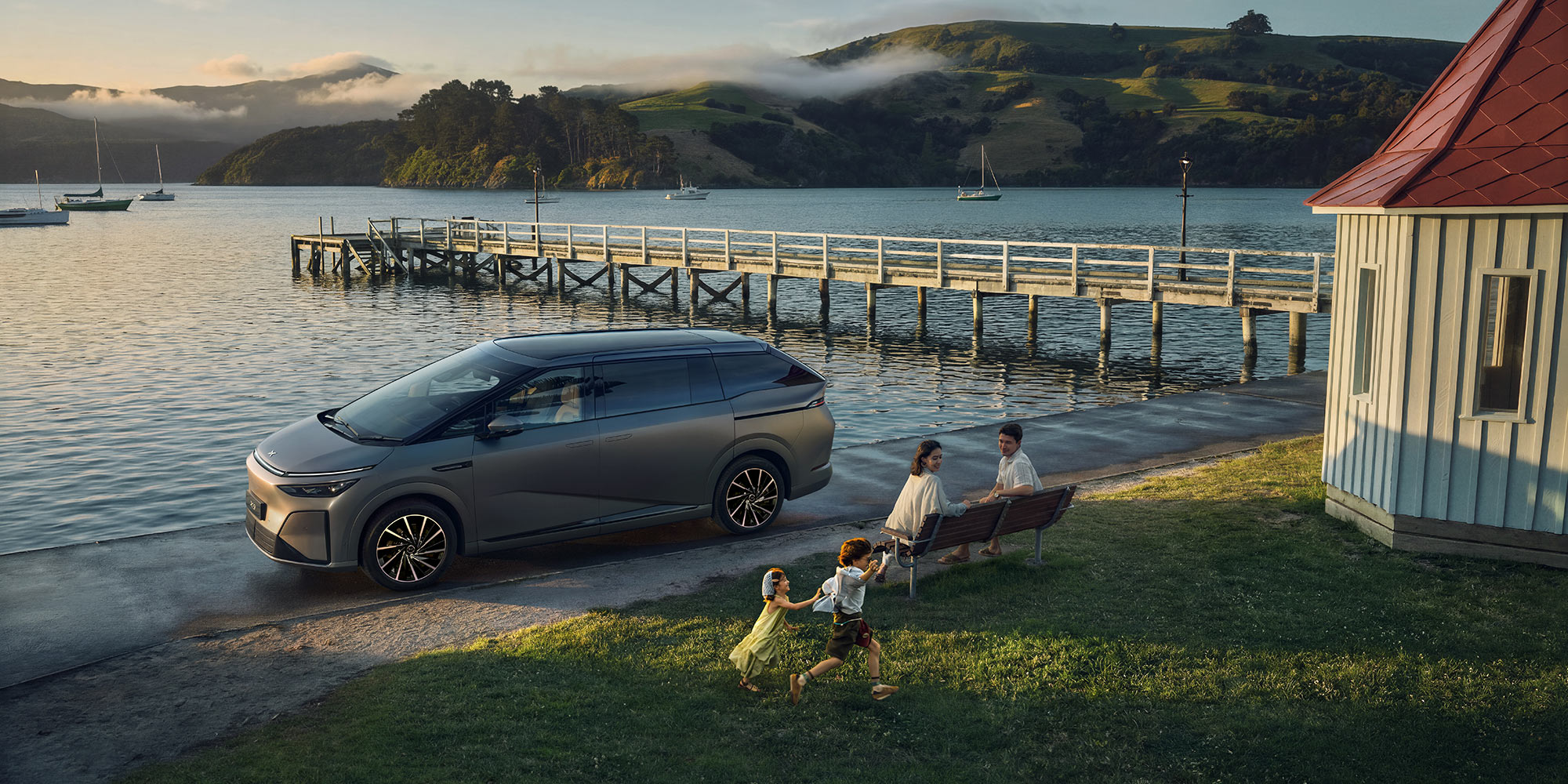
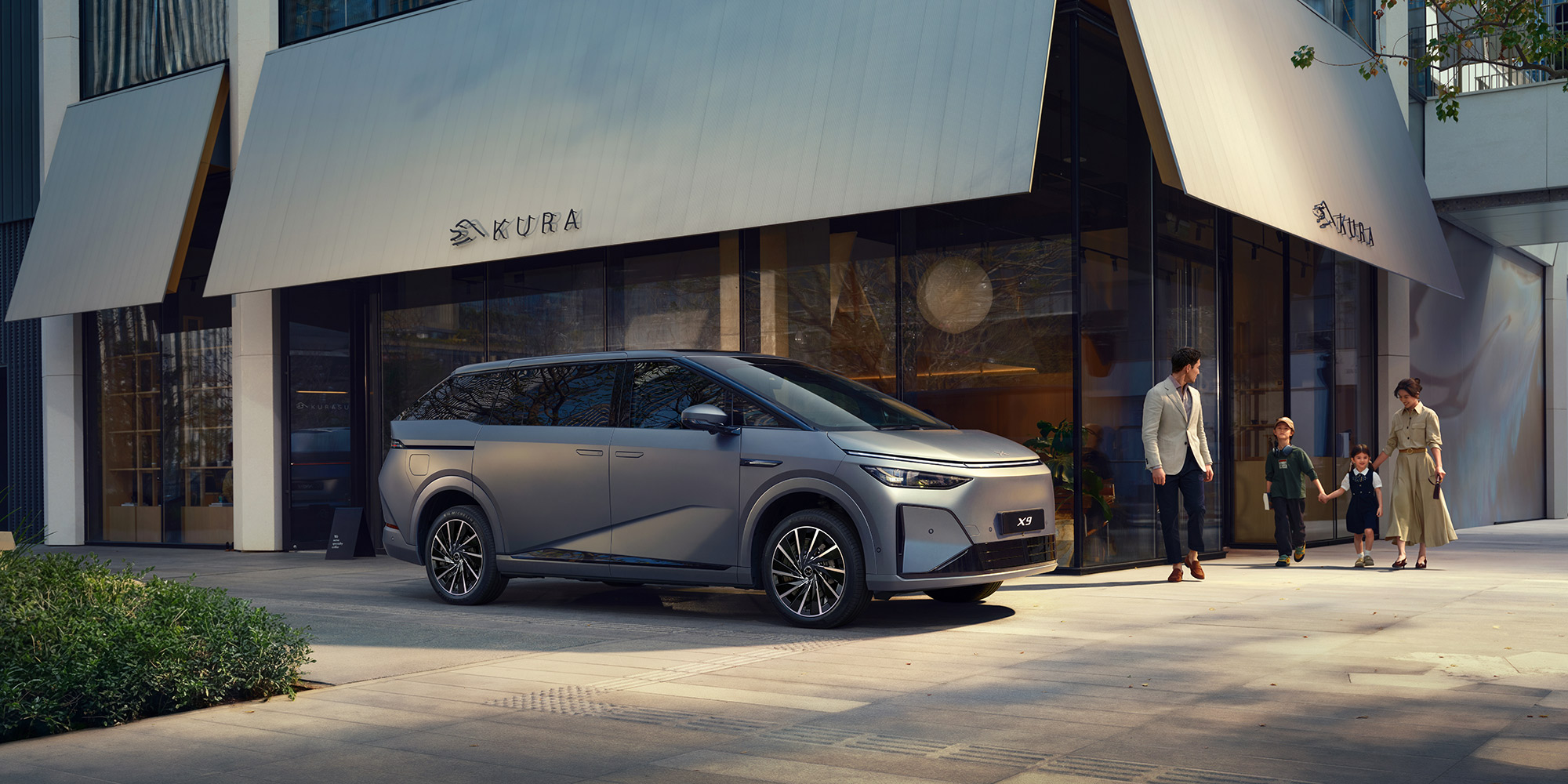
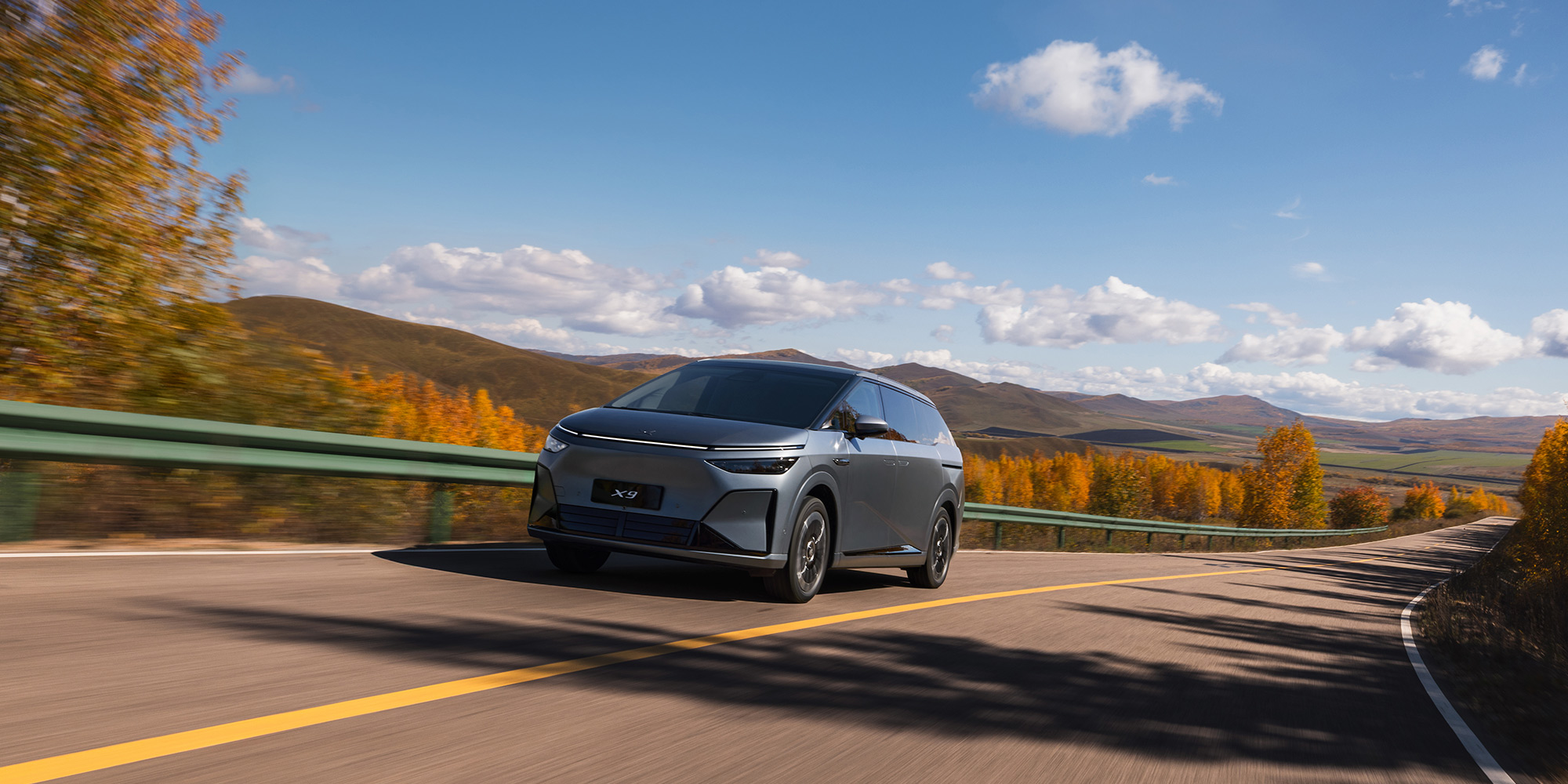
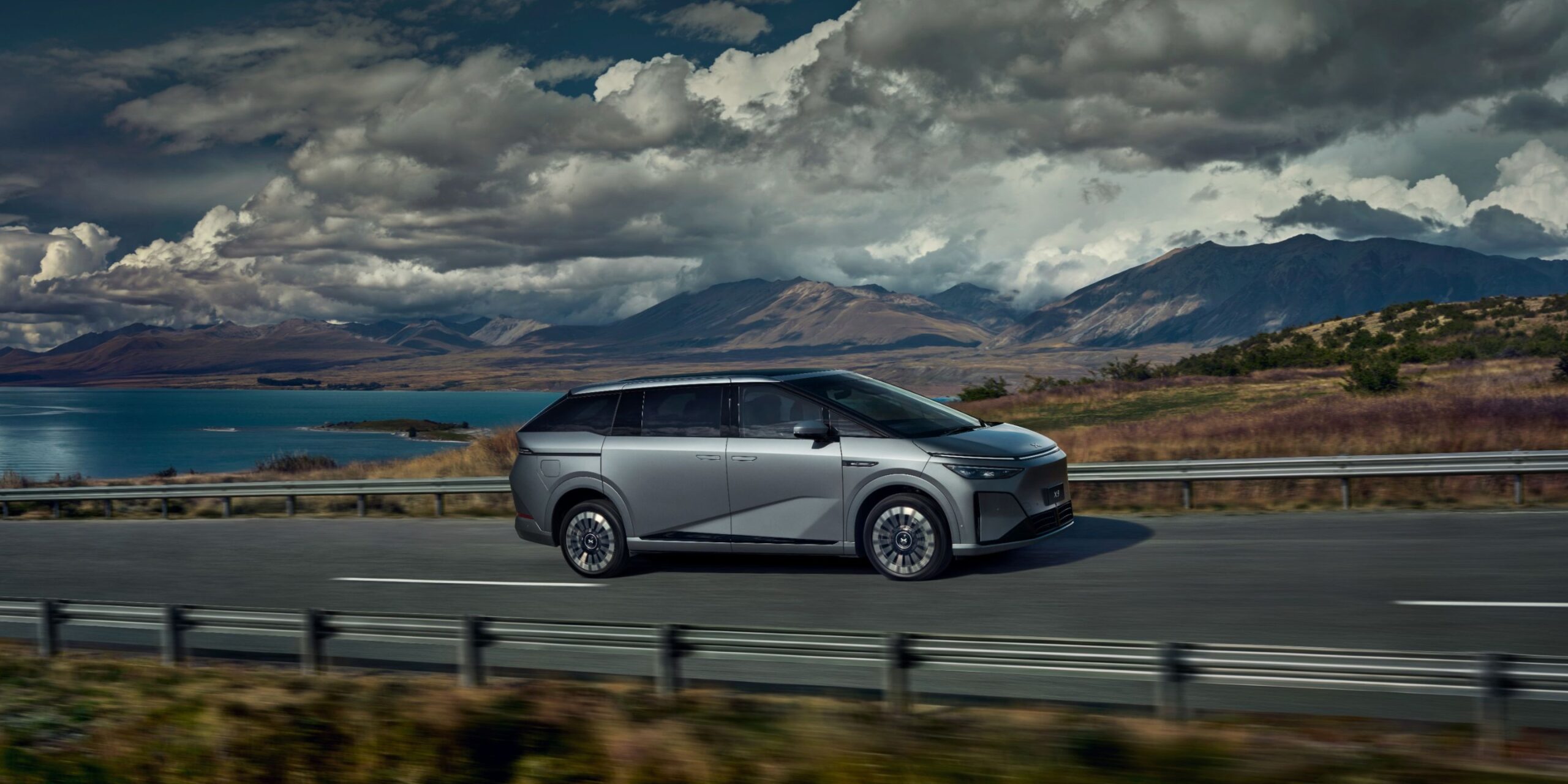
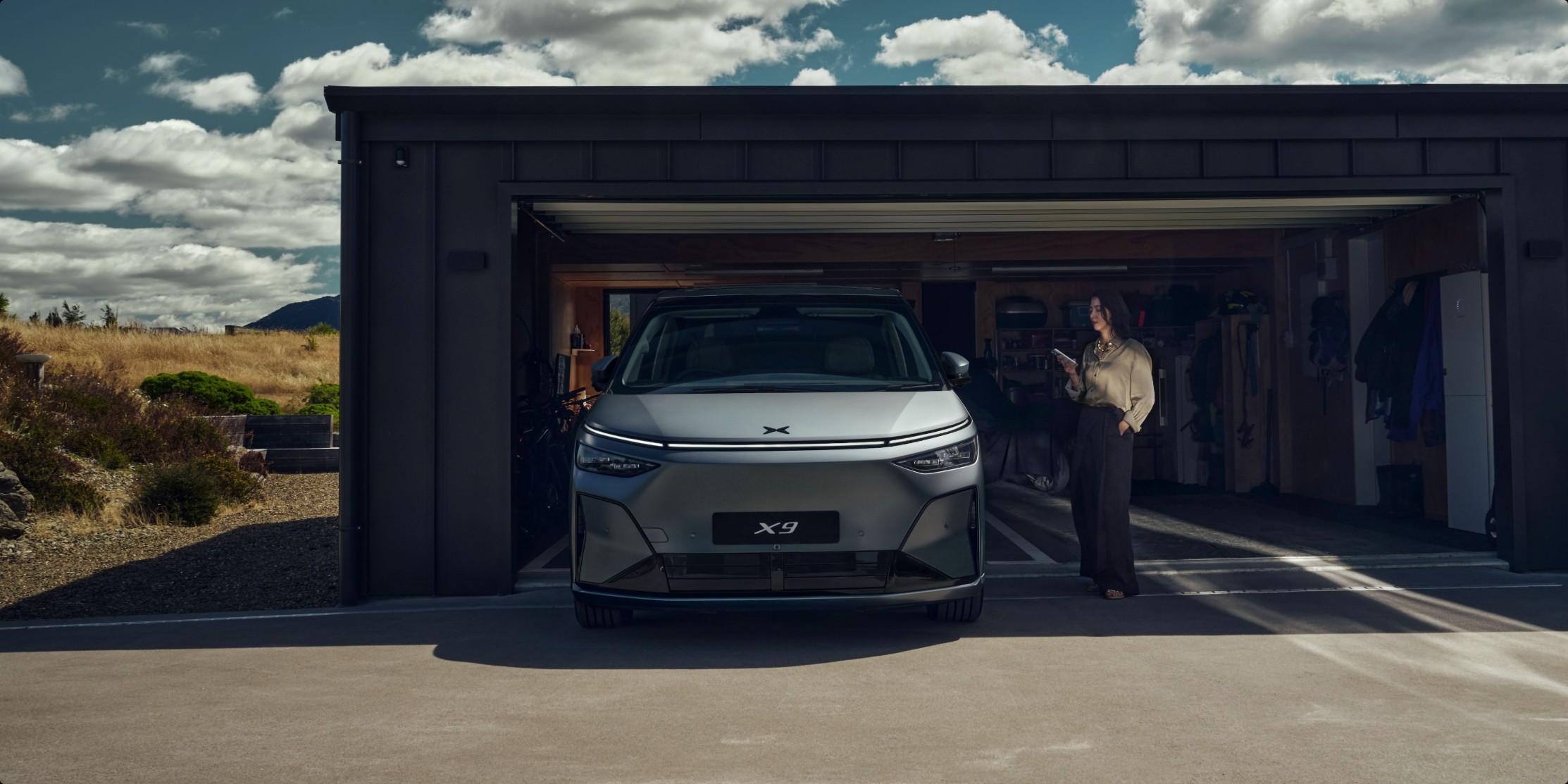
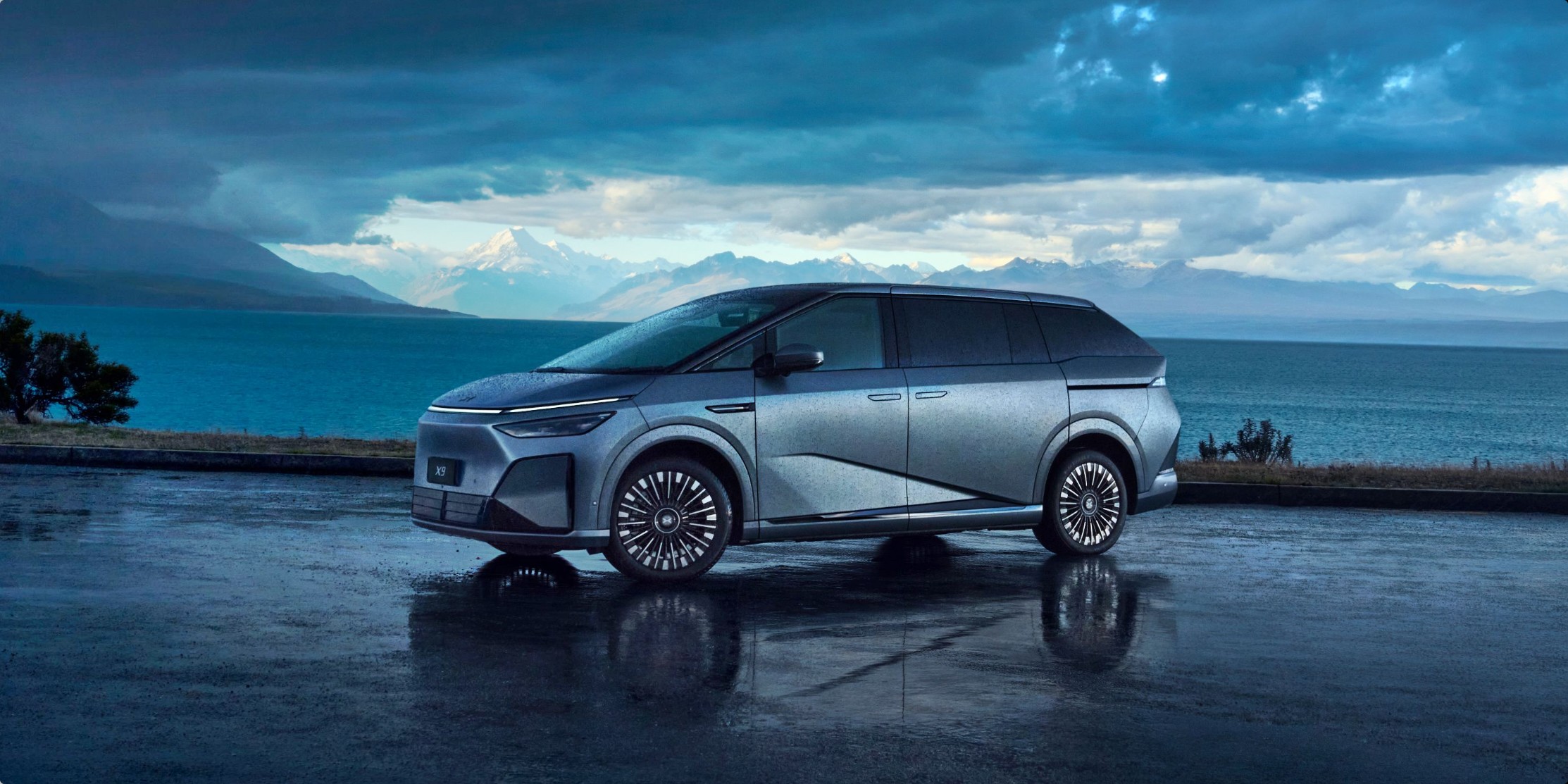
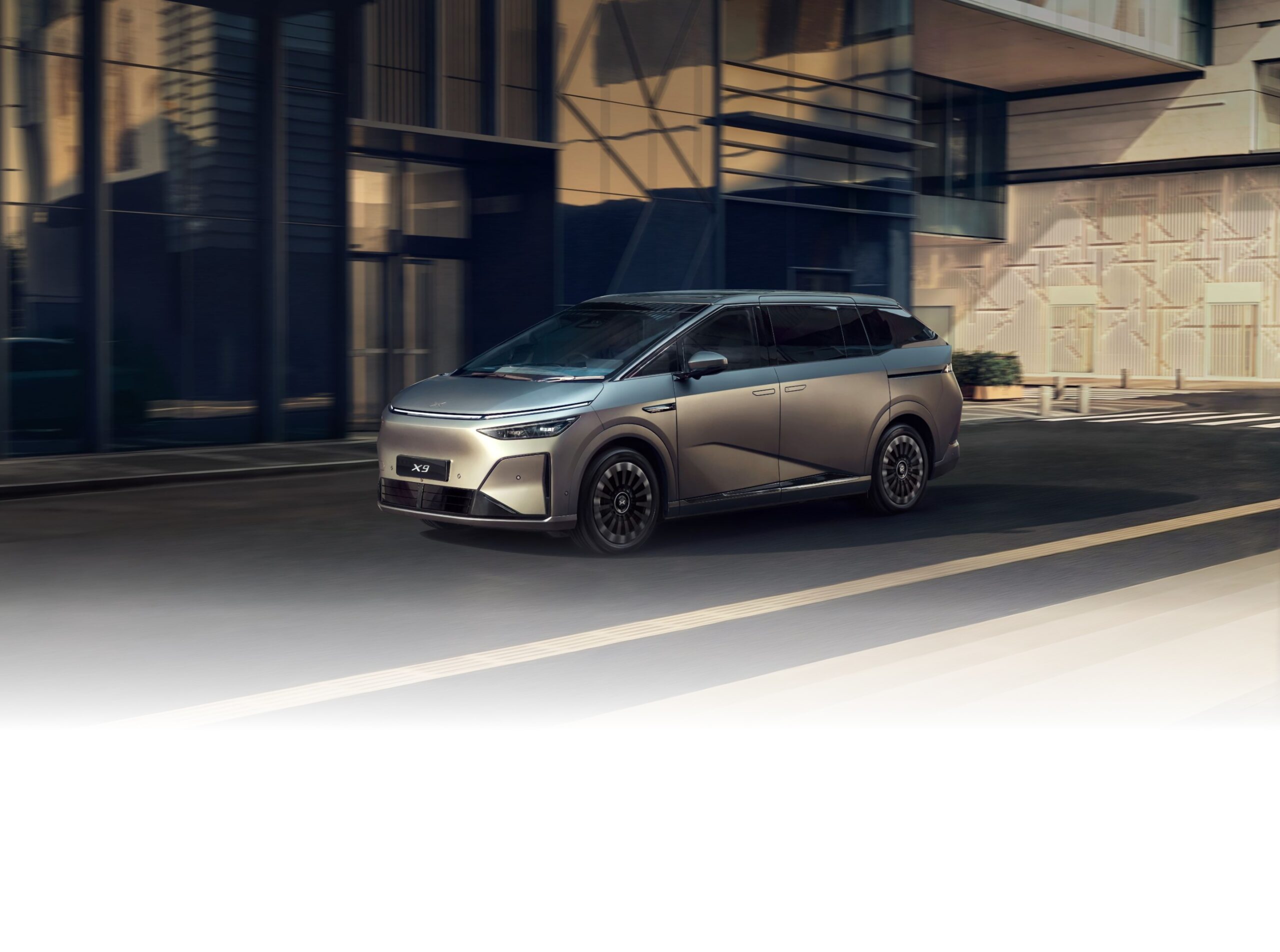
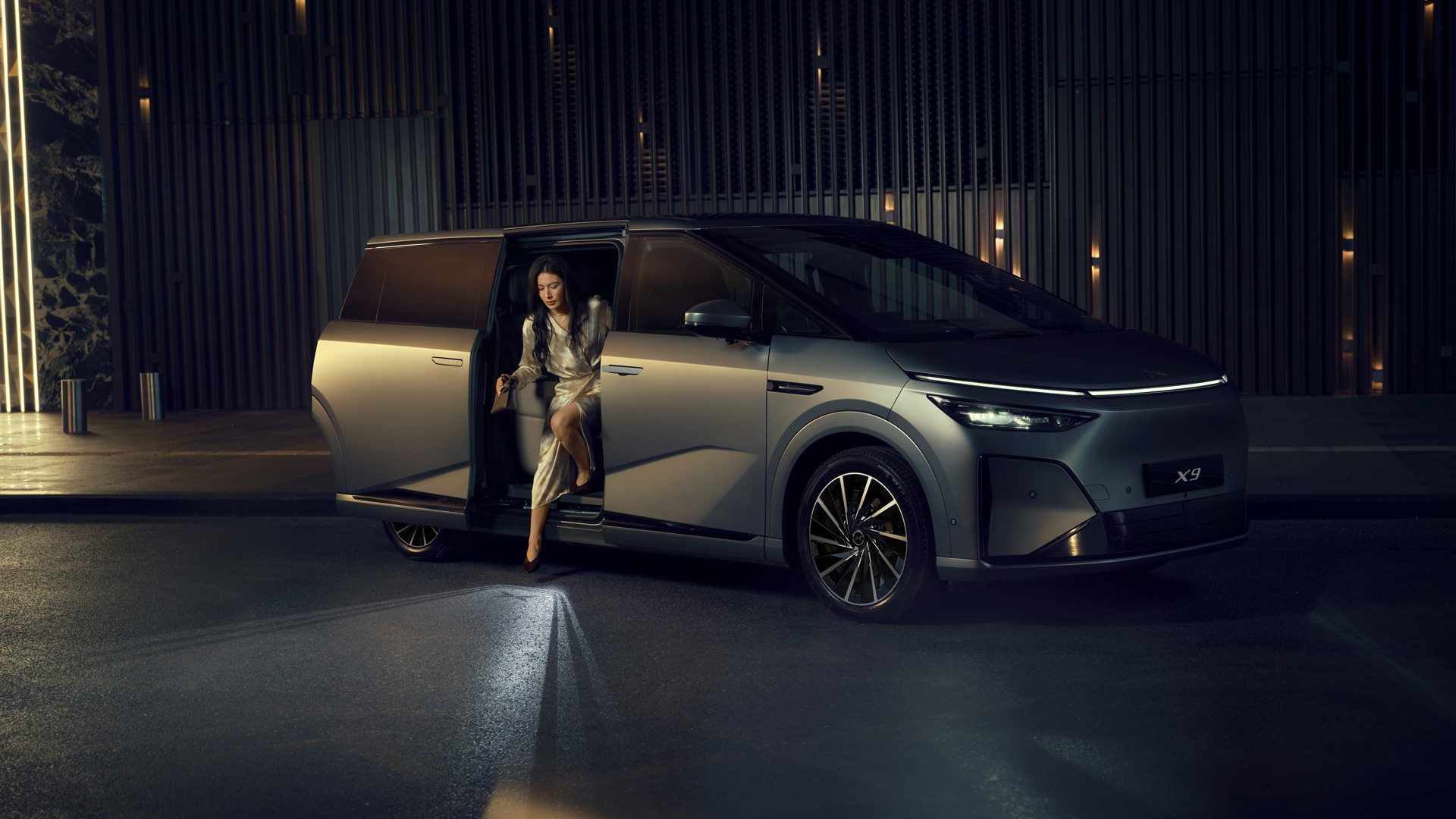
Electric sliding doors - both sides, with a puddle light thrown on the ground. Useful in the tight bay the length forces you into.
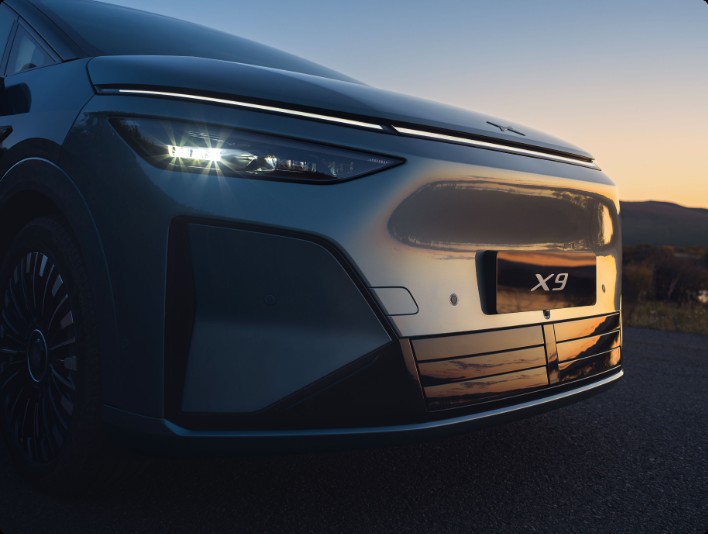
The front light bar - one continuous strip across the nose, with the XPENG mark on the bonnet above it.
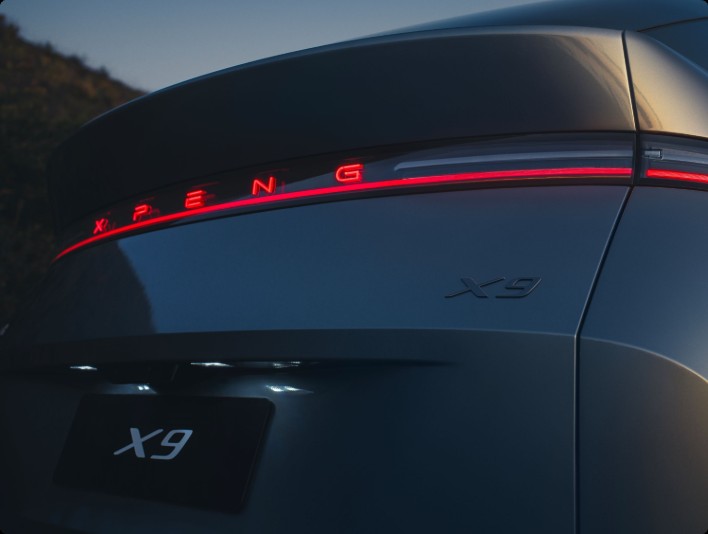
The tail bar - the XPENG lettering sits inside the light strip and lights with it.
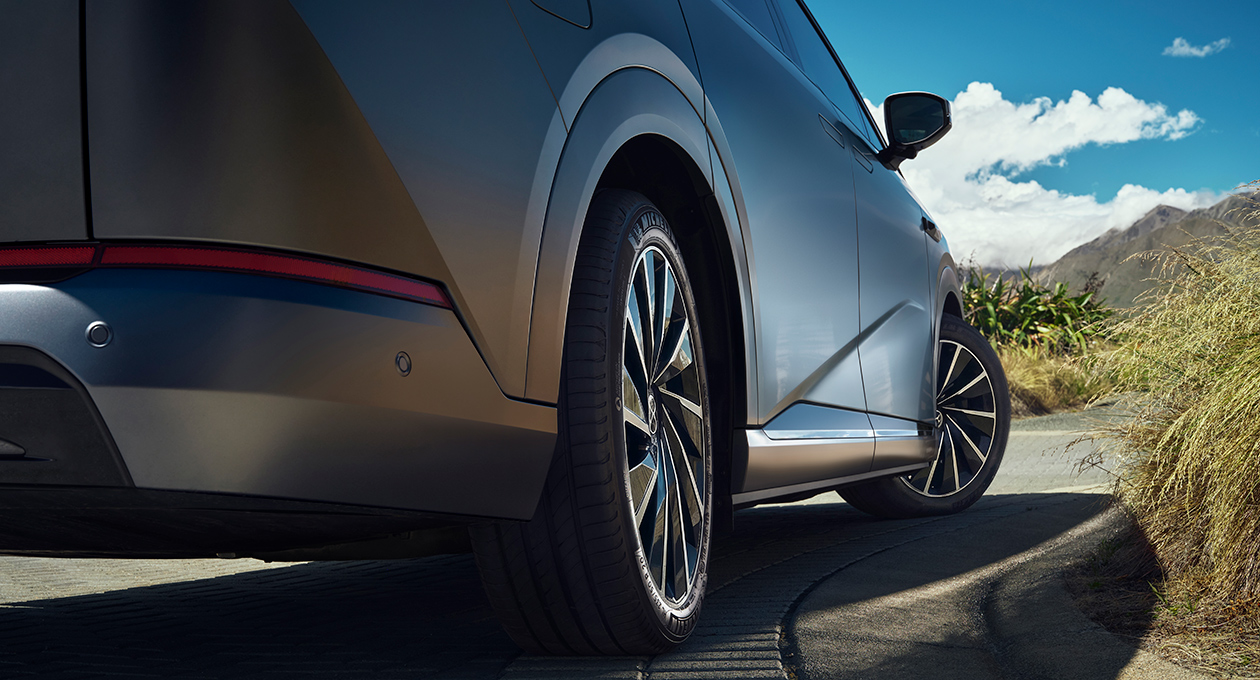
Rear-axle steering - the rear wheel takes an angle of its own. Standard on all three trims, and the reason the X9 turns tighter than its length suggests.
Cabin
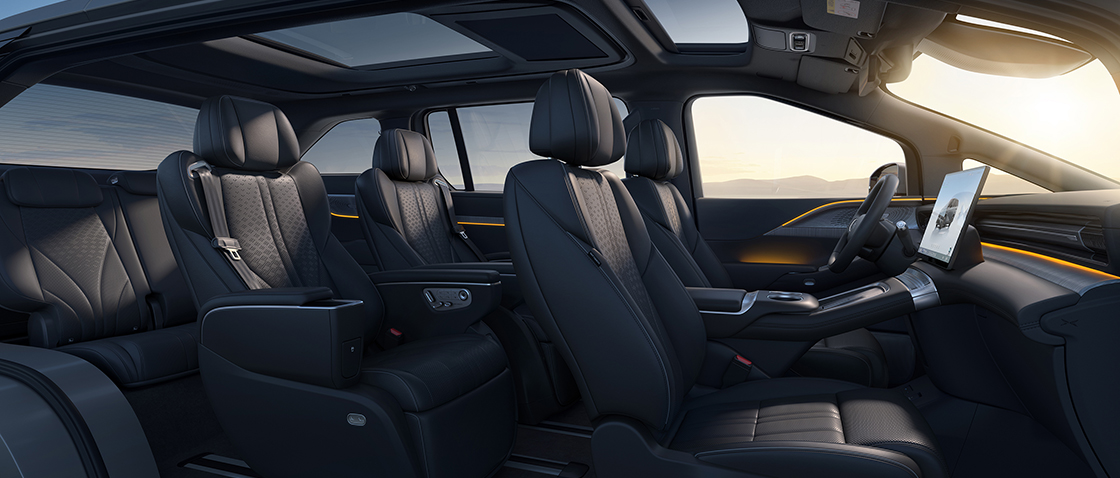
Meteorite Black - all three rows in one shot, left-hand drive. The second row is two separate chairs, which is what the 2-2-3 layout means.
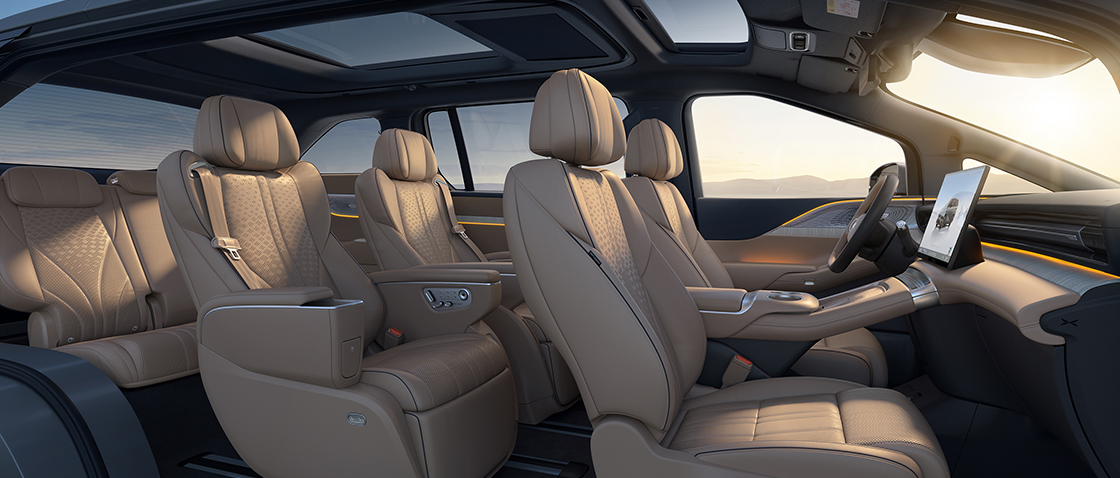
Coffee - the lighter of the two Nappa interiors, in the same left-hand-drive layout.

Through the sliding door - no step and no transmission tunnel, so you walk from the second row to the third instead of climbing over.

Third row down - the floor it leaves is flat and square, which is the part a boot-litre figure never tells you.
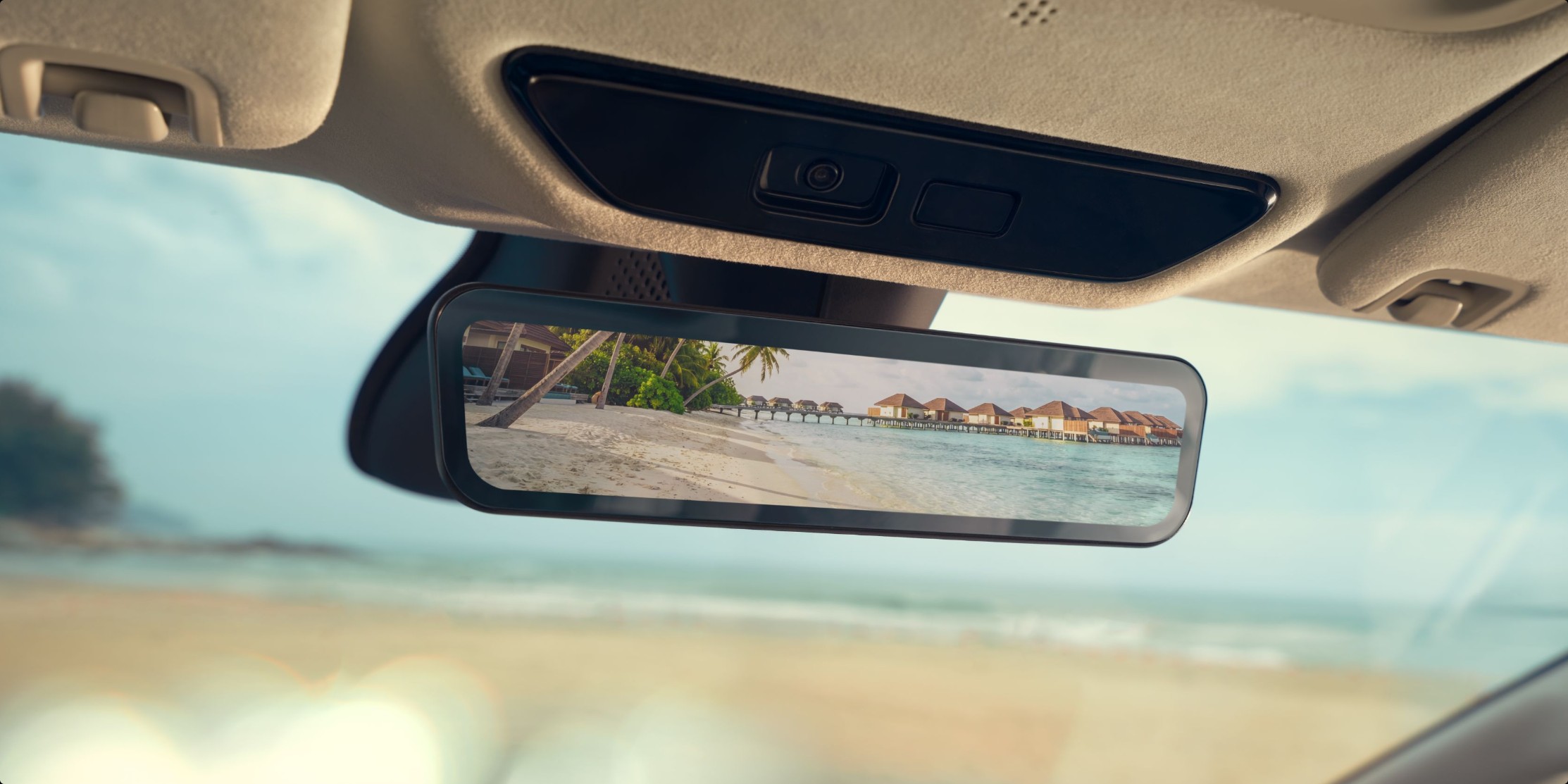
Camera mirror - the view behind comes from outside the car rather than through it.
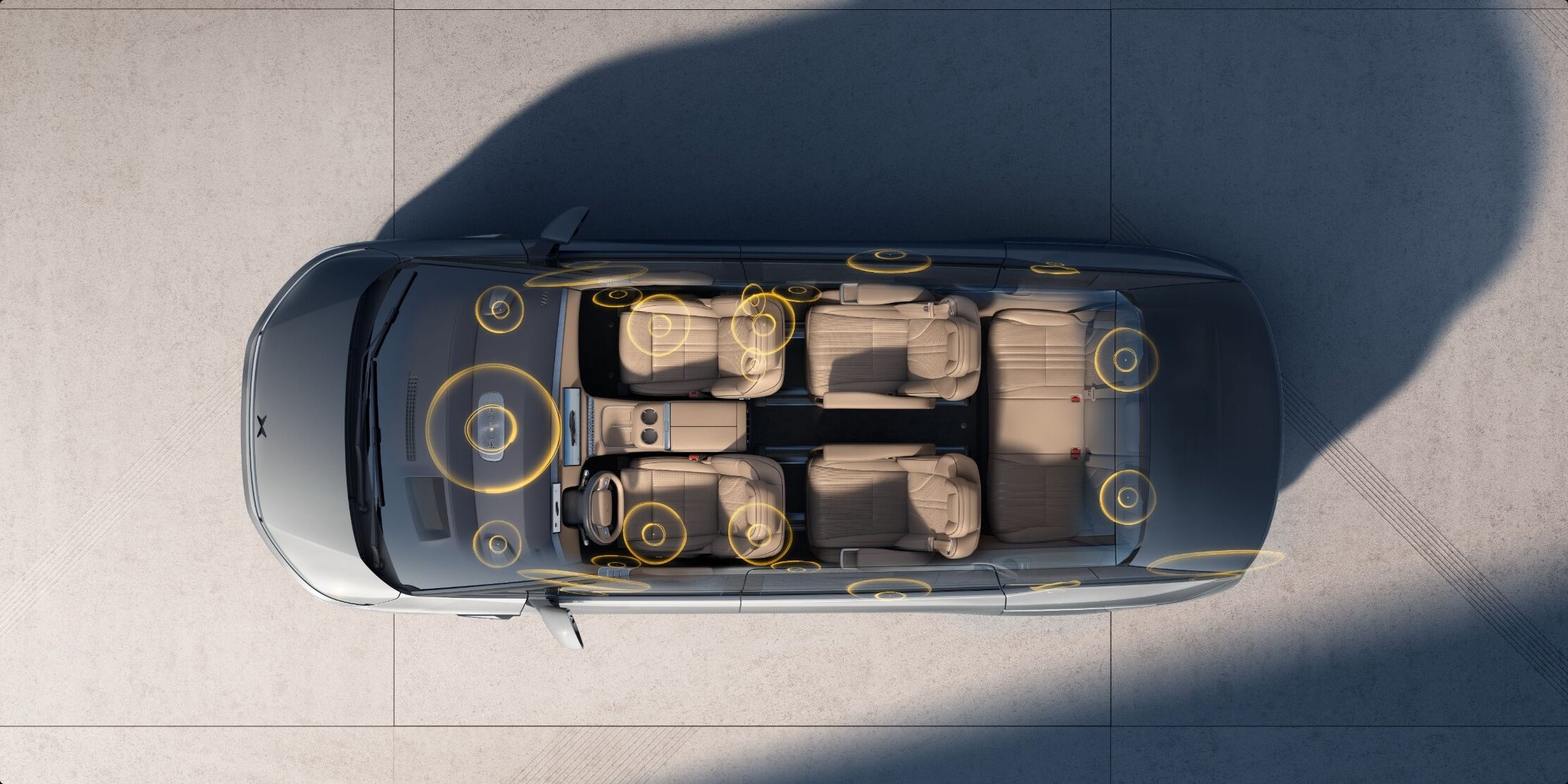
Where the 27 speakers sit - the XOPERA 7.1.6 layout.
Colours
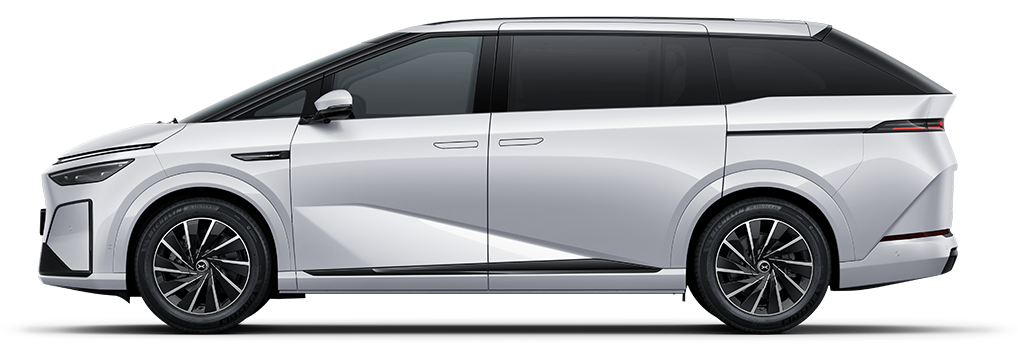
Arctic White
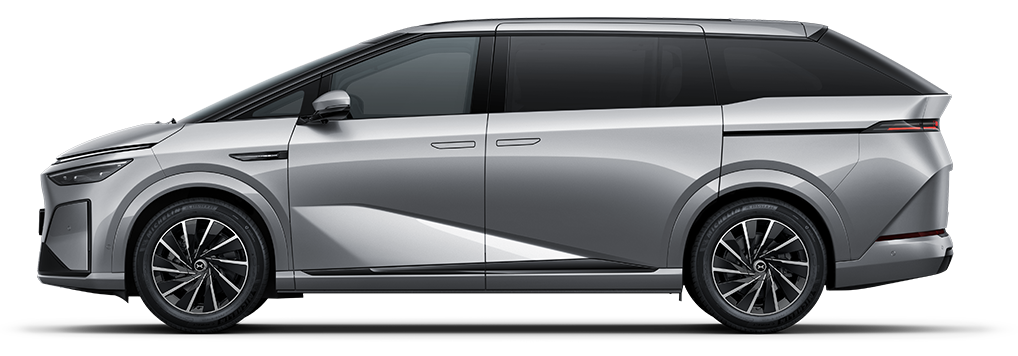
Silver Frost
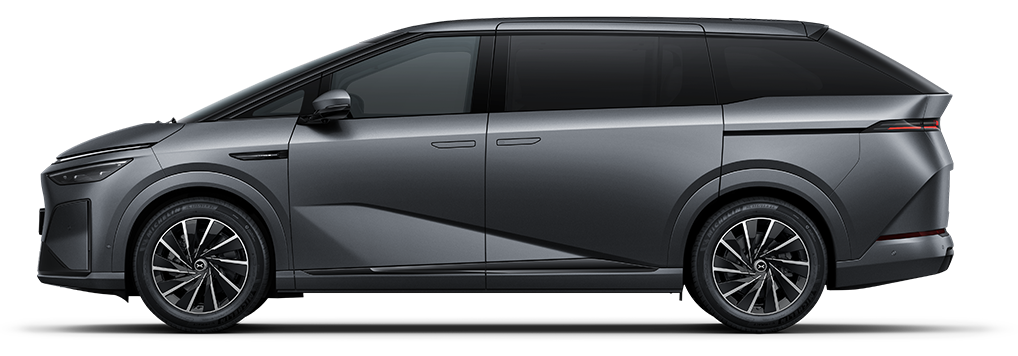
Matte Gray
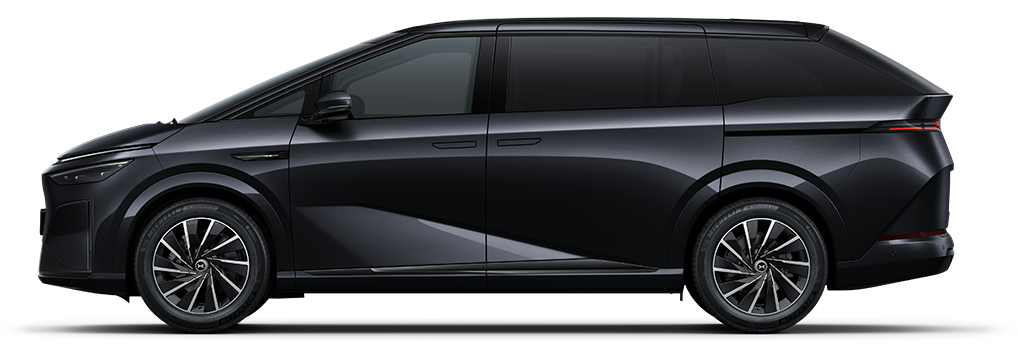
Midnight Black
Technology
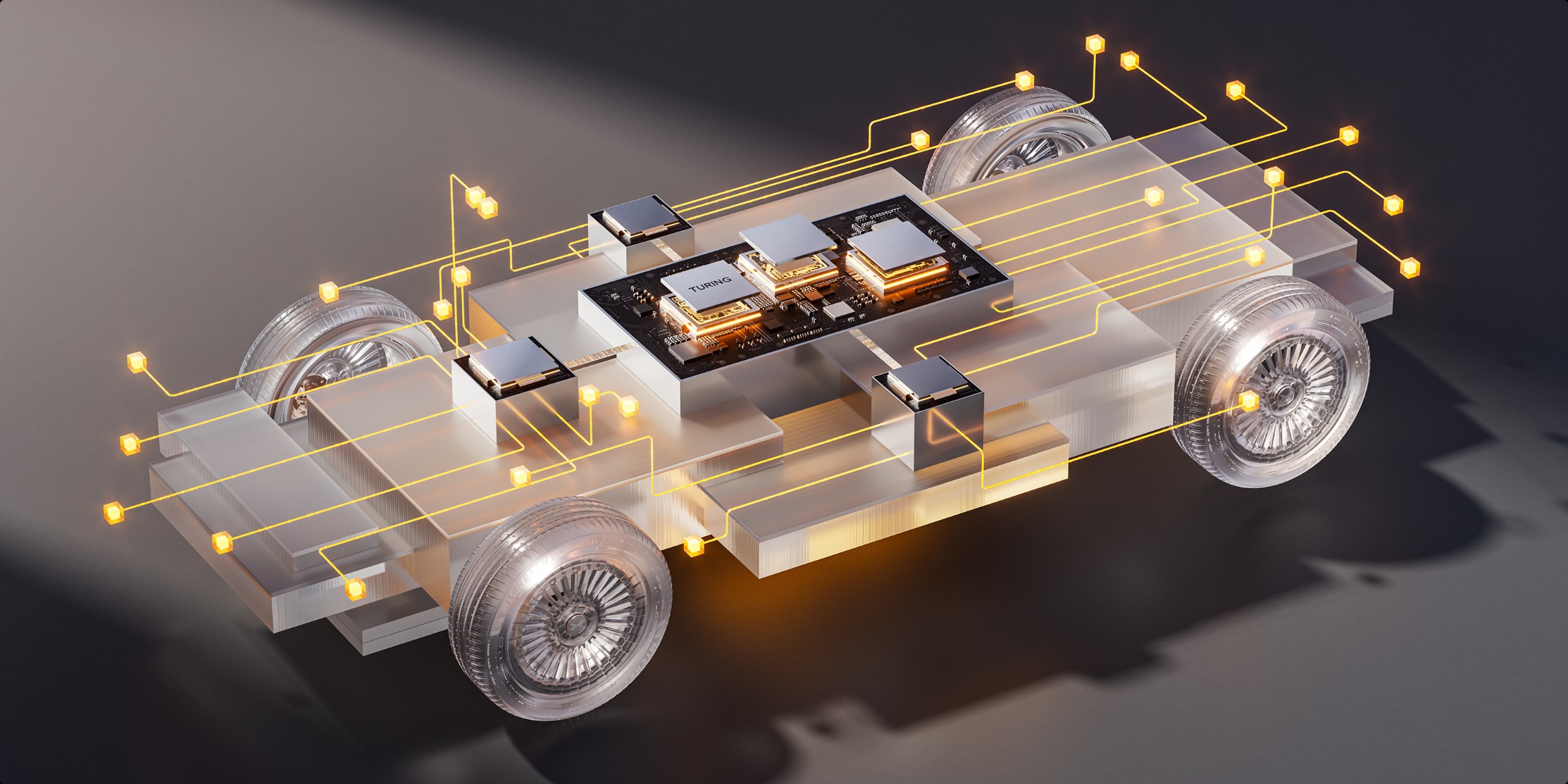
Chassis render, compute board lit - XPENG’s own illustration of the assistance hardware.
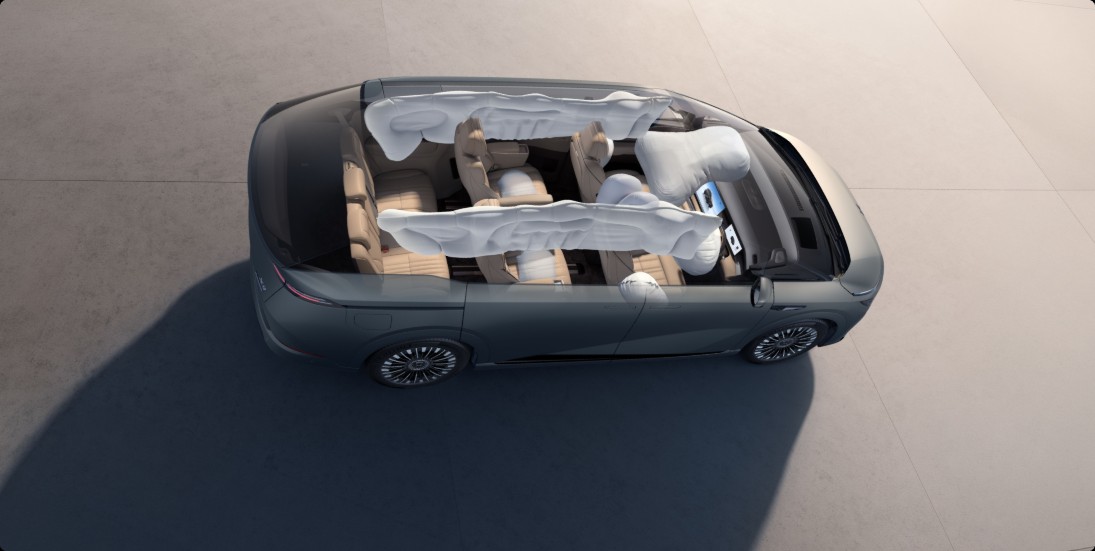
Airbag layout - XPENG’s deployment diagram. Seen from above, the third row sits inside the curtain rather than behind it.
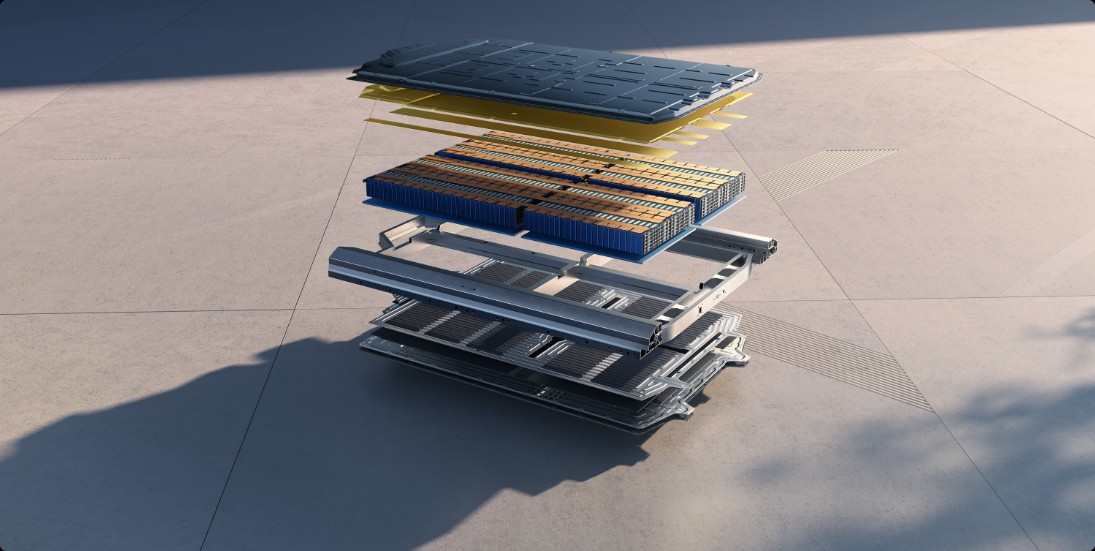
The pack, exploded - the cooling plate under the cells is what decides whether a 5C pack holds its peak or tapers early.
Sources
- XPENG AT store configurator (read 5 October 2026) - Austrian list prices from €78,600
- Motor-Freizeit-Trends, 8 May 2026 - X9 on order in Austria, deliveries from June
- XPENG DE store configurator (read 16 August 2026) - trims, list prices, equipment, paint and interior prices, the tow-hitch option, the wheel render and its tyre marking, the XOPERA 7.1.6 speaker layout
- VLA 2.0 on the international market (two Turing chips or more) and Google Maps on L03, G9L and later models: XPENG, August 2026.
- LFP full-charge reminder trigger (14 days or 1,000 km without a full charge): XPENG, XOS 5.2.5.
- XPENG Germany model page and the German launch release of 8 May 2026 - order date, delivery timing, warranty terms, the announced colour range
- XPENG NO store configurator (read 16 August 2026) - Norwegian list prices and the NOK 12,900 tow-hitch option; the roof sunshade, manual front and electric rear, on 8 October 2026. The 10-80% charge time of 12 minutes is from here and from XPENG’s global page; the German page quotes the same car as 20-80% in 10 minutes. The 5.4 m turning radius is from the Norwegian model page
- The seven-market list and the launch date come from XPENG’s own announcement of 16 June 2026. The generation is the New X9, launched in China on 2 March 2026. The air-suspension close-up is from xiaopeng.com/x9_2026.html - the dual-chamber springs match the European car; the last seconds show a China-only paint
- Safety ratings checked against euroncap.com (no X9 entry, August 2026) and the C-NCAP result published in September 2024. European charging figures are the published output of current Ionity and Alpitronic hardware, not XPENG numbers
- Warranty geography, the authorised-partner condition and the 12-month / 20,000 km service interval come from the XPENG European Holding B.V. warranty terms and XPENG Danmark’s service page. XPENG Danmark staff (August 2026) said Danish cover stops at cars in their official programme; that line is not in those documents
Prices are German list prices including 19% VAT, checked against the configurator when this page is revised. Range and consumption are WLTP combined and marked by XPENG as subject to final homologation.
Related: Compare specs · XPENG G9 · XPENG P7+ · XPENG L03 · Lineup history
Changes to this page (7)
- Corrected the roof sunshade to manual at the front and electric at the rear, after XPENG's Norwegian configurator, and the 5.4 m figure is now called a turning radius.
- Austria added to the markets: the X9 has been on order there since 8 May 2026 from €78,600.
- Added the El Prix 2026 results of 646 km in summer, 11.4 percent above WLTP, and 361 km in winter, plus a Q&A answer on where to find the manual.
- Q&A: EV Database charging pages for the three X9 trims, EVKX curves for Long Range and AWD Performance.
- Q&A: does the X9 have a sunroof, or can the glass roof open?
- Cabin: interior 360 viewer from XPENG's EU website.
- Q&A: VLA 2.0, Google Maps in the navigation, and whether the LFP pack should be charged to 100%.